


Fuente: Autoría propia
Regeneration and educational-housing mix in Chile:
Proposal for a management model
Reconversión y mixtura educacional-habitacional en Chile:
Propuesta de un modelo de gestión
Reconversão e mix habitacional educacional no Chile:
proposta de modelo de gestão
Reconversion et mixité éducation-logement au Chili:
Proposition d'un modèle de gestion
Catalina Harrison Herrera
Gobierno Regional de Santiago de Chile
cataharrison@gmail.com
https://orcid.org/0000-0001-5827-458X
Rodrigo Caimanque Leverone
Facultad de Arquitectura y Urbanismo, Universidad de Chile
rcaimanque@uchile.cl
https://orcid.org/0000-0002-3020-3365
How to cite this article:
Harrison, C. y Caimanque, R. (2024). Regeneration and educational-housing mix in Chile: Proposal for a management model. BITÁCORA URBANO TERRITORIAL, 35(I): 209-222.
https://doi.org/10.15446/bitacora.v35n1.117335
Recibido: 31/10/2024
Aprobado: 05/12/2024
ISSN electrónico 2027-145X. ISSN impreso 0124-7913. Universidad Nacional de Colombia, Bogotá
(1) 2025: 209-222
Autors
08_117335-E
Abstract
Large Latin American cities are characterized by high socio-spatial segregation. In Chile, a severe housing deficit and shortage of well-located land to produce social housing are also identified. However, recent urban and housing laws aimed at urban regeneration would make it possible to take advantage of underused land in consolidated city areas. This article explores the regeneration of state educational facilities to link them with housing. A management model is proposed for mixed-use projects, combining the replacement of educational infrastructure with building housing. Based on a documentary-normative analysis and interviews with experts, the technical, regulatory and financial viability of the model is analyzed. Finally, recommendations for public policy are provided.
Keywords: urban regeneration, mixed uses, housing, governance, political institutions, urbanization, project management
Resumen
Las grandes ciudades latinoamericanas se caracterizan por una alta segregación socioespacial. En Chile, se identifican además un severo déficit habitacional y una escasez de suelo bien localizado para producir viviendas sociales. Sin embargo, las recientes legislaciones urbanas y habitacionales orientadas a la regeneración urbana permitirían aprovechar el suelo subutilizado en áreas consolidadas de las ciudades. Este artículo explora la reconversión de equipamientos educacionales estatales para vincularlos con la vivienda. Se propone un modelo de gestión para proyectos de uso mixto, combinando la reposición de la infraestructura educacional con la construcción de viviendas. Con base en un análisis documental-normativo y en entrevistas con expertos, se analiza la viabilidad técnica, normativa y financiera del modelo. Finalmente, se presentan recomendaciones para la política pública.
Palabras clave: reconversión urbana, mixtura de usos, vivienda, gobernanza, instituciones políticas, urbanización, gestión del proyecto
Resumo
As grandes cidades latino-americanas caracterizam-se por uma elevada segregação socioespacial. No Chile, identifica-se também um grave défice habitacional e escassez de terrenos bem localizados para produzir habitação social. No entanto, a recente legislação urbanística e habitacional destinada à regeneração urbana permitiria aproveitar os terrenos subutilizados em áreas consolidadas das cidades. Este artigo explora a reconversão das instalações educativas estatais para as ligar à habitação. É proposto um modelo de gestão para empreendimentos de uso misto, combinando a substituição de infraestruturas educativas com a construção de habitações. Com base na análise documental-normativa e em entrevistas a especialistas, é analisada a viabilidade técnica, regulatória e financeira do modelo. Por fim, são apresentadas recomendações para políticas públicas.
Palavras-chave: reconversão urbana, mistura de usos, habitação, governança, instituições políticas, urbanização, gerenciamento de projetos
Résumé
Les grandes villes latino-américaines se caractérisent par une forte ségrégation socio-spatiale. Au Chili, un grave déficit de logements et une pénurie de terrains bien situés pour produire des logements sociaux sont également identifiés. Cependant, les récentes législations urbaines et en matière de logement visant à la régénération urbaine permettraient de tirer parti des terrains sous-utilisés dans les zones consolidées des villes. Cet article explore la reconversion des établissements d’enseignement public pour les relier au logement. Un modèle de gestion est proposé pour les projets à usage mixte, combinant le remplacement des infrastructures éducatives avec la construction de logements. Sur la base d’une analyse documentaire-normative et d’entretiens avec des experts, la viabilité technique, réglementaire et financière du modèle est analysée. Enfin, des recommandations en matière de politiques publiques sont présentées.
Mots-clés : reconversion urbaine, mélange d›usages, logement, gouvernance, institutions politiques, urbanisation, gestion de projet
Introduction

Chile, like several other Latin American countries, exhibits highly segregated urban environments, both in socioeconomic terms and in land use. This has resulted in municipalities oriented predominantly toward residential or service-related uses, with concentrations of socioeconomic strata that are entirely separated from one another (Ruiz-Tagle, 2016). This pattern has manifested in long commutes to places of employment or access to goods and services, particularly affecting the most disadvantaged segments of the population (Correa-Parra et al., 2023). While this phenomenon has been observed in various cities across the region, it takes on specific characteristics in Chile, where socio-spatial segregation is largely the outcome of state housing policies. These policies have prioritized access to low-cost land for the development of social housing, leading to the displacement of vulnerable families to peripheral areas (Rasse et al., 2021).
As of 2022, the national housing deficit in Chile is estimated at 641,421 units (Déficit Cero & Centro de Políticas Públicas UC, 2022). The Metropolitan Region accounts for 49.4% of the total housing demand, followed by the Valparaíso Region with 11% (ibid.). This projected deficit stands in contrast to the scarcity of vacant land with favorable location characteristics (Hidalgo et al., 2017), especially in large urban areas and metropolitan zones.
In the ongoing balancing act between quantity and quality—particularly following the housing quality crisis that prompted the implementation of the Urban Housing Policy for Quality Improvement and Social Integration (Bustos-Peñafiel, 2020) by the Ministry of Housing and Urbanism (MINVU)—substantial progress has been made. However, the policy framework still adheres to a subsidized homeownership model, recently expanded to include rental options, yet remains only marginally integrated with urban planning (ibid.). The severity of the housing deficit has led to the declaration of a national "housing emergency," necessitating the exploration of alternative strategies to enable housing production with an urban development perspective.
Recent legislation and regulatory changes—including incentives embedded in Municipal Territorial Planning Instruments (IPTs), the Law on Public Space Contributions aimed at distributing public investment and promoting urban equity across scales, and the Integration Law (MINVU, 2022a), which incorporates an Emergency Housing Plan—have emerged as new tools for urban regeneration. These policies grant the State concrete authority to develop housing projects serving the public interest.
Amid these changes and the current urban-housing crisis, the recognition and strategic use of underutilized public urban facilities with available land—such as educational, health, or sports facilities—particularly in Chile’s major cities, represent a significant opportunity to address housing and infrastructure needs simultaneously. This article aims to carry out a conceptual and practical exploration of public infrastructure governance within the context of the current housing crisis. It proposes a management model for urban reconversion toward mixed-use developments, targeting underutilized, well-located land. Specifically, the study proposes and evaluates—both technically and normatively—the incorporation of affordable and social housing within existing educational facilities in urban areas. This would simultaneously upgrade the infrastructure of these facilities, offering a viable and sustainable alternative within the context of the national housing emergency.
At the national level, there are 2,585 educational establishments located in urban areas, occupying a total of 4,494 hectares (MINEDUC, 2012). These properties are well distributed throughout metropolitan areas, opening the possibility of developing a management model that facilitates intersectoral integration and supports the educational-housing reconversion. However, such an endeavor poses institutional and governance challenges, particularly within Chile’s centralized and sectoral administrative model (Opazo Henríquez, 2020).
This article explores the relationship between urban housing policy and the management of educational infrastructure, identifying areas of convergence and divergence that could inform the development of an operational and institutional model addressing sectoral challenges in an integrated and city-oriented manner. It identifies Supreme Decree 49 (MINVU, 2011), the Solidarity Housing Fund Program, as offering the most viable link to the Educational Establishment Replacement Program—a preliminary step toward housing-education integration within the public institutional framework. This approach aims to make underutilized land available for housing, while also opening the opportunity to channel new investment into the total or partial replacement of deteriorated educational facilities.
The article proceeds by presenting a conceptual framework addressing the challenges of social housing location, the characteristics of educational facilities, mixed land use, and governance challenges. This is followed by a description of the methodology used. The results and discussion focus on the analysis of housing and educational policy and administrative frameworks. Lastly, the article identifies the institutional linkages that shape the proposed management model and offers key recommendations and concluding remarks.
Theoretical Framework

The Location Crisis in Housing Policy
Urban segregation in Chilean cities has been closely linked to housing policies which, during their quantitative phase, displaced low-income housing developments to the urban periphery (Muñoz Velásquez et al., 2019; Hidalgo et al., 2017). This process can be explained by factors such as lower land values (Rasse et al., 2021) and economies of scale in housing production (Libertun de Duren, 2018). In this context, the location of social housing has remained a persistent challenge (Najman, 2022), along with the goals of social and urban integration (Vicuña et al., 2019).
Social housing located in peripheral urban areas is associated with a range of problems, including poor integration, urban fragmentation, and functional dependencies on consolidated urban systems. These areas also suffer from low levels of accessibility (Bustos-Peñafiel, 2020), lack of services, public transportation, and infrastructure when compared to central and peri-central areas (Nascimento & Salinas, 2020). All of these issues contribute to the concentration of poverty, insecurity, and overcrowding (Muñoz Velásquez et al., 2019). Segregated environments have also been shown to negatively impact the quality of life for heads of household living far from their workplaces, reduce employment opportunities for women, and limit access to public resources and services—thereby exacerbating social vulnerability (Fuentes & Rodríguez, 2020).
Since 2006, the Chilean state has undertaken a series of reforms aimed at improving housing quality and, more recently, promoting socio-spatial integration (Integration Law No. 21.450 of 2022). However, these reforms have continued to operate within a subsidiary system that, although increasingly resourced (Vergara-Perucich, 2021), has failed to offer substantive responses that improve opportunities for residents, particularly regarding location and access (Muñoz Velásquez et al., 2019).
Despite various efforts to foster integration between vulnerable populations and higher-income groups, public policies continue to subject housing location to the dynamics of the real estate market. This perpetuates the logic of land valorization (Urrutia et al., 2020) and leads to the displacement of the poorest from the housing market (Rasse et al., 2021), with limited development of well-located public-interest housing projects.
In response to the deficit/location dilemma, alternative mechanisms such as micro-radication have emerged. These operate within the logic of subsidiarity by leveraging land ownership among property holders to provide housing for extended family members, thus maintaining social and familial networks (Urrutia et al., 2020). These mechanisms open new possibilities for exploration, particularly in the identification of available public land, which could meet construction standards while advancing integration and location criteria through mixed-use development.
Educational Infrastructure, Mixed Uses, and Governance Challenges
In Chile, the need to expand school coverage has led to the adaptation of non-educational buildings to function as boarding schools or educational institutions (Almonacid, 2004). However, the conversion of educational establishments for alternative uses remains an underexplored topic. International experiences have demonstrated the feasibility of housing-education mixed-use models, with examples in Belgium, the Netherlands, England, and France . In Chile, housing projects combined with office and commercial uses are increasingly common (MINVU, 2023), and there are notable examples of housing integrated with public health facilities under mixed-ownership arrangements (Municipal official 1, August 2023).
Regarding housing-education mixed-use development, the Chilean context presents valuable opportunities both architecturally and urbanistically. Chile’s public educational architecture exhibits a recognizable typology nationwide (Marini et al., 2018), shaped by various historical phases and policy approaches. Many of these facilities are still in operation and are part of the collective image of the State's institutional presence across cities (Torres et al., 2015).
The benefits of mixed-use development in neighborhoods and cities have been extensively debated. Mixed-use has been praised for fostering environments that integrate work, services, and residential activities, thereby contributing to dynamic, vibrant, and safe public spaces (Hoppenbrouwer & Louw, 2005). Yue et al. (2017) summarize mixed-use development in terms of land-use intensification, increased functional diversity, and integration of previously segregated uses. However, these values do not necessarily resolve the issue of affordability. In Canada, Moos et al. (2017) found that housing in mixed-use areas tends to be less affordable than in other parts of the city. This concern may be even more pressing in the Chilean context, where central area regeneration processes driven by profit-maximization have led to displacement and loss of neighborhood identity (Señoret & Link, 2020), undermining the potential benefits of mixed-use development.
The advancement of a housing/public education mixed-use proposal offers promising opportunities by diversifying land uses in well-located neighborhoods and addressing affordability concerns, given that educational land is publicly owned. However, this also presents institutional and governance challenges, especially considering Chile's traditionally centralized political-administrative system and low levels of intersectoral coordination (Opazo Henríquez, 2020).
The so-called shift from “government to governance” (Gjaltema et al., 2020) suggests that diverse actors and interests participate asymmetrically in decision-making processes, with government no longer acting as the sole executor of urban policy (Bustos et al., 2019). In Chile, urban governance is characterized by fragmentation, high concentration of power, and low levels of citizen participation. It is often vulnerable to electoral fluctuations and influenced by private sector interests (Caimanque, 2023). Nonetheless, even within this context, public policy and the definition of management models offer opportunities to generate viable urban alternatives (Parsons et al., 2007), recognizing the existence of interdependencies (McGuirk, 2003) both within and outside the State, and the need to build trust (Edelenbos & van Meerkerk, 2018) among diverse actors under a shared development framework.
The housing/educational infrastructure management model discussed in this article is framed by considerations of technical, regulatory, and institutional feasibility. It is shaped by centralist policy definitions and a subsidiarity-based logic, both of which continue to be determining factors in the materialization of urban solutions. At the same time, the model acknowledges the need for validation within the political arena and the modes of governance that accompany it.
Methodology
This article is based on qualitative methods, which included a comprehensive review and analysis of public documentation, as well as housing regulations such as DS19 (MINVU, 2016) and DS49 (MINVU, 2011), urban planning instruments such as the General Ordinance of Urbanism and Construction (OGUC), the General Law on Urbanism and Construction (LGUC), and relevant educational regulations. Additionally, Government Program Evaluation (EPG) reports prepared by the Budget Directorate of the Ministry of Finance (DIPRES), as well as the educational facilities inventory carried out by MINEDUC, were reviewed. These sources were complemented by an extensive literature review related to the research topic. Public documentation was obtained through formal requests based on Law 20.285 on access to public information (both active and passive), and through contributions from subject-matter experts. The objective of this review was to identify the goals, legal scope, and financial frameworks of the various policies and programs, establishing key alignments and potential discrepancies between urban-housing and educational regulations.
Semi-structured interviews were conducted with eight experts in housing and education policy, as well as with officials from local governments. The selection of participants was based on their professional experience in mixed public-sector management, with a focus on housing and/or educational infrastructure. The information obtained was coded and systematized, allowing for the identification of key findings related to concepts such as governance, planning, regulation, and public management.
The interviews were conducted in two stages. The first round emphasized the participants' knowledge of public management in housing and educational projects, identifying limitations and opportunities within the conceptual model. The second round involved the evaluation of the proposed integration model, with adjustments made based on the participants' feedback. All data were triangulated with the legislation, policies, and regulations previously reviewed.
Results
Analysis of the Political-Administrative Framework
Housing Policy in Chile
The current urban housing policy framework includes eleven active decrees for the development of new housing and the improvement of existing units or neighborhoods. Among these, the most relevant are Decree DS19, which supports socially integrated housing projects, and Decree DS49, designed to provide diverse housing solutions for vulnerable families. These instruments were analyzed according to the following criteria: (i) location, (ii) management, (iii) financing, and (iv) targeting (see Table 1).
The main variation identified is that DS19 must meet at least six indicators, compared to the four required under DS49 . However, location is not a decisive differentiating factor in determining which decree is better suited for the proposed reconversion model.
In terms of management structure, DS49 is fully subsidized and managed by the State, whereas in DS19 the State plays a more limited role, with the private Entidad Desarrolladora (Developer Entity) leading the project. Land acquisition and management is another key distinction: in DS49, the State plays a far more active role, supported by budgetary notes and land transfer resolutions, which will be explained in detail later.
Financing is also a significant area of contrast. DS49 is almost entirely State-subsidized, whereas DS19 is financed approximately 30% by the State, with the remaining cost dependent on the real estate market.
Finally, DS49 identifies each beneficiary during the project’s development phase, targeting the most vulnerable 40% of the population. It also includes them in the design process through a participatory mechanism known as the Social Support Plan (Plan de Acompañamiento Social), a feature absent in DS19, which exercises less control over future residents.
In conclusion, DS49 presents comparative advantages for the proposed reconversion management model, as both the financing and management of the projects are entirely under State control, and the decree includes more adaptable mechanisms and greater community involvement.
Educational Infrastructure Policy in Chile
The Public Education Infrastructure Program aims to ensure high infrastructure standards in school buildings and to address deficits and deficiencies in educational facilities with poor hygiene conditions (DIPRES, 2019). This is achieved through replacement projects (major reconstruction works), maintenance projects (minor works), and emergency projects (reconstruction works in response to disasters) (DIPRES, 2019).
In the case of partial or total replacements, several social evaluations by the Ministry of Social Development and Family (MDSF) are required in order to secure funding. This results in highly complex processes for educational providers (sostenedores) who often lack the technical capacity to undertake large-scale investments. Consequently, there is limited investment in educational infrastructure, as providers tend to restrict themselves to minor maintenance works in order to avoid additional bureaucracy.
According to the educational infrastructure cadastre compiled by MINEDUC in Chile, educational facilities exhibit an average deterioration rate of 19.26%, amounting to nearly 4,500 hectares of urban land nationwide. In comparison, land surveys in the Metropolitan Region indicate that Greater Santiago has approximately 718.4 hectares of vacant land available on the real estate market (Trivelli, 2024), versus 2,650 hectares occupied by educational establishments (MINEDUC, 2012), which are evenly distributed throughout the urban area of the region. This suggests that a reconversion mechanism targeting educational facilities could significantly increase the supply of available urban land in the Metropolitan Region, while also improving location accessibility due to the more favorable spatial distribution of these sites.
Regulatory and Institutional Resources and Constraints for Reconversion
Based on the previous regulatory analysis, this section outlines the normative tools and financing mechanisms provided by existing laws and decrees. A key initial finding is the concept of “regulatory enablement,” which allows for the establishment of special urban planning norms for land allocated to the construction of public interest housing. This mechanism permits not only the definition of land use for a given plot, but also decisions regarding building typology, height, density, floor area ratio, and buildable area, thereby shaping the morphology required for the proposed development. This is particularly relevant in cases where local zoning regulations designate land exclusively for public facilities, such as educational institutions, effectively prohibiting residential projects.
Regarding financing, the 2023 National Budget Law offers key instruments for the proposed model. Specifically, Budget Clause 8 authorizes the Ministry of Housing and Urban Development (MINVU) to form partnerships with municipalities and/or other public or private entities for the development of housing, infrastructure, or urban improvement projects. Furthermore, Clause 3, Section O allows for an increase in the infrastructure subsidy amount to cover the cost of land that already contains infrastructure, which may then be transferred to the owner of the land where the housing complex is developed (Municipal official 2, August 2023).
The Emergency Housing Plan also provides mechanisms to facilitate the transfer of publicly owned land to the Housing and Urban Development Services (SERVIU), a key operation in the management model to be developed in the following section.
Additionally, the Co-Ownership Law (MINVU, 2022b) serves as a valuable regulatory tool by governing ownership of individual housing units as well as coexistence rules—an essential component in the implementation of mixed-use projects (MINVU official, August 2023). However, current educational regulations stipulate that educational facilities must be used exclusively for educational service provision and cannot be fully or partially assigned to other purposes (MINEDUC official, October 2023). This restriction implies the need for regulatory adjustments or clarifications to enable reconversion projects, a matter that will be further developed in the proposed management model.
In summary, the existence of a regulatory and institutional framework provides concrete foundations for the design of a reconversion model, based on principles of flexibility and adaptability, as well as an expanded role for the State in land management. Nonetheless, regulatory adjustments are necessary to ensure the model’s feasibility, along with the creation of incentives to support its implementation.
Proposed Management Model for Educational/Housing Mixture
To make the model feasible, the processes of a housing project and an educational infrastructure replacement project are cross-analyzed. This allows for the identification of opportunities provided by each, aiming to follow the most efficient pathway by leveraging the capacities of each institutional actor. While both project cycles are complex, housing project management includes an immediate execution model. Furthermore, the Ministry of Housing and Urban Development (MINVU), through the Housing and Urbanization Services (SERVIU), has significantly greater technical capacity for executing construction works compared to the Ministry of Education (MINEDUC). For these reasons, the proposal suggests incorporating educational infrastructure land into the housing project cycle, based on the procedures and funding mechanisms of Decree DS49. The necessary adjustments would be made to respect the procedural stages involved in MINEDUC’s educational infrastructure replacement processes.
The proposed management model consists of the following stages: (i) Planning, (ii) Project Design, (iii) Financing, (iv) Execution, and(v) Operation (see Figure 2).
In the planning stage, MINVU is responsible for allocating resources to various housing initiatives. A joint cadastre between MINVU and MINEDUC is proposed to gather relevant information for identifying and prioritizing reconversion opportunities.
Based on a diagnostic assessment of available educational infrastructure, the location parameters defined under DS49 are applied to determine which educational establishments meet these indicators, identifying those suitable for reconversion due to their location.
The project development stage begins with land management, allowing SERVIU to legally authorize the site for housing investment. This process depends on land ownership. If the educational establishment is under municipal control, the land may remain under municipal ownership for the housing project. In cases where ownership lies elsewhere, the land must be transferred to SERVIU, which, upon project completion, will legally allocate the new educational facility to the respective institution.
Once land management is resolved, SERVIU issues a call for proposals to select a project sponsor (entidad patrocinante). The selected entity will develop the technical, legal, and social components of the project. It is essential that this process includes engagement with the school, housing, and surrounding community, as community involvement is key to the success of any urban regeneration project.
The qualification and financing stage begins once the reconversion project is fully developed and a building permit has been obtained. Once the project is approved by both institutions, MINVU grants the necessary subsidies to fully fund the initiative. Additionally:
“If MINVU’s resources are insufficient to cover the works related to the educational facility, a transfer must be requested from MINEDUC to finance the replacement—similarly to how funds are currently transferred to the Ministry of Public Works (MOP), without requiring a Social Evaluation (RS).”
(Municipal official 2, August 2023)
The proposal aims to operate under Clause 3.O. of MINVU’s Budget Law, which allows for increasing the infrastructure subsidy to cover land already containing facilities. This infrastructure can then be transferred to the owner of the land on which the housing complex is developed.
The execution stage begins with mitigation works on the educational facility, enabling the relocation of the school community during project construction (MINEDUC official, October 2023). Once the land is available, construction is carried out under SERVIU supervision. Simultaneously, the social accompaniment plan—a requirement under DS49—is implemented to foster coexistence norms for the future housing complex.
Finally, in the operation stage, once the project receives its final construction permit, the educational facility obtains official recognition from MINEDUC, and housing units are formally transferred. It is proposed that the homes be delivered under a protected rental scheme to beneficiaries, thus facilitating programmatic mixture and prioritizing school community families with housing needs. Ultimately, the co-ownership system must be established to regulate the coexistence of the building’s mixed uses.
Discussion
Within the current institutional context, this study explores the normative, administrative, and operational feasibility of implementing a realistic pathway for the development of well-located public interest housing projects, and for advancing new urban regeneration strategies. To this end, several key considerations emerge that could reinforce the model’s viability, leading to a set of policy recommendations aimed at facilitating and incentivizing its implementation.
Model Feasibility
Collaboration Agreement
The main challenge of multisectoral models lies in institutional coordination. This initiative, which from a governance perspective implies actor interdependence (McGuirk, 2003), must be driven by political commitment and general agreements, culminating in a formal programming agreement. This agreement should define the roles of each institution, funding mechanisms, and coordination procedures for supplementing MINEDUC or MINVU resources when necessary. In this context, MINVU’s leadership is crucial, as:
“It is a social ministry, but it is also an infrastructure ministry and an economic one, because it generates direct and indirect employment. By its very nature, it is obliged to engage in intensive intersectoral coordination, much more so than MINEDUC, which is entirely sectoral. [...] MINVU constantly collaborates with Health, Interior, National Assets, Environment, Transport, etc. [...] MINVU’s urban housing policy can only be materialized through intensive intersectoral coordination.”
(Government of Santiago official, November 2023)
Joint MINVU/MINEDUC Cadastre
Institutional collaboration must also involve the joint development of a national cadastre of educational facilities, improving measurement instruments both for general MINEDUC infrastructure investment and for mixed-use reconversion projects. This would expand data collection to include legal, social, and urban dimensions.
Amendment to the Public Education Law
To enable the implementation of reconversion projects, the law must be amended or clarified to allow residential use on the same property as educational use, under a co-ownership framework.
Enrollment Variability
The model should be adaptable to local conditions, particularly in areas experiencing declining school enrollment:“Projects could leverage facilities with declining enrollment, making space available for housing or other programs.” (MINVU official, October 2023)Conversely, in territories with increasing demand—often due to high immigrant populations—opportunities emerge to:“Adapt the educational program to increased demand in municipalities with growing populations.” (MINEDUC official, November 2023)
Incentives for the Model
Adjustments to Housing and Education Decrees
Relevant decrees should explicitly recognize this mechanism, clearly defining funding methods, resource allocation, and project evaluation processes. This is vital for building trust in decision-making processes (Edelenbos & van Meerkerk, 2018), providing certainty for communities and institutional actors, and offering a clear institutional framework for public officials managing these initiatives.
Adjustments to Urban Regulations
The Social Integration Law provides a foundational framework for promoting urban regeneration and mixed-use developments. This model proposes extending "normative habilitation" to allow for adjustments to habitability standards, granting developers greater flexibility—particularly when rehabilitating existing infrastructure.
Further incentives can be implemented through territorial planning instruments, emphasizing mixed uses and urban reconversion for public interest housing. These measures aim to gradually dismantle rigid zoning practices, fostering greater functional heterogeneity in cities. Providing the State with enhanced land management tools is essential—not only for this model—but also to rebalance negotiations with private actors in other public interest projects.
Amendments to the Co-ownership Law
A specific chapter should be developed within the co-ownership law to address mixed-use buildings. This would regulate essential norms for coexistence and safety conditions, ensuring the appropriate functioning of such projects.
Property Tenure
In alignment with the State’s renewed role in urban development (Privitera-Sixto, 2020), it is proposed that the housing units remain under public ownership, with tenancy granted through public interest rental schemes: “The municipality could play an active role in managing the housing stock, ensuring targeted allocation, community coexistence, and building maintenance.”
(Municipal official 3, October 2023)
Targeting should also consider the socioeconomic composition of the surrounding area, aiming to attract families with varying degrees of vulnerability and promote social integration—especially prioritizing households from the local school community who face housing needs.
Catalyst Projects for Urban Regeneration
At the neighborhood scale, mixed-use reconversion projects can serve as catalyst interventions, initiating broader urban regeneration processes. These projects can go beyond replacing educational infrastructure or supplying new housing, incorporating additional services and facilities required by the area: “Such projects could serve as the first stage of a broader regeneration strategy, addressing multiple urban needs.”
(MINVU official 1, August 2023)
Conclusions
In the current context of urban and housing crisis, the search for new management strategies that foster social integration through well-located social housing projects has gained growing relevance. This article explores the feasibility of a reconversion model that transforms public educational facilities into mixed-use developments. The proposed model relies on existing regulatory frameworks but requires institutional, normative, and even cultural adjustments, which should be further studied as they offer a concrete and feasible opportunity to repurpose underutilized land in large urban areas.
The proposed mix of public education and housing presents comparative advantages in terms of locating new public interest housing, as it avoids the need to acquire new land and responds to the affordability challenge (Moos et al., 2017) by removing land value and availability from the equation. However, this management model is more applicable to large-scale cities where the scarcity of well-located land is more acute, unlike smaller territories with available or lower-value land, where the effort and cost of redevelopment may not be justified.
This new mechanism emerges as a response to urban segregation, housing shortages, and the scarcity of urban land. The study highlights that the proposed model creates a novel approach to urban housing project management, while also presenting an opportunity for the Ministry of Education’s public infrastructure program to access additional financing channels through the Ministry of Housing. This could lead to a more efficient use of public resources, as residential land investments would also enhance educational infrastructure, improving standards within public school facilities.
Consequently, the reconversion model could advance both improved public education infrastructure and the reduction of urban segregation by providing well-located housing of public interest. Moreover, it could serve as a reference for converting other types of urban facilities, contributing to the development of new urban regeneration mechanisms aimed at building more diverse and vibrant cities.
Regarding governance, the leadership of MINVU (Ministry of Housing and Urbanism) is strategically important, given its historical role in infrastructure implementation and its extensive experience coordinating with other ministries and civil society. However, the shift from "government to governance" does not entail diminishing the role of the state. The Emergency Housing Plan expands state authority to acquire public and private land for social housing and to collaborate with other public agencies in facilitating project implementation. Within this emerging context of state strengthening, new opportunities arise to diversify the search for urban land and prioritize the use of underutilized sites.
This article demonstrates that it is possible to advance more integrated public policies through technical and institutional regulatory adjustments. In fact, it is precisely during the diagnosis of social needs that multidimensional problems emerge—issues that affect the same families who require both education and housing. However, the state continues to act in a fragmented and uncoordinated manner. The proposed model enables a better alignment of demands within the same household, emphasizing institutional interlinkages and social impact.
As with any governance model, urban politics matters (Caimanque, 2023). The interests and power dynamics between actors—whether within the state, the real estate sector, educational communities, or housing rights movements—are key to advancing exploratory initiatives that offer alternative solutions to both the housing crisis and educational infrastructure challenges from an urban perspective. Recent debates and shifts in urban housing policy, even within the existing subsidiary model, open up new spaces for more inclusive and innovative responses.
Referencias

ALMONACID, C. (2017). Política educativa chilena en primera persona. Editorial UMCE
BUSTOS, B., LUKAS, M., STAMM, C., & TORRE, A. (2019). Neoliberalismo y gobernanza territorial: Propuestas y reflexiones a partir del caso de Chile. Revista de Geografía Norte Grande, 73, 161–183. https://dx.doi.org/10.4067/S0718-34022019000200161
BUSTOS-PEÑAFIEL, M. A. (2020). Desafíos para enfrentar el deterioro de una producción cuantitativa: Vivienda social en copropiedad en Chile. Bitácora Urbano Territorial, 30(3), 247–261. https://doi.org/10.15446/bitacora.v30n3.86821
CAIMANQUE, R. (2023). The life and death of the ‘Baron mall’: The shifting politics of urban regeneration in Valparaiso. Environment and Planning C: Politics and Space, 41(5), 884–902. https://doi.org/10.1177/2399654423116307
CORREA-PARRA, J., VERGARA-PERUCICH, F., RODRÍGUEZ-VALLADARES, N., AGUIRRE-NUÑEZ, C., & HIDALGO-DATTWYLER, R. (2023). Desafíos de integración urbana en Chile: Segregación residencial y el rol del capital humano avanzado bajo influencias neoliberales. Revista de Urbanismo, (49), 115–137. https://doi.org/10.5354/0717-5051.2023.71506
DE DUREN, N. R. L. (2018). Why there? Developers’ rationale for building social housing in the urban periphery in Latin America. Cities, 72, 411–420. https://doi.org/10.1016/j.cities.2017.10.006
DÉFICIT CERO & CENTRO POLÍTICAS PÚBLICAS UC. (2022). Caracterización del Déficit Habitacional en Chile.
EDELENBOS, J., & VAN MEERKERK, I. (2018). Finding common ground in urban governance networks: What are its facilitating factors? Journal of Environmental Planning and Management, 61(12), 2094–2110. https://doi.org/10.1080/09640568.2017.1383232
FUENTES, L., & RODRÍGUEZ, S. (2020). El acceso de los jóvenes al trabajo y la ciudad: Miradas territoriales de la desigualdad y la segregación en Santiago de Chile. Ciudad y Territorio, 52(204), 335–348. https://doi.org/10.37230/CyTET.2020.204.10
GJALTEMA, J., BIESBROEK, R., & TERMEER, K. (2020). From government to governance… to meta-governance: A systematic literature review. Public Management Review, 22(12), 1760–1780. https://doi.org/10.1080/14719037.2019.1648697
HIDALGO DATTWYLER, R., URBINA TERÁN, P., ALVARADO PETERSON, V., & PAULSEN BILBAO, A. (2017). Desplazados y ¿Olvidados?: Contradicciones respecto de la satisfacción residencial en Bajos de Mena, Puente Alto, Santiago de Chile. Revista INVI, 32(89), 85–110. https://doi.org/10.4067/S0718-83582017000100085
HOPPENBROUWER, E., & LOUW, E. (2005). Mixed-use development: Theory and practice in Amsterdam’s Eastern Docklands. European Planning Studies, 13(7), 967–983. https://doi.org/10.1080/09654310500242048
MARINI, G., MERCHÁN, J. D. R., & AGUAYO, M. S. (2018). Estéticas cotidianas escolares: Desde lo que se ve hacia cómo se siente la escuela. Educação & Sociedade, 39(143), 361–378. https://doi.org/10.1590/es0101-73302018171876
MCGUIRK, P. (2003). Producing the capacity to govern in Global Sydney: A multiscaled account. Journal of Urban Affairs, 25(2), 201–223. https://doi.org/10.1111/1467-9906.t01-3-00006
MINEDUC. (2012). Catastro de Infraestructura Escolar. https://infraestructuraescolar.mineduc.cl/estudios-y-publicaciones/catastro-infraestructura-escolar/
MINEDUC. (2017). Ley 21.040. Crea el sistema de educación pública. https://bcn.cl/2f72w
MINVU. (2011). Decreto Supremo 49, Programa Fondo Solidario de Elección de Vivienda. https://bcn.cl/2kqob
MINVU. (2016). D.S. 19. Programa de Integración Social y Territorial. https://bcn.cl/2l122
MINVU. (2022A). Ley 21.450. Aprueba ley sobre integración social en la planificación urbana, gestión de suelo y plan de emergencia habitacional. https://bcn.cl/31ugs
MINVU. (2022B). Ley 21.442. Aprueba Nueva Ley De Copropiedad Inmobiliaria. https://bcn.cl/2zugi
MOOS, M., VINODRAI, T., REVINGTON, N., & SEASONS, M. (2018). Planning for mixed use: Affordable for whom? Journal of the American Planning Association, 84(1), 7–20. https://doi.org/10.1080/01944363.2017.1406315
Muñoz Velásquez, D. A., Zumelzu, A., Samaniego, H., & González, G. (2019). Metodología para determinar localizaciones más sostenibles para conjuntos de vivienda social en Valdivia, Chile. En XIII CTV 2019 Proceedings: XIII International Conference on Virtual City and Territory: Challenges and paradigms of the contemporary city. UPC. https://doi.org/10.5821/ctv.8665
NAJMAN, M. (2022). Acerca de los efectos de la localización de la nueva vivienda social sobre las luchas por el acceso a la ciudad de los sectores populares. EURE (Santiago), 48(145), 1–22. https://doi.org/10.7764/EURE.48.145.13
OPAZO HENRÍQUEZ, O. (2020). Las leyes de descentralización en Chile: Eje del cambio de la intergubernamentalidad pasando de la jerarquía a la negociación. Revista Iberoamericana de Estudios Municipales, 21, 5–28. https://doi.org/10.32457/riem.vi21.303
PARSONS, W., CASALET, M., MIRANDA, F., HERNÁNDEZ, C., LANGRE ROSADO, P., & FERNÁNDEZ GUERRA, F. (2007). Políticas públicas: Una introducción a la teoría y la práctica del análisis de políticas públicas. FLACSO México.
PRIVITERA-SIXTO, M. R. (2020). Operaciones de gobernanza urbana en el sur “más vulnerable” de la Ciudad de Buenos Aires: Comuna 8, la producción de nuevas “oportunidades” y viejas desigualdades. EURE (Santiago), 46(138), 117–137. https://doi.org/10.4067/S0250-71612020000200117
RASSE FIGUEROA, A., ROBLES, M. S., SABATINI DOWNEY, F., CÁCERES QUIERO, G., & TREBILCOCK, M. P. (2021). Desde la segregación a la exclusión residencial: ¿Dónde están los nuevos hogares pobres (2000-2017) de la ciudad de Santiago, Chile? Revista de Urbanismo, (44), 39–59. https://doi.org/10.5354/0717-5051.2021.55948
RUIZ-TAGLE, J. (2016). La segregación y la integración en la sociología urbana: Revisión de enfoques y aproximaciones críticas para las políticas públicas. Revista INVI, 31(87), 9–57. https://doi.org/10.4067/S0718-83582016000200001
SEÑORET, A., & LINK, F. (2019). Densidad urbana, forma y sociabilidad en la ciudad neoliberal: El caso del barrio Santa Isabel en Santiago de Chile. Revista de Urbanismo, (41), 1-17. https://doi.org/10.5354/0717-5051.2019.52862
TORRES, C., VALDIVIA, S., & ATRIA, M. (2015). Arquitectura escolar pública como patrimonio moderno en Chile. Repositorio Universidad de Chile. https://repositorio.uchile.cl/handle/2250/179631
TRIVELLI, P. (2024). Boletín N°168. Mercado de suelo urbano. Área Metropolitana de Santiago. Instituto de Estudios Urbanos y Territoriales. https://estudiosurbanos.uc.cl/documento/n168-mercado-de-suelo-urbano-ams-2do-trimestre-2024/
URRUTIA, J. P., CORREA, J., & ALT, I. (2020). A pesar del Estado y el Mercado: Informalidad habitacional y convivencia como estrategia de resistencia. ARQ (Santiago), 106, 120–129. https://doi.org/10.4067/S0717-69962020000300120
VERGARA-PERUCICH, J. F. (2021). Precios y financierización: Evidencia empírica en mercado de la vivienda del Gran Santiago. Revista INVI, 36(103), 137–166. https://doi.org/10.4067/S0718-83582021000300137
VICUÑA, M., ORELLANA, A., TRUFFELLO, R., & MORENO, D. (2019). Integración urbana y calidad de vida: Disyuntivas en contextos metropolitanos. Revista INVI, 34(97), 17–47. https://doi.org/10.4067/S0718-83582019000300017
YUE, Y., ZHUANG, Y., YEH, A. G., XIE, J. Y., MA, C. L., & LI, Q. Q. (2017). Measurements of POI-based mixed use and their relationships with neighbourhood vibrancy. International Journal of Geographical Information Science, 31(4), 658–675. https://doi.org/10.1080/13658816.2016.1220561
LISTADO DE ABREVIATURAS, ACRÓNIMOS, SIGLAS
DIPRES: Dirección de Presupuestos
EPG: Evaluaciones de Programas Gubernamentales
IPT: Instrumento de Planificación Territorial
LGUC: Ley General de Urbanismo y Construcciones
MDSF: Ministerio de Desarrollo Social y Familia
MINEDUC: Ministerio de Educación
MINVU: Ministerio de Vivienda y Urbanismo
MOP: Ministerio de Obras Públicas
OGUC: Ordenanza General de Urbanismo y Construcciones
SERVIU: Servicio de Vivienda y Urbanización
Catalina Harrison Herrera
An architect from the Central University of Chile, she holds a master's degree in urban planning from the University of Chile and a diploma in public policy from the Catholic University of Chile. Her professional experience has focused on the design, management, and implementation of public interest projects at institutions such as the Techo Chile Foundation, the Integra Foundation, the Housing and Urbanization Service, and, currently, at the Regional Government of Santiago. Her research focuses on public policies for urban regeneration, their contribution to socio-spatial integration, and new mechanisms for their implementation.
Rodrigo Caimanque Leverone
An architect from the University of Chile and a PhD in Development Planning from University College London, he is an Assistant Professor at the Faculty of Architecture and Urban Planning at the University of Chile. His work focuses on urban governance and policy studies, incorporating multi-scalar variables. His recent research interests include the role of social movements and organizations in local governance in the face of urban threats and in the creation of collaborative networks and alternatives for occupying neighborhood spaces.
Autors
Proposal for a management model
Regeneration and educational-housing mix in Chile:
Proposal for a management model
Proposal for a management model
Proposal for a management model
Proposal for a management model
Proposal for a management model
|
Scope |
DS 49 |
DS 19 |
|
Location |
4 indicators |
6 indicators |
|
Management |
|
Managed by the Developer Entity (private) |
|
Managed by the State |
Lower prioritization within the Housing Emergency Plan |
|
|
Higher prioritization of the Housing Emergency Plan |
Land management primarily handled by the Development Entity |
|
|
Land management supported by the State |
Less compatible with rental subsidies |
|
|
More compatible with rental subsidy |
Beneficiaries dependent on the market |
|
|
Prior identification of beneficiaries |
Social Support Plan after the delivery |
|
|
Financing |
Social support plan before and after the delivery of housing |
An average state participation of 30%. |
|
Full state participation (100%). |
Financing contingent upon market analysis. |
|
|
Targeting |
Budgetary provisions offer multiple avenues for financing. |
Focused on at least three socioeconomic groups. |
| |
Focused on families within the bottom 40% most vulnerable segment of the national population. |
|
Tabla 1. Comparative summary DS49/DS19
Source: Author’s elaboration.
Proposal for a management model
Figure 1. Distribution of Educational Establishments in the Metropolitan Region
Source: Author’s elaboration based on MINEDUC cadastral data (2012).
Proposal for a management model
Proposal for a management model
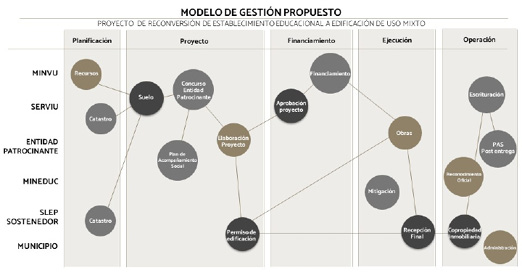
Figure 2. Proposed Educational/Housing Management Model
Source: Author’s elaboration.
Proposal for a management model
Proposal for a management model
Proposal for a management model
Proposal for a management model
Proposal for a management model