Correo Electrónico
 DNINFOA - SIA
 Bibliotecas
 Convocatorias
 Identidad U.N.


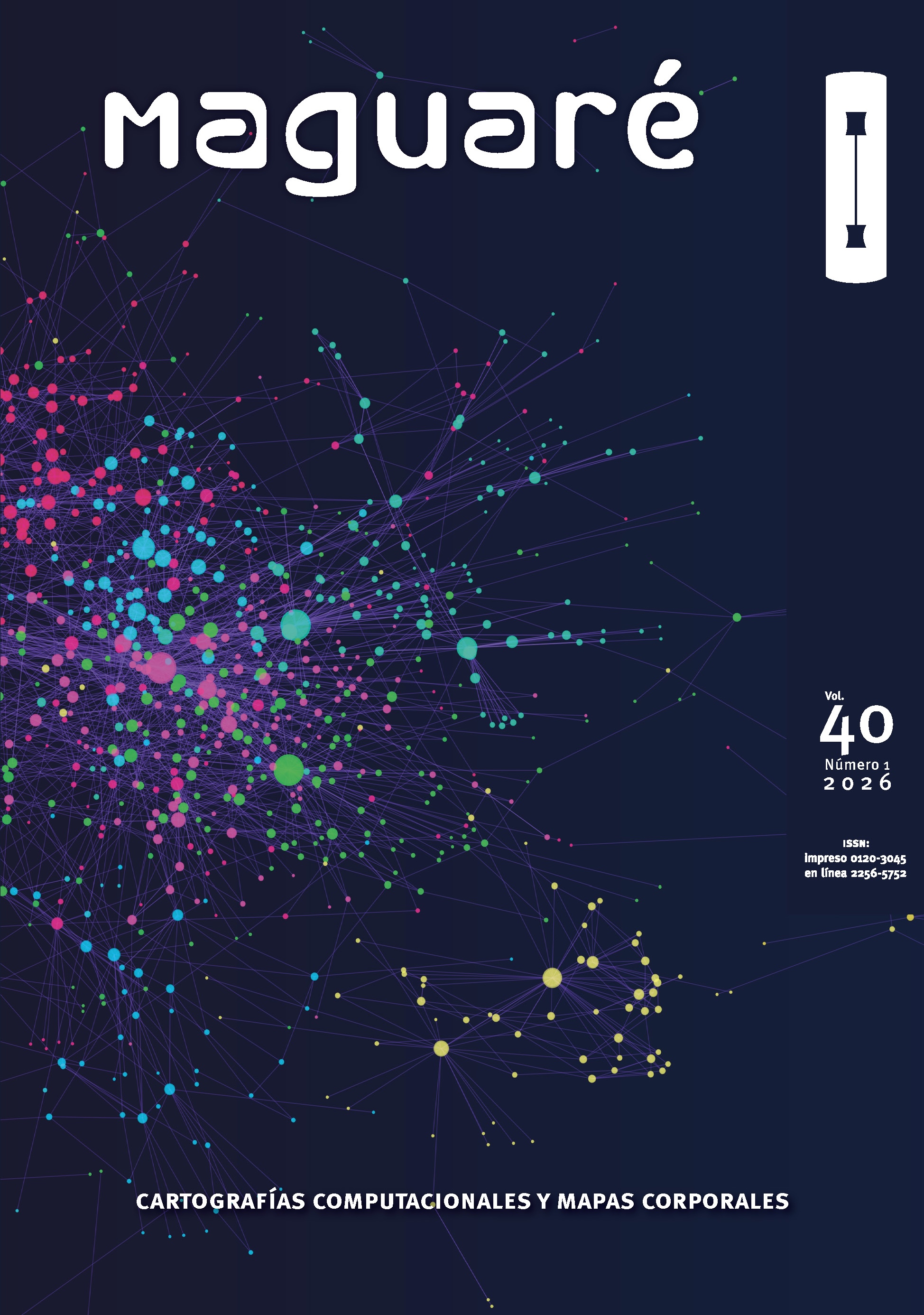
Publicado
An Anthropological Understanding of Artificial Intelligence Transformations in Civic and Domestic Life, Labor, and Higher Education Through the Cybernetic Organism (Cyborg) Concept
An Anthropological Understanding of Artificial Intelligence Transformations in Civic and Domestic Life, Labor, and Higher Education Through the Cybernetic Organism (Cyborg) Concept.
DOI:
https://doi.org/10.15446/mag.v40n1.124922Palabras clave:
cyborg, desigualdades, educación superior, inteligencia artificial, vida cívica, vida doméstica, vida laboral (es)artificial intelligence, civic life, cyborg, domestic life, higher education, inequalities, work life (en)
Descargas
Este ensayo utiliza la antropología cyborg para modelar las interacciones entre los humanos y la inteligencia artificial (ia), y destaca las fortalezas y limitaciones de la iaen relación con el aprendizaje y la innovación. Basados en el énfasis de Haraway en las desigualdades, reconocemos que la iano constituye una forma separada ni superior de inteligencia, sino una herramienta que amplifica la capacidad de acción humana. Los ejemplos contemporáneos de implementación de IA en ámbitos cívicos, domésticos, laborales y educativos evidencian su potencial para reproducir sesgos y formas de opresión, en tanto se trata de una construcción humana que refleja —y a la vez influye en— los valores socioculturales y éticos de sus creadores y usuarios. Estos casos ofrecen insumos para plantear consideraciones prácticas y éticas sobre el desarrollo y uso futuros de la ia, entre ellas la necesidad de fomentar colaboraciones estructuradas entre humanos y sistemas algorítmicos, promover la alfabetización humano-ia, garantizar el respeto por la dignidad y los derechos humanos, y abordar los sesgos y desigualdades inherentes.
This essay uses cyborg anthropology to model interactions between humans and artificial intelligence (ai) and highlights potential strengths and weaknesses of airegarding learning and innovation. Informed by Haraway’s emphases on inequalities, we recognize aiis neither a separate nor superior form of intelligence, but a tool that augments human agency. Current examples of aiimplementation in the civic, domestic, labor, and educational domains expose the potential of aifor biases and oppression as a human construct that reflects and affects the sociocultural and ethical values of its creators and users. These examples inform practical and ethical considerations for the development and use of aiin the future, including structured human-aicollaboration, promotion of human-ailiteracy, respect for human dignity and rights, and addressing inherent biases and inequalities.
Referencias
American Medical Association. 2023. “Augmented Intelligence in Medicine”. American Medical Association. October 6, 2023. https://www.ama-assn.org/practice-management/digital/augmented-intelligence-medicine
Bauman, Zygmunt y David Lyon. 2013. Liquid Surveillance. Cambridge, uk: Polity Press.
Bender, Emily. 2023. “Thought Experiment in the National Library of Thailand”. Medium (blog). 27 de mayo de 2023. https://medium.com/@emilymenonbender/thought-experiment-in-the-national-library-of-thailand-f2bf761a8a83
Bender, Emily, Timnit Gebru, Angelina McMillan-Major y Shmargaret Shmitchell. 2021. “On the Dangers of Stochastic Parrots: Can Language Models Be Too Big?” Proceedings of the 2021 ACM Conference on Fairness, Accountability, and Transparency, 610–23. New York: Association for Computing Machinery. https://doi.org/10.1145/3442188.3445922
Bender, Emily y Alexander Koller. 2020. “Climbing towards nlu: On Meaning, Form, and Understanding in the Age of Data”. En Proceedings of the 58th Annual Meeting of the Association for Computational Linguistics, 5185–98. Association for Computational Linguistics. https://doi.org/10.18653/v1/2020.acl-main.463
Benjamin, Ruha. 2019. Race after Technology: Abolitionist Tools for the New Jim Code. Cambridge, uk: Polity Press.
Bergstrom, Carl y Ogbunu Brandon. 2023. “Chatgpt Isn’t ‘Hallucinating.’ It’s Bullshitting”. Undark Magazine. 6 de abril de 2023. https://undark.org/2023/04/06/chatgpt-isnt-hallucinating-its-bullshitting/
Bernius, Matthew. 2012. “Manufacturing and Encountering ‘Human’ in the Age of Digital Reproduction”. En Human No More: Digital Subjectivities, Unhuman Subjects, and the End of Anthropology, editado por Neil Whitehead y Michael Wesch, 49-70. Boulder: University Press of Colorado.
Bhuiyan, Johana. 2023. “Lost in ai Translation: Growing Reliance on Language Apps Jeopardizes Some Asylum Applications”. The Guardian, 7 de septiembre de 2023, sec. us news. https://www.theguardian.com/usnews/2023/sep/07/asylum-seekers-ai-translation-apps
Bohannon, Cat. 2023. Eve: How the Female Body Drove 200 Million Years of Human Evolution. New York: Alfred A. Knopf.
Case, Amber. 2010. “We Are All Cyborgs Now”. ted (video). 2010. https://www.ted.com/talks/amber_case_we_are_all_cyborgs_now
Case, Amber. 2014. An Illustrated Dictionary of Cyborg Anthropology. Segunda edición. United States: Cyborg Anthropology.
Clynes, Manfred y Nathan Kline. 1960. “Cyborgs and Space”. Astronautics, septiembre 1960. https://web.mit.edu/digitalapollo/Documents/Chapter1/cyborgs.pdf
Coldewey, Devin. 2023. “Signal’s Meredith Whittaker: ai Is Fundamentally ‘a Surveillance Technology’”. TechCrunch (blog). 25 de septiembre de 2023. https://techcrunch.com/2023/09/25/signals-meredith-whittaker-ai-is-fundamentally-a-surveillance-technology/Davis-Floyd, Robbie y Joseph Dumit. 1998. Cyborg Babies: From Techno-Sex to Techno-Tots. New York: Routledge.
Dell’Acqua, Fabrizio, Edward McFowland, Ethan Mollick, Hila Lifshitz-Assaf, Katherine Kellogg, Saran Rajendran, Lisa Krayer, François Candelon y Karim Lakhani. 2023. “Navigating the Jagged Technological Frontier: Field Experimental Evidence of the Effects of ai on Knowledge Worker Productivity and Quality”. ssrn Scholarly Paper. Rochester, ny. https://doi.org/10.2139/ssrn.4573321
Doctorow, Cory. 2020. How to Destroy Surveillance Capitalism. New York: Stonesong Digital, llc.
Doctorow, Cory. 2023. The Internet Con: How to Seize the Means of Computation. London: Verso.
Donath, Judith. 2014. The Social Machine: Designs for Living Online. Cambridge, Massachusetts: mit Press.
Escobar, Arturo, David Hess, Isabel Licha, Will Sibley, Marilyn Strathern y Judith Sutz. 1994. “Welcome to Cyberia: Notes on the Anthropology of Cyberculture [and Comments and Reply]”. Current Anthropology 35, 3: 211–31.
Evans, Claire Lisa. 2018. Broad Band: The Untold Story of the Women Who Made the Internet. New York, New York: Portfolio/Penguin.
Forlano, Laura. 2017. “Data Rituals in Intimate Infrastructures: Crip Time and the Disabled Cyborg Body as an Epistemic Site of Feminist Science”. Catalyst: Feminism, Theory, Technoscience 3, 2: 1-28.
Foucault Welles, Brooke, Olga Sarmiento, Ana Maria Jaramillo y Mariana Macedo, eds. 2022. “Networked Inequality: Studies on Diversity and Marginalization”. Special Collection of Applied Network Science. https://appliednetsci.springeropen.com/networkedinequality.
Graeber, David y David Wengrow. 2021. The Dawn of Everything: A New History of Humanity. uk: Penguin.
Graf, Katharina. 2023. “Cyborg Cooks: Mothers and the Anthropology of Smart Kitchens”. Digital Culture & Society 9, 1: 49–70. https://doi.org/10.14361/dcs-2023-090104
Gray, Chris Hables. 1995. The Cyborg Handbook. New York: Routledge.
Gray, Chris Hables. 2002. Cyborg Citizen: Politics in the Posthuman Age. New York: Routledge.
Gray, Chris Hables, Heidi Figueroa-Sarriera y Steven Mentor, eds. 2021. Modified: Living as a Cyborg. New York: Routledge.
Hakken, David. 1999. Cyborgs@Cyberspace?: An Ethnographer Looks to the Future. New York: Routledge.
Hakken, David. 2003. The Knowledge Landscapes of Cyberspace. New York: Routledge.
Hanson, Allan. 2009. “Beyond the Skin Bag: On the Moral Responsibility of Extended Agencies”. Ethics and Information Technology 11, 1: 91–99. https://doi.org/10.1007/s10676-009-9184-z
Haraway, Donna. 1985. “Manifesto for Cyborgs: Science, Technology, and Socialist Feminism in the 1980s”. Socialist Review 80: 65–108.
Haraway, Donna. 1988. “Situated Knowledges: The Science Question in Feminism and the Privilege of Partial Perspective”. Feminist Studies 14, 3: 575-99.
Haraway, Donna. 1989. Primate Visions: Gender, Race, and Nature in the World of Modern Science. New York: Routledge.
Haraway, Donna. 1991. Simians, Cyborgs, and Women: The Reinvention of Nature. New York: Routledge.
Haraway, Donna. 1994. “A Manifesto for Cyborgs: Science, Technology, and Socialist Feminism in the 1980s”. En The Postmodern Turn: New Perspectives on Social Theory, editado por Steven Seidman, 82-115. Cambridge, uk: Cambridge University Press.
Hayles, Katherine. 1998. How We Became Posthuman: Virtual Bodies in Cybernetics, Literature, and Informatics. Chicago: University of Chicago Press.
Helm, Paula, Gábor Bella, Gertraud Koch y Fausto Giunchiglia. 2023. “Diversity and Language Technology: How Techno-Linguistic Bias Can Cause Epistemic Injustice”. arXiv. https://doi.org/10.48550/arXiv.2307.13714
Helmreich, Stefan. 2013. Sounding the Limits of Life: Essays in the Anthropology of Biology and Beyond. Princeton, New Jersey: Princeton University Press.
Hendler, Jim y Tim Berners-Lee. 2010. “From the Semantic Web to Social Machines: A Research Challenge for ai on the World Wide Web”. Artificial Intelligence 174, 2: 156–61. https://doi.org/10.1016/j.artint.2009.11.010
hotosm. 2023. “Impact Report 2022-2023”. Humanitarian OpenStreetMap. https://www.hotosm.org/uploads/2022-2023-ImpactReport08_30.pdf
iu uits. 2023a. “About Bing Chat Enterprise at iu”. Indiana University, University Information Technology Services Knowledge Base. 2023. https://kb.iu.edu/d/bing
iu uits. 2023b. “Acceptable Uses of Generative ai Services at iu”. Indiana University, University Information Technology Services Knowledge Base. 2023. https://kb.iu.edu/d/biit
Kadlecová, Jana y Jaroslav Krbec. 2020. “Umwelt Extended: Toward New Approaches in the Study of the Technologically Modified Body”. Journal of Posthuman Studies 4, 2: 178–94. https://doi.org/10.5325/jpoststud.4.2.0178
Kansa, Eric. 2023. “Artificial Intelligence (ai) and Open Context”. The Alexandria Archive Institute (blog). 8 de octubre de 2023. https://alexandriaarchive.org/2023/10/08/artificial-intelligence-ai-and-open-context/
Knazook, Beth. 2023. “‘Using Fair with Care’ and Other Thoughts on Sharing Cultural Heritage Images as Data in South Africa”. Digital Repository Ireland (blog). 26 de septiembre de 2023. https://dri.ie/news/using-fair-with-care/
Lemke, Thomas, and Gisela Welz. 2023. “Fixing Futures: Technologies of Anticipation in Contemporary Societies”. Goethe University Frankfurt am Main. https://fixingfutures.eu/files/2022/12/Research-Programme.pdf
Locate Press. 2022. “How Artificial Intelligence Is Improving Open Source gis”. Locate Press Blog (blog). 2 de noviembre de 2022. https://blog.locatepress.com/how-artificial-intelligence-is-improving-open-source-gis/
Marres, Noortje, Michael Castelle, Beatrice Gobbo, Chiara Poletti y James Tripp. 2024. “ai as Super-Controversy: Eliciting ai and Society Controversies with an Extended Expert Community in the uk”. Big Data & Society 11, 2. https://doi.org/10.1177/20539517241255103
Martin, Alexander. 2023. “British Government Quietly Sacks Entire Board of Independent AI Advisers”. The Record. 21 de septiembre de 2023. https://therecord.media/uk-disbands-ai-advisory-board-cdei-rishi-sunak
McElreath, Richard. 2023. “I Told a Colleague That Logistic Regression Is ai and They Got Mad at Me, so I Made a Chart. Find Yourself. I Am ‘Tinder Is ai’”. NerdCulture.De (blog). 23 de Agosto de 2023. https://nerdculture. de/@rlmcelreath/110938545075497824
Mervich, Carlo. 2020. “The Human Infrastructure of Artificial Intelligence”. Tesis de maestría, Universidad de Twente, Enschede, Países Bajos. http://essay.utwente.nl/82808
Miceli, Milagros, and Julian Posada. 2022. “The Data-Production Dispositif”. Proceedings of the acm on Human-Computer Interaction 6, 460: 1-37. https://doi.org/10.1145/3555561
Muldoon, James, Callum Cant, Mark Graham y Funda Ustek Spilda. 2023. “The Poverty of Ethical ai: Impact Sourcing and ai Supply Chains”. ai & Society. https://doi.org/10.1007/s00146-023-01824-9
Muldoon, James y Boxi Wu. 2023. “Artificial Intelligence in the Colonial Matrix of Power”. Philosophy & Technology 36, 80. https://link.springer.com/article/10.1007/s13347-023-00687-8
Nadeem, Reem. 2023. “Public Awareness of Artificial Intelligence in Everyday Activities”. Pew Research Center Science & Society (blog). 15 de febrero de 2023. https://www.pewresearch.org/science/2023/02/15/public-awareness-of-artificial-intelligence-in-everyday-activities/
National Science Foundation. 2020. “Science and Technology: Public Attitudes, Knowledge, and Interest”. National Science Board Science and Engineering Indicators 2020 (nsb-2020-7). https://ncses.nsf.gov/pubs/nsb20207/downloads
Noble, Safiya Umoja. 2018. Algorithms of Oppression: How Search Engines Reinforce Racism. New York: New York University Press.
Onuoha, Mimi y Diana Nucera. 2018. “A People’s Guide to Artificial Intelligence”. Allied Media Projects. https://alliedmedia.org/resources/peoples-guide-to-ai
Oudshoorn, Nelly. 2020. Resilient Cyborgs: Living and Dying with Pacemakers and Defibrillators. Singapore: Palgrave Macmillan.
Perez, Caroline Criado. 2019. Invisible Women: Data Bias in a World Designed for Men. New York: Abrams Press.
Powell, Alison. 2018. “The Data Walkshop and Radical Bottom-Up Data Knowledge”. En Ethnography for a Data Saturated World, editado por Hannah Knox y Dawn Nafus, 212-232. Manchester, uk: Manchester University Press.
Prucher, Jeff. 2007. Brave New Words: The Oxford Dictionary of Science Fiction. New York: Oxford University Press.
Quigley, Muireann y Semande Ayihongbe. 2018. “Everyday Cyborgs: On Integrated Persons and Integrated Goods”. Medical Law Review 26, 2: 276-308. https://doi.org/10.1093/medlaw/fwy003
Raeburn, Nicole Christine. 2004. Changing Corporate America from Inside Out: Lesbian and Gay Workplace Rights. Minneapolis: University of Minnesota Press.
Richardson, Rashida. 2019. “Confronting Black Boxes: A Shadow Report of the New York City Automated Decision System Task Force”. ai Now Institute. https://ainowinstitute.org/publications/confronting-black-boxes-a-shadow-report-of-the-new-york-city-automated
Turkle, Sherry. 2008. “Always-On / Always-On-You”. En Handbook of Mobile Communication Studies, editado por James Katz, 121-137. Cambridge, Massachusetts: mit Press.
Vearrier, Laura, Arthur Derse, Jesse Basford, Gregory Luke Larkin y John Moskop. 2022. “Artificial Intelligence in Emergency Medicine: Benefits, Risks, and Recommendations”. The Journal of Emergency Medicine 62, 4: 492–99. https://doi.org/10.1016/j.jemermed.2022.01.001
Vertesi, Janet. 2015. Seeing Like a Rover: How Robots, Teams, and Images Craft Knowledge of Mars. Chicago: University of Chicago Press.
Wells, Joshua. 2014. “Keep Calm and Remain Human: How We Have Always Been Cyborgs and Theories on the Technological Present of Anthropology”. Reviews in Anthropology 43, 1: 5–34. https://doi.org/10.1080/00938157.2014.872460
Wiener, Norbert. 1948. Cybernetics: Or Control and Communication in the Animal and the Machine. Actualités
Cómo citar
APA
ACM
ACS
ABNT
Chicago
Harvard
IEEE
MLA
Turabian
Vancouver
Descargar cita
Licencia

Esta obra está bajo una licencia internacional Creative Commons Atribución-CompartirIgual 4.0.
Esta licencia permite compartir, modificar y comercializar las obras bajo los siguientes términos:
Reconocimiento: Debe reconocer los créditos de la obra de la manera especificada por el autor o el licenciador (pero no de una manera que sugiera que tiene su apoyo o apoyan el uso que hace de su obra).
Compartir igual: Si remezcla, transforma o crea a partir del material, debe distribuir su contribución bajo la misma licencia del original.
Copyright
El autor es el titular del copyright de los contenidos publicados y retiene los derechos de publicación.