Publicado
Transformaciones urbanas, temor y empeligrosamiento social en vecindarios:el caso de Maipú, Santiago de Chile.
Urban transformations, fear of crime and social entanglement: the case of Maipú, Santiago of Chile.
Transformations urbaines, peur et difficultés sociales dans les quartiers: le cas de Maipú, Santiago du Chili.
Transformações urbanas, medo e emaranhamento social: o caso de Maipú em Santiago
DOI:
https://doi.org/10.15446/bitacora.v31n1.86862Palabras clave:
desarrollo urbano, interacción social, delincuencia (es)Développement urbain, Interaction sociale, Délinquance (fr)
Desenvolvimento urbano, crimes, Relações entre grupos (pt)
Urban development, Crime, Intergroup relations (en)
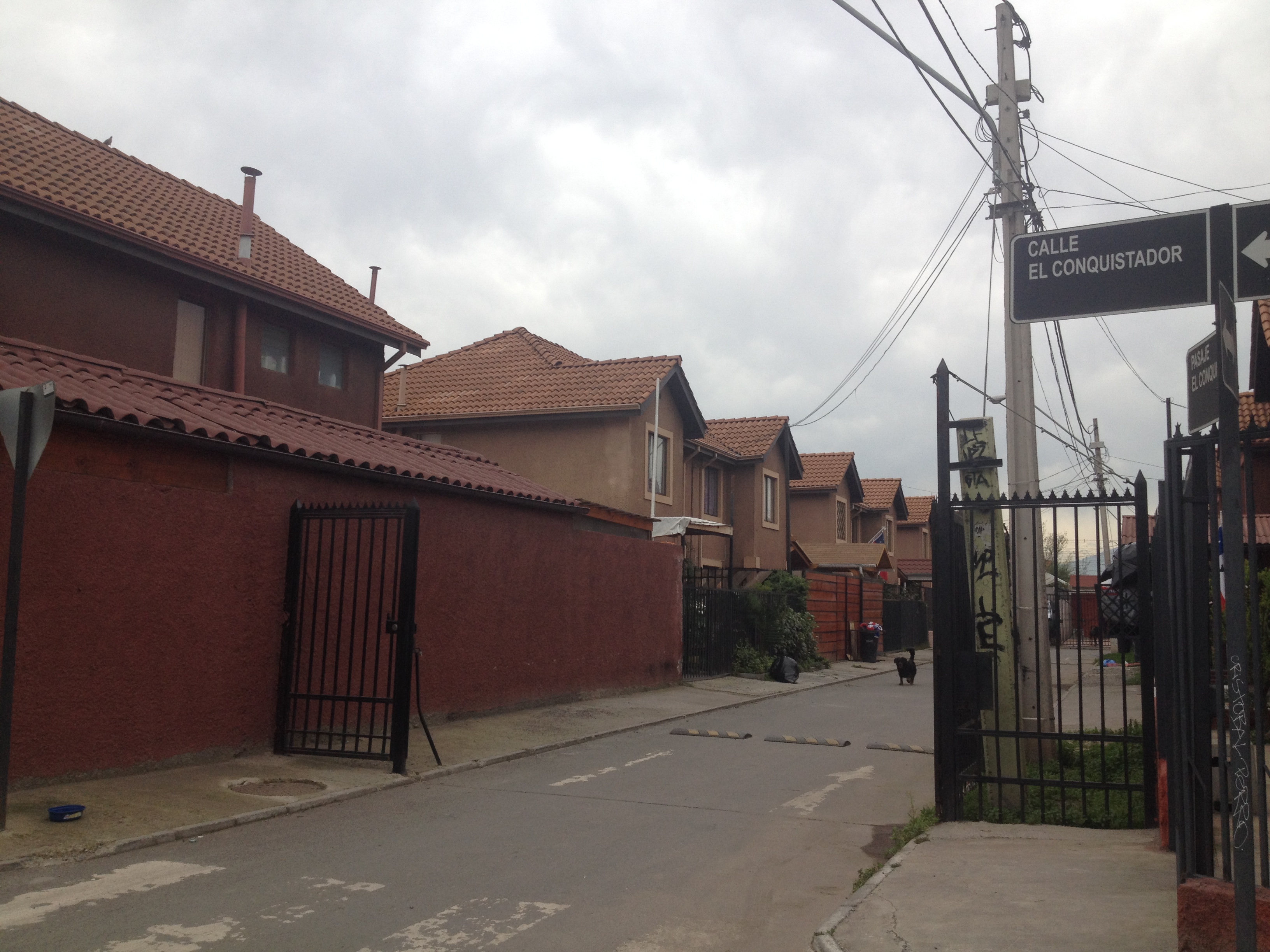
El temor que produce el delito reconfigura el habitar urbano en los vecindarios. Y es que, éste no remite a la experiencia directa del crimen, sino que a una multiplicidad de factores que se desenvuelven en la escala de la calle, del barrio y de la ciudad. La literatura ha dado cuenta que detrás del temor al delito se esconden diversos miedos y preocupaciones que experimentan los sujetos. Un aspecto menos explorado por los estudios urbanos y la criminología refiere a cómo este sentimiento, que se configura subjetivamente en la vida cotidiana, está imbricado en procesos y trasformaciones de escala ciudad. A partir de un estudio cualitativo realizado en la comuna de Maipú en Santiago de Chile, este artículo indaga en los juicios y valoraciones asociados al peligro y el delito y cómo estos se relacionan con los cambios urbanos y sociales percibidos en entornos vecinales. Los resultados muestran que, en un territorio afectado por profundas transformaciones urbanas, emerge la figura del “empeligrosamiento” hacia los desconocidos, el que constituye una forma de relacionamiento que resignifica las interacciones sociales, al mismo tiempo que moviliza la pérdida de control subjetivo sobre el espacio vecinal en el que se habita.
The fear of crime reconfigures urban living in neighborhoods. This is because it does not refer to the direct experience of crime, but to a multiplicity of factors that develop on the scale of the street, the neighborhood and the city. Literature has shown that behind the fear of crime are hidden various fears and concerns experienced by the subjects. An aspect less explored by urban studies and criminology refers to how this feeling, which is subjectively determined in daily life, is interwoven in processes and transformations of the city scale. From a qualitative study carried out in the commune of Maipú in Santiago, Chile, this article explores the judgments and evaluations that the subjects perceive and mean the danger and the crime and how these are related to the urban changes in their neighboring environments. The results show that, in a territory affected by urban transformations, the figure of the “empeligrosamiento” towards the unknown emerges, constitutes a form of relation that signifies social interactions at the same time as it sharpens the loss of subjective control over the neighborhood space in which it is inhabited.
O medo de que o crime producía reconfigurações na vida urbana dos bairros. Este medo não se refere à experiência direta do crime, mas a uma multiplicidade de fatores que se desenvolvem na escala da rua, do bairro e da cidade. A literatura tem mostrado que por trás do medo do crime estão escondidos vários medos e preocupações vividos pelos sujeitos. Um aspecto menos explorado pelos estudos urbanos e pela criminologia refere-se a como esse sentimento, que se configura no cotidiano, se entrelaça em processos e transformações da escala da cidade. A partir de um estudo qualitativo realizado na comuna de Maipú, em Santiago do Chile, este artigo investiga os julgamentos e avaliações que os sujeitos percebem do perigo e da criminalidade e como estes se relacionam com as mudanças urbanas nos ambientes de seus bairros. Os resultados mostram que, num território afetado por transformações urbanas, surge a figura do "empeligrosamiento" em relação aos estranhos, que constitui uma forma de relação que resignifica as interações sociais ao mesmo tempo em que aguça a perda do controle subjetivo sobre o espaço vizinho em que é habitado.
Referencias
ABELA, J. A. (2002). Las técnicas de análisis de contenido: una revisión actualizada. Andalucía: Fundación Centro de Estudios Andaluces.
ANDRESEN, M.A. (2006). “Crime Measures and the Spatial Analysis of Criminal Activity”. En: The British Journal of Criminology, 46(2): 258–285
ALEXANDER, C. y PAIN, R. (2012). “Urban security. Whose security? Everyday responses to urban fears”. En: Ceccato, V. (ed.), The Urban Fabric of Crime and Fear. Países Bajos: Springer.
ARMITAGE, R. y PASCOE, T. (2018). “La prevención del delito mediante el diseño ambiental”. En: Tenca, M. y Méndez, E. (eds.) Manual de Prevención del Delito y Seguridad Ciudadana. Buenos Aires: Ediciones Didot.
BAUMAN, Z. (2006). Confianza y temor en la ciudad. Vivir con extranjeros. Barcelona: Ed. Arcadia.
BRAGA, A. y CLARKE, R. (2014). “Explaining High-Risk Concentrations of Crime in the City: Social Disorganization, Crime Opportunities, and Important Next Steps”. En: Journal of Research in Crime and Delinquency, 51(4), 480–498.
BRUNTON-SMITH, I. y JACKSON, J. (2012). “Urban fear and its roots in Place”. En: Ceccato, V. (ed.), The Urban Fabric of Crime and Fear. Países Bajos: Springer.
CALDEIRA, T. P. R. (2009). Ciudad de muros. Barcelona: Editorial Gedisa.
CECCATO, V. y LUKYTE, N. (2011). “Safety and sustainability in a city in transition: the case of Vilnius, Lithuania”. En: Cities, 28(1), 83-94.
CECCATO, V. (2012). “The urban fabric of crime and fear”. En: Ceccato, V. (ed.), The Urban Fabric of Crime and Fear. Países Bajos: Springer.
COHEN, L.E., y FELSON, M. (1979). “Social change and crime rate trends: a routine activity approach”. En: American Sociological Review, 44(4), 588–608.
COLEMAN, A. (1985). Utopia on Trial: Vision and Reality in Planned Housing. Londres: Hilary Shipman.
DAMMERT, L. (2012). Fear and Crime in Latin America. Redefining State-Society Relations. Nueva York: Routledge.
DAMMERT, L. y SALAZAR, F. (2018). “Fear of crime in Latin America”. En: Lee, M. y Mythen, G. (eds.) The Routledge International Handbook of Fear of Crime. Londres/Nueva York: Routledge.
DAVIS, M. (2001). Mas allá de Blade Runner. Control urbano: la ecología del miedo. Barcelona: Virus.
DOUGLAS. M. (1966). Purity and Danger. An Analysis of Concepts on Pollution and Taboo. Londres /Nueva York: Routledge.
GAINEY, R., ALPER, M. y CHAPPELL, A.T. (2011). “Fear of Crime Revisited: Examining the Direct and Indirect Effects of Disorder, Risk Perception, and Social Capital”. En: American Journal of Criminal Justice, 36, 120-137.
GARLAND, D. (2008). “On the concept of moral panic”. En: Crime, Media, Culture, 4(1), 9–30.
GLÜCK, Z. y LOW, S. (2017). “A sociospatial framework for the anthropology of security”. En: Anthropological Theory, 17(3), 281–296.
HAINING, R. (2012). “Ecological analysis of Urban Offence and Offender data”. En: Ceccato, V. (ed.), The Urban Fabric of Crime and Fear. Países Bajos: Springer.
HILLIER, B. (1996). Space is the Machine. Cambridge: Cambridge University Press.
INSTITUTO NACIONAL DE ESTADÍSTICA (2018). XV Encuesta Nacional Urbana de Seguridad Ciudadana (ENUSC 2018). Presentación de resultados. Consultado en: https://www.ine.cl/docs/default-source/seguridad-ciudadana/publicaciones-y-anuarios/2018/s%C3%ADntesis-de-resultados-xv-enusc-2018.pdf?sfvrsn=11af55b6_2
JACOBS, J. (1961). The Death and Life of Great American Cities. Nueva York: Random House.
KESSLER, G. (2009). El sentimiento de inseguridad: sociología del temor al delito. Buenos Aires: Siglo XXI editores.
LANDMAN, K. (2012). “Reconsidering Crime and Urban fortification in South Africa”. En: Ceccato, V. (ed.), The Urban Fabric of Crime and Fear. Países Bajos: Springer.
LEE, M. y MYTHEN, G. (eds.) (2018). The Routledge International Handbook of Fear of Crime. Londres/Nueva York: Routledge.
LOUKAITOU-SIDERIS, A. (2012). “Safe on the move. The importance of the built environment”. En: Ceccato, V. (ed.), The Urban Fabric of Crime and Fear. Países Bajos: Springer.
LOW, S. (2003). Behind the Gates: Life, Security, and the Pursuit of Happiness in Fortress America. Nueva York: Routledge
LUNEKE, A. (2016). Inseguridad ciudadana y diferenciación social en el nivel micro-barrial: el caso del sector Santo Tomás, Santiago de Chile. En: Revista EURE, 42(125), 109-129.
LUPTON, D. (2006). “Sociology and risk”. En: Mythen, G. y Walklate, S. (eds.) Beyond the Risk Society: Critical Reflections on Risk and Human Security. Maidenhead: Open University Press.
MÁRQUEZ, F. B., y PÉREZ, F. P. (2008). “Spatial Frontiers and Neo-communitarian Identities in the City: The Case of Santiago de Chile”. En: Urban Studies, 45(7), 1461-1483.
MUNICIPALIDAD DE MAIPÚ (2015). Atlas Comunal de Maipú. Consultado en: http://www.municipalidadMaipú.cl/wp-content/uploads/2015/12/Atlas-2015.pdf
NEWMAN, O. (1972). Defensible Space: Crime Prevention Through Urban Design. Nueva York: Macmillan.
PAIN, R. (2000). “Place, social relations and the fear of crime: a review”. En: Progress in Human Geography, 24(3), 365–387.
RASSE, A. (2015). “Juntos, pero no revueltos. Procesos de integración social en fronteras residenciales entre hogares de distinto nivel socio económico”. Revista EURE - Revista De Estudios Urbano Regionales, 41(122), 125-143.
RICHARDS, K. y LEE, M. (2018). “Beyond moral panic: young people and fear of crime”. En: Lee, M. y Mythen, G. (eds.) The Routledge International Handbook of Fear of Crime. Londres/Nueva York: Routledge.
SABIDO, O. (2012). “Tres miradas sociológicas al extrañamiento del mundo”. En: Simmel, G. (2012), El Extranjero. Sociología del extraño. Barcelona Ediciones: Sequitur.
SALVO, E. (2018). Procesos urbanos, vínculos comunitarios e identidad barrial: Perspectivas de análisis territorial para la recuperación de la Villa San Luis de Maipú. Tesis para optar al grado de Magíster en Desarrollo Urbano, Pontificia Universidad Católica de Chile.
SAMPSON, R. (2012). Great American City: Chicago and the Enduring Neighborhood Effect. Chicago: The University of Chicago Press.
SMITH, M.J. y CORNISH, D.B. (Eds.). (2006). Secure and Tranquil Travel: Preventing Crime and Disorder on Public Transport. Londres: University College London (UCL) Jill Dando Institute of Crime Science.
TAYLOR, I. (1995). “Private homes and public others: an analysis of talk about crime in sub urban south Manchester in the mid-1990s”. En: Bristish Journals of Criminology, 35(2), 263-285.
WALKLATE, S. (2001). Fearful communities? En: Urban Studies, 38(5-6), 929-939.
WALKLATE, S. (2018). “Gender, violence and fear of crime: women as fearing subjects?”. En: Lee, M. y Mythen, G. (eds.) The Routledge International Handbook of Fear of Crime. Londres/Nueva York: Routledge.
VILALTA, C. y MUGGAH, R. (2016). “What Explains Criminal Violence in Mexico City? A Test of Two Theories of Crime”. En: Stability: International Journal of Security and Development, 5(1), 1.
WILSON, J.Q. y KELLING, G.L. (marzo 1982). Broken windows. The police and neighborhood safety. Consultado en: https://www.theatlantic.com/magazine/archive/1982/03/broken-windows/304465/
WIKSTRÖM, P.-O.H. (2011). Situational action theory. Oxford: Oxford University Press.
Dimensions
PlumX
Visitas a la página del resumen del artículo
Descargas
Cómo citar
Licencia
Derechos de autor 2020 Bitácora Urbano Territorial

Esta obra está bajo una licencia internacional Creative Commons Atribución 4.0.
El contenido y las opiniones incluidas en los trabajos publicados por Bitácora Urbano\Territorialson de responsabilidad exclusiva de sus autores para todos los efectos, y no comprometen necesariamente el punto de vista de la Revista. Cualquier restricción legal que afecte los trabajos y su contenido (escrito y/o gráfico) es responsabilidad exclusiva de quienes los firman.Bitácora Urbano\Territorial se reserva el derecho de realizar modificaciones al contenido escrito y/o gráfico de los trabajos que se van a publicar, a fin de adaptarlos específicamente a requerimientos de edición.
Bitácora Urbano\Territorial está publicada bajo Licencia de Atribución de Bienes Comunes Creativos (CC) 4.0 de Creative Commons. El envío de colaboraciones a Bitácora Urbano\Territorial implica que los autores conocen y adhieren a las condiciones establecidas en esa licencia.