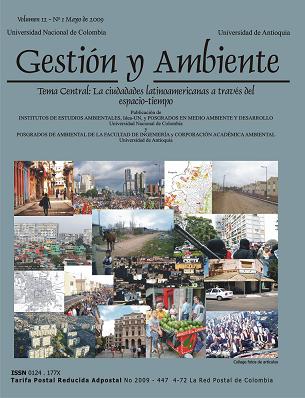
Publicado
BOGOTÁ: Social Housing versus Actors
Palabras clave:
Spatial production, Actors and Relations, Migrations, MetroVivienda. (es)Descargas
Visitas a la página del resumen del artículo
Descargas
Cómo citar
Licencia
Derechos de autor 2009 Gestión y Ambiente

Esta obra está bajo una licencia internacional Creative Commons Atribución-NoComercial-CompartirIgual 4.0.
Los artículos que sean publicados en la revista Gestión y Ambiente, también serán publicados en el sitio web http://www.revistas.unal.edu.co/index.php/gestion/index y en formatos electrónicos como PDF, HTML, XML, entre otros. Además, en diferentes redes sociales de difusión del conocimiento. Gestión y Ambiente adopta directrices de ética por Committee on Publication Ethics (COPE) sobre buenas prácticas de conducta (evitar conductas como plagio, falsificación, autoría ficticia, entre otros), describe conflictos de interés o en competencia, contribuciones de autoría y fuentes de financiación. Todo lo publicado se considerará propiedad de la revista Gestión y Ambiente, pero pueden usarse bajo la licencia Creative Commons “Reconocimiento-No Comercial-Compartir Igual International (BY-NC-SA) 4.0”