 Correo Electrónico
 DNINFOA - SIA
 Bibliotecas
 Convocatorias
 Identidad U.N.


Publicado
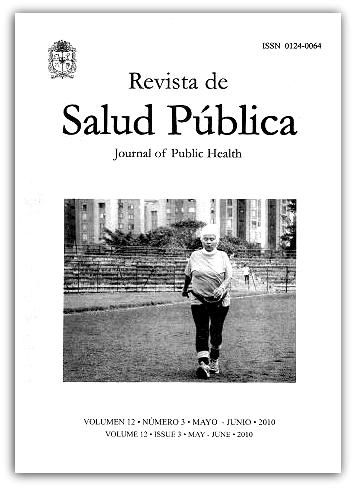
Apoyo social dignificante del adulto mayor institucionalizado. Medellin, 2008
Dignified social support for elderly institutionalised adults in Medellín, 2008
Palabras clave:
Apoyo social, relaciones familiares, anciano, institucionalización (es)Social support, family relationship, the aged, institutionalisation (en)
Descargas
Objetivo Analizar el apoyo social del adulto mayor residente en los Centros de Bienestar del Anciano de Medellín registrados en la Secretaría de Bienestar Social en el año 2008.
Materiales Estudio descriptivo transversal, que abordó algunas características relacionadas con el apoyo social recibido por 276 adultos mayores institucionalizados en 39 centros de protección social, con fuente de información primaria. El análisis de la información fue univariado y bivariado.
Resultados Los institucionalizados eran en su mayoría mujeres, con edades de 65-84 años, solteras o viudas, con nivel de educación primaria y secundaria; la mayor parte estaban afiliadas al régimen contributivo. Los principales motivos de institucionalización fueron: soledad, problemas de salud y por decisión familiar; ellos son visitados por sus hijos y otros familiares, y este apoyo fue valorado como satisfactorio, pero más de la mitad tenía sentimientos de soledad y la sexta parte manifestó humillaciones de sus seres queridos; es de anotar que una baja proporción reportó maltrato de sus cuidadores.
Conclusiones Las redes de apoyo social son fuertes dentro de la institución y perciben un menor maltrato por parte de los cuidadores institucionales que de los familiares. En general, la soledad es un aspecto que lleva a los adultos mayores a institucionalizarse, pero esta permanece en ellos, motivada en parte por el poco contacto con las familias y la mediana satisfacción con amigos y la misma institución, evidenciando su condición de desamparo y de vulnerabilidad social.
which addressed some characteristics related to the social support being received by 273 elderly people institutionalised in 37 social welfare centres. Univariate and bivariate analysis was applied to the data. Results The institutionalised people were mostly single or widowed women aged between 65 and 84 who had received primary and secondary education; most were affiliated to the contributory health regimen. Loneliness, health problems and family decision were the main causes for them having become institutionalised. They were visited by their children and other relatives and such support was rated
as being satisfactory; however, more than half of them had feelings of loneliness and one sixth claimed to be humiliated and insulted by their loved ones. It should be noted that a few of them reported being mistreated by their caregivers.Institutionalised elderly adults performed recreational activities, were satisfied with the support received from friends, with cohabitation and the pertinent institution.
Conclusions Social support networks were strong within the institution (i.e. Elderly Welfare Centres); the elderly seemed to receive greater abuse from family members and cohabitants than institutional caregivers. Loneliness generally leads
elderly adults to become institutionalised; however, once having entered an institution (being partly motivated by little family contact and average satisfaction with friends and the institution itself) their neglect and social vulnerability becomes
evident.
Cómo citar
APA
ACM
ACS
ABNT
Chicago
Harvard
IEEE
MLA
Turabian
Vancouver
Descargar cita
Visitas a la página del resumen del artículo
Descargas
Licencia
Derechos de autor 2010 Revista de Salud Pública

Esta obra está bajo una licencia internacional Creative Commons Atribución 4.0.
Esta revista provee acceso libre inmediato a su contenido bajo el principio de que hacer disponible gratuitamente investigación al publico apoya a un mayor intercambio de conocimiento global.
Todos los contenidos de esta revista, excepto dónde está identificado, están publicados bajo una Licencia Creative Commons Atribución 4.0.
















