Correo Electrónico
 DNINFOA - SIA
 Bibliotecas
 Convocatorias
 Identidad U.N.


Published
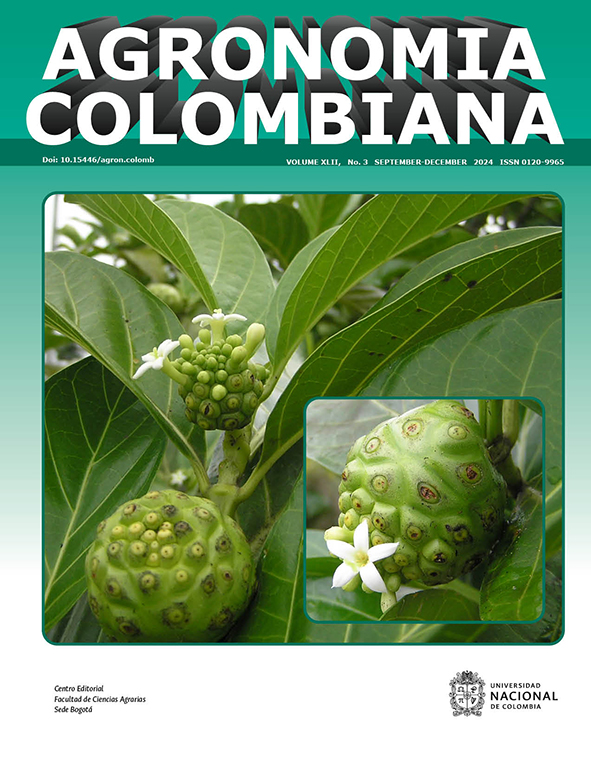
Environmental conditions during preharvest influence bioactive compounds in fruits: A review with emphasis on tropical and subtropical species
Las condiciones ambientales en precosecha influencian los compuestos bioactivos en frutos: una revisión, con énfasis en especies tropicales y subtropicales
DOI:
https://doi.org/10.15446/agron.colomb.v42n3.116951Keywords:
phytochemicals, human health, carotenoids, phenolics, vitamins, plant stress, temperature, light (en)fitoquímicos, salud humana, carotenoides, fenoles, vitaminas, estrés en plantas, temperatura, luz (es)
Downloads
A healthy diet rich in fruits and vegetables with high contents of bioactive compounds and antioxidants has become an essential habit among the human population, leading to a significant increase in the commercial trade of many fruits, especially of tropical and subtropical origins. The content of phytonutrients in fruits depends on various pre-harvest factors, especially agroclimatic conditions of temperature, light, and air humidity, as well as crop management and fruit maturity stage. Among the essential phytonutrients found in fruits that promote health and prevent diseases are the carotenoids (α-carotene, β-carotene, β-cryptoxanthin, lycopene, lutein, etc.), phenolic compounds (flavonoids, phenolic acids, among others), monoterpenes (i.e., limonene), isoprenoids (i.e., lipophilic vitamins), and ascorbic acid. Factors of temperature, light intensity, UV light, and water stress promote the synthesis of phytochemicals in fruits. In contrast, an excess of these factors can either increase or decrease the accumulation of these compounds in fruits. In addition to different abiotic stresses that result from climatic conditions and have inter- and intra-annual variations, the geographical locations, elevation, and genotype influence the content of bioactive compounds in fruits. There is a strong interest in manipulating changes in climate conditions as a factor in fruit quality, including the phytochemical content, while reducing yield losses. This review aimed to explore how preharvest environmental factors affect accumulation of phytochemicals in fruits, which are important for plant resilience and human health, with an emphasis on tropical and subtropical fruit species.
Una dieta saludable rica en frutas y verduras con altos contenidos en compuestos bioactivos y antioxidantes se ha convertido en un hábito alimenticio muy importante de la población, conllevando a un incremento significativo en la comercialización de muchos frutos, especialmente de origen tropical y subtropical. El contenido de estos fitonutrientes en frutos depende de los factores precosecha, especialmente de las condiciones agroclimáticas como temperatura, luz y humedad del aire, aparte del manejo del cultivo y de la madurez del fruto, entre otros. Dentro de los fitonutrientes más importantes están los carotenoides (α-caroteno, β-caroteno, β-criptoxantina, licopeno, luteína, entre otros), compuestos fenólicos (flavonoides, ácidos fenólicos, entre otros), monoterpenos (por ejemplo, limoneno), isoprenoides (por ejemplo, vitaminas lipofílicas), y el ácido ascórbico. Factores como temperatura, intensidad lumínica, luz UV y el estrés hídrico promueven la biosíntesis de fitoquímicos en los frutos, mientras que el exceso de estos factores puede aumentar o disminuir la acumulación de estos compuestos en los frutos. Aparte de los tipos de estrés abiótico por las condiciones climáticas, con sus variaciones interanuales e intraanuales, también la ubicación geográfica y elevacional y los diferentes genotipos influyen en los contenidos de compuestos bioactivos de los frutos. Existe un gran interés por aprovechar las condiciones del cambio climático como mecanismo para aumentar la calidad de los productos, incluyendo los contenidos de fitoquímicos, reduciendo al tiempo las pérdidas en los rendimientos de los cultivos. El objetivo de esta revisión fue explorar cómo los factores ambientales en precosecha afectan la acumulación de fitoquímicos en los frutos, los cuales son importantes para la salud humana y la resiliencia de las plantas, con un enfoque en especies tropicales y subtropicales.
References
Adiba, A., Khachtib, Y., Boutagayout, A., Hamdani, A., Kouighat, M., Haddioui, A., Hssaini, L., & Razouk, R. (2024). Bioactive compounds and quality attributes of pomegranate fruit as affected by continuous deficit irrigation. Vegetos, 1–14. https://doi.org/10.1007/s42535-024-00899-z
Aguirre-Becerra, H., Vazquez-Hernandez, M. C., Saenz de la O, D., Alvarado-Mariana, A., Guevara-Gonzalez, R. G., Garcia-Trejo, J. F., & Feregrino-Perez, A. A. (2021). Role of stress and defense in plant secondary metabolites production. In D. Pal, & A. K. Nayak (Eds.), Bioactive natural products for pharmaceutical applications (pp. 151–195). Springer, Cham. https://doi.org/10.1007/978-3-030-54027-2_5
Al-Kalbani, B. S., Al-Yahyai, R. A., Al-Sadi, A. M., & Al-Mamari, A-G. H. (2021). Physical and chemical fruit quality attributes of two pomegranate cultivars grown at varying altitudes of Al-Hajar Mountains in Oman. Journal of Agricultural and Marine Sciences, 26(2), 42–50. https://doi.org/10.53541/jams.vol26iss2pp42-50
Andreotti, C., Guerrero Chavez, G., & Zago, M. (2014). Quality of strawberry fruits cultivated in a highland area in South Tyrol (Italy): First results. Acta Horticulturae, 1049, 795−799. https://doi.org/10.17660/ActaHortic.2014.1049.126
Ávila-Sosa, R., Navarro-Cruz, A. R., Vera-López, O., Hernández-Carranza, P., & Ochoa-Velasco, C. E. (2016). Ultraviolet light stimulation of bioactive compounds with antioxidant capacity of fruits and vegetables. In M. W. Siddiqui, V. Bansal, & K. Prasad (Eds.), Plant secondary metabolites. Stimulation, extraction, and utilization. Apple Academic Press, Oakville. https://doi.org/10.1201/9781315366319
Ayer, D. B., & Shrestha, G. K. (2018). Altitudinal effects on fruit quality parameters of sweet orange (Citrus sinensis Osbeck). Nepalese Journal of Agricultural Sciences, 16, 25–29. https://www.cabidigitallibrary.org/doi/pdf/10.5555/20183359760
Azari, R., Tadmor, Y., Meir, A., Reuveni, M., Evenor, D., Nahon, S., Shlomo, H., Chen, L., & Levin, I. (2010). Light signaling genes and their manipulation towards modulation of phytonutrient content in tomato fruits. Biotechnology Advances, 28(1), 108–118. https://doi.org/10.1016/j.biotechadv.2009.10.003
Baiea, M. H. M., EL-Gioushy, S. F., & El-Badawy, H. E. M. (2018). Efficacy of kaolin and screen duo spraying on fruit sunburn, yield and fruit quality of Keitt mango fruits. Journal of Plant Production, 9(12), 1013–1020. https://doi.org/10.21608/jpp.2018.36619
Bang, H., Leskovar, D. I., Bender, D. A., & Crosby, K. (2004). Deficit irrigation impact on lycopene, soluble solids, firmness and yield of diploid and triploid watermelon in three distinct environments. The Journal of Horticultural Science and Biotechnology, 79, 885–890. https://doi.org/10.1080/14620316.2004.11511861
Beltrán, B., Estévez, R., Cuadrado, C., Jiménez, S., & Olmedilla-Alonso, B. (2012). Base de datos de carotenoides para valoración de la ingesta dietética de carotenos, xantofilas y de vitamina A; utilización en un estudio comparativo del estado nutricional en vitamina A de adultos jóvenes. Nutrición Hospitalaria, 27(4), 1334–1343. https://scielo.isciii.es/scielo.php?script=sci_arttext&pid=S0212-16112012000400055
Benavides, H. O., Simbaqueva, O., & Zapata, H. J. (2017). Atlas de radiación solar, ultravioleta y ozono de Colombia. Instituto de Hidrología, Meteorología y Estudios Ambientales (IDEAM). https://www.andi.com.co//Uploads/RADIACION.compressed.pdf
Benkeblia, N., Tennant, D. P. F., Jawandha, S. K., & Gill, P. S. (2011). Preharvest and harvest factors influencing the postharvest quality of tropical and subtropical fruits. In E. M. Yahia (Ed.), Postharvest biology and technology of tropical and subtropical fruits. Fundamental issues (pp. 112−141). Woodhead Publishing, Oxford. https://doi.org/10.1533/9780857093622.112
Bernjak, B., & Kristl, J. (2020). A review of tannins in berries. Agricultura Scientia, 17(1-2), 27−36. https://doi.org/10.18690/agricultura.17.1-2.27-36.2020
Borochov-Neori, H., Judeinstein, S., Harari, M., Bar-Yaakov, I., Patil, B. S., Lurie, S., & Holland, D. (2011). Climate effects on anthocyanin accumulation and composition in the pomegranate (Punica granatum L.) fruit arils. Journal of Agricultural and Food Chemistry, 59(10), 5325–5334. https://doi.org/10.1021/jf2003688
Bravo, S., García-Alonso, J., Martín-Pozuelo, G., Gómez, V., Santaella, M., Navarro-González, I., & Periago, M. J. (2012). The influence of postharvest UV-C hormesis on lycopene, β-carotene, and phenolic content and antioxidant activity of breaker tomatoes. Food Research International, 49(1), 296–302. https://doi.org/10.1016/j.foodres.2012.07.018
Breniere, T., Fanciullino, A.-L., Dumont, D., Le Bourvellec, C., Riva, C., Borel, P., Landrier, J.-F., & Bertin, N. (2024). Effect of longterm deficit irrigation on tomato and goji berry quality: From fruit composition to in vitro bioaccessibility of carotenoids. Frontiers in Plant Science, 15, Article 1339536. https://doi.org/10.3389/fpls.2024.1339536
Brito, C., Dinis, L.-T., Moutinho-Pereira, J., & Correia, C. (2019). Kaolin, an emerging tool to alleviate the effects of abiotic stresses on crop performance. Scientia Horticulturae, 250, 310−316. https://doi.org/10.1016/j.scienta.2019.02.070
Burgos, G., Amorós, W., Salas, E., Muñoa, L., Sosa, P., Díaz, C., & Bonierbale, M. (2012). Carotenoid concentrations of native Andean potatoes as affected by cooking. Food Chemistry, 133(4), 1131−1137. https://doi.org/10.1016/j.foodchem.2011.09.002
Caldwell, M. M., Björn, L. O., Bornman, J. F., Flint, S. D., Kulandaivelu, G., Teramura, A. H., & Tevini, M. (1998). Effects of increased solar ultraviolet radiation on terrestrial ecosystems. Journal of Photochemistry and Photobiology B: Biology, 46(1-3), 40–52. https://doi.org/10.1016/S1011-1344(98)00184-5
Cardeñosa, V., Girones-Vilaplana, A., Muriel, J. L., Moreno, D. A., & Moreno-Rojas, J. M. (2016). Influence of genotype, cultivation system and irrigation regime on antioxidant capacity and selected phenolics of blueberries (Vaccinium corymbosum L.). Food Chemistry, 202, 276–283. https://doi.org/10.1016/j.foodchem.2016.01.118
Cervantes, L., Ariza, M. T., Miranda, L., Lozano, D., Medina, J. J., Soria, C., & Martínez-Ferri, E. (2020). Stability of fruit quality traits of different strawberry varieties under variable environmental conditions. Agronomy, 10(9), Article 1242. https://doi.org/10.3390/agronomy10091242
Cetinkaya, H., Koc, M., & Kulak, M. (2016). Monitoring of mineral and polyphenol content in olive leaves under drought conditions: Application chemometric techniques. Industrial Crops and Products, 88, 78–84. https://doi.org/10.1016/j.indcrop.2016.01.005
Choudhury, S., Deka, B. C., Sema, A., & Kotoky, U. (2021). Effect of pruning and pre-harvest calcium spray on quality and shelf life of Peach cv. TA-170. Academic Journal of Agricultural Research, 9(9), 23−27. https://new.academiapublishing.org/journals/ajar/pdf/2021/Sep/Choudhury%20et%20al.pdf
Clevidence, B. A. (2010). Tropical and subtropical fruits: Phytonutrients and anticipated health benefits. Acta Horticulturae, 864, 485−498. https://doi.org/10.17660/ActaHortic.2010.864.66
Crisosto, C. H., Johnson, R. S., DeJong T., & Day, K. R. (1997). Orchard factors affecting postharvest stone fruit quality. HortScience, 32(5), 820−823. https://doi.org/10.21273/HORTSCI.32.5.820
Devin, S. R., Prudencio, Á. S., Mahdavi, S. M. E., Rubio, M., Martínez-García, P. J., & Martínez-Gómez, P. (2023). Orchard management and incorporation of biochemical and molecular strategies for improving drought tolerance in fruit tree crops. Plants, 12(4), Article 773. https://doi.org/10.3390/plants12040773
Dhuique-Mayer, C., Fanciullino, A. L., Dubois, C., & Ollitrault, P. (2009). Effect of genotype and environment on citrus juice carotenoid content. Journal of Agricultural and Food Chemistry, 57(19), 9160−9168. https://doi.org/10.1021/jf901668d
Dias, M. G., Borge, G. I. A., Kljak, K., Mandić, A. I., Mapelli-Brahm, P., Olmedilla-Alonso, B., Pintea, A. M., Ravasco, F., Šaponjac, V. T., Sereikait, J., Vargas-Murga, L., Vulić, J. J., & Meléndez-Martínez, A. J. (2021). European database of carotenoid levels in foods. Factors affecting carotenoid content. Foods, 10(5), Article 912. https://doi.org/10.3390/foods10050912
Dong, J., Gruda, N., Li, X., & Duan, Z. (2018). Effects of elevated CO2 on nutritional quality of vegetables: A review. Frontiers in Plant Science, 9, Article 924. https://doi.org/10.3389/fpls.2018.00924
Durán Zuazo, V. H., Lipan, L., Cárceles Rodríguez, B., Sendra, E., Franco Tarifa, D., Nems, A., Gálvez Ruiz, B., Carbonell-Barrachina, A. A., & García-Tejero, I. F. (2021). Impact of deficit irrigation on fruit yield and lipid profile of terraced avocado orchards. Agronomy for Sustainable Development, 41, Article 69. https://doi.org/10.1007/s13593-021-00731-x
Dzomeku, B. M., Wald, J. P., Wünsche, J. N., Nohr, D., & Biesalski, H. K. (2020). Climate change enhanced carotenoid pro-vitamin A levels of selected plantain cultivars. Plants, 9(4), Article 541. https://doi.org/10.3390/plants9040541
Etzbach, L., Pfeiffer, A., Weber, F., & Schieber, A. (2018). Characterization of carotenoid profiles in goldenberry (Physalis peruviana L.) fruits at various ripening stages and in different plant tissues by HPLC-DAD-APCI-MSn. Food Chemistry, 245, 508−517. https://doi.org/10.1016/j.foodchem.2017.10.120
Falagán, N., Artés, F., Artés-Hernández, F., Gómez, P. A., Pérez-Pastor, A., & Aguayo, E. (2015). Comparative study on postharvest performance of nectarines grown under regulated deficit irrigation. Postharvest Biology and Technology, 110, 24−32. https://doi.org/10.1016/J.POSTHARVBIO.2015.07.011
Fan, L., Dubé, C., & Khanizadeh, S. (2017). The effect of production systems on strawberry quality. In M. Soto-Hernandez, M. Palma-Tenango, & M. R. García-Mateos (Eds.), Phenolic compounds − Natural sources, importance and applications (pp. 197−213). InTechOpen. https://doi.org/10.5772/67233
Faria, A. F., Hasegawa, P. N., Chagas, E. A., Pío, R., Purgatto, E., & Mercadante, A. Z. (2009). Cultivar influence on carotenoid composition of loquats from Brazil. Journal of Food Composition and Analysis, 22(3), 196−203. https://doi.org/10.1016/j.jfca.2008.10.014
Felicetti, D. A., & Schrader L. E. (2008). Photooxidative sunburn of apples: Characterization of a third type of apple sunburn. International Journal of Fruit Science, 8(3), 160−172. https://doi.org/10.1080/15538360802526472
Fernando, H. R. P., Srilaong, V., Pongprasert, N., Boonyaritthongchai, P., & Jitareerat, P. (2014). Changes in antioxidant properties and chemical composition during ripening in banana variety ‘Hom Thong’ (AAA group) and ‘Khai’ (AA group). International Food Research Journal, 21(2), 749−754.
Fischer, G., Balaguera-López, H. E, Parra-Coronado, A., & Magnitskiy, S. (2024). Adaptation of fruit trees to different elevations in the tropical Andes. In S. Tripathi, R. Bhadouria, P. Srivastava, R. Singh, & R. S. Devi (Eds.), Ecophysiology of tropical plants - Recent trends and future perspectives (pp. 193−208). CRC Press. https://doi.org/10.1201/9781003335054
Fischer, G., Cleves-Leguizamo, J. A., & Balaguera-López, H. E. (2022). Impact of soil temperature on fruit species within climate change scenarios. Revista Colombiana de Ciencias Hortícolas, 16(1), Article e12769. https://doi.org/10.17584/rcch.2022v16i1.12769
Fischer, G., Ebert, G., & Lüdders, P. (2000). Provitamin A carotenoids, organic acids and ascorbic acid content of cape gooseberry (Physalis peruviana L.) ecotypes grown at two tropical altitudes. Acta Horticulturae, 531, 263−267. https://doi.org/10.17660/ActaHortic.2000.531.43
Fischer, G., Melgarejo, L. M., & Balaguera-López, H. E. (2022). Review on the impact of elevated CO2 concentrations on fruit species in the face of climate change. Ciencia y Tecnología Agropecuaria, 23(2), Article e2475. https://doi.org/10.21930/rcta.vol23_num2_art:2475
Fischer, G., & Orduz-Rodríguez, J. O. (2012). Ecofisiología en frutales. In G. Fischer (Ed.), Manual para el cultivo de frutales en el trópico (pp. 54–72). Produmedios.
Fischer, G., Orduz-Rodríguez, J. O., & Amarante, C. V. T. (2022). Sunburn disorder in tropical and subtropical fruits. A review. Revista Colombiana de Ciencias Hortícolas, 16(3), Article e15703. https://doi.org/10.17584/rcch.2022v16i3.15703
Fischer, G., & Parra-Coronado, A. (2020). Influence of some environmental factors on the feijoa (Acca sellowiana [Berg] Burret): A review. Agronomía Colombiana, 38(3), 388–397. https://doi.org/10.15446/agron.colomb.v38n3.88982
Fischer, G., Parra-Coronado, A., & Balaguera-López, H. E. (2022). Altitude as a determinant of fruit quality with emphasis on the Andean tropics of Colombia. A review. Agronomía Colombiana, 40(2), 212–227. https://doi.org/10.15446/agron.colomb.v40n2.101854
Fischer, G., Ramírez F., & Almanza-Merchán, P. J. (2012). Inducción floral, floración y desarrollo del fruto. In G. Fischer (Ed.), Manual para el cultivo de frutales en el trópico (pp. 120–140). Produmedios.
Fischer, G., Ramírez, F., & Casierra-Posada, F. (2016). Ecophysiological aspects of fruit crops in the era of climate change. A review. Agronomía Colombiana, 34(2), 190−199. https://doi.org/10.15446/agron.colomb.v34n2.56799
Flórez-Velasco, N. Fischer, G., & Balaguera-López. H. E. (2024). Photosynthesis in fruit crops of the high tropical Andes: A systematic review. Agronomía Colombiana, 42(2), Article e113887. https://doi.org/10.15446/agron.colomb.v42n2.113887
García-Pastor, M. E., Garrido-Auñón, F., Puente-Moreno, J., Díaz-Mula, H. M., Serrano, M., & Valero, D. (2024). The effects of preharvest treatments on the postharvest storage quality of different horticultural products. In S. Ali, S. A. Mir, B. N. Dar, & S. Ejaz (Eds.), Sustainable postharvest technologies for fruits and vegetables (Chapter 29). CRC Press. https://doi.org/10.1201/9781003370376
Gil, M. I. (2015). Pre- and postharvest strategies to enhance bioactive constituents of fruits and vegetables. Acta Horticulturae, 1079, 95−106. https://doi.org/10.17660/ActaHortic.2015.1079.8
Godoy, F., Olivos-Hernández, K., Stange, C., & Handford, M. (2021). Abiotic stress in crop species: Improving tolerance by applying plant metabolites. Plants, 10(2), Article 186. https://doi.org/10.3390/plants10020186
González, I. A., Osorio, C., Meléndez-Martínez, A. J., González-Miret, M. L., & Heredia, F. J. (2011). Application of tristimulus colorimetry to evaluate color changes during the ripening of Colombian guava (Psidium guajava L.) varieties with different carotenoid pattern. International Journal of Food Science and Technology, 46(4), 840−848. https://doi.org/10.1111/j.1365-2621.2011.02569.x
González-Chavira, M. M., Herrera-Hernández, M. G., Guzmán-Maldonado, H., & Pons-Hernández, J. L. (2018). Controlled water deficit as abiotic stress factor for enhancing the phytochemical content and adding-value of crops. Scientia Horticulturae, 234, 354–360. https://doi.org/10.1016/j.scienta.2018.02.049
Gruda, N. S. (2019). Assessing the impact of environmental factors on the quality of greenhouse produce. In L. Marcelis, & E. Heuvelink (Eds.), Achieving sustainable greenhouse cultivation (Chapter 14, pp. 1−32). Burleigh Dodds Science Publishing, Cambridge. https://doi.org/10.1201/9780429266744
Harris, J., Steenhuijsen, P. B., McMullin, S., Bajwa, B., Jager, I., & Brouwer, I. D. (2021). Fruits and vegetables for healthy diets: Priorities for food system research and action. Food Systems Summit Brief, prepared by Research Partners of the Scientific Group for the Food Systems Summit, March 2021. https://bonndoc.ulb.uni-bonn.de/xmlui/bitstream/handle/20.500.11811/9140/08_FSS_Brief_Fruits_Vegetables.pdf?sequence=1&isAllowed=y
Hewett, E. W. (2006). An overview of preharvest factors influencing postharvest quality of horticultural products. International Journal of Postharvest Technology and Innovation, 1(1), 4−15. https://doi.org/10.1504/IJPTI.2006.009178
Hinojosa-Gómez, J., San Martín-Hernández, C., Heredia, J. B., León-Félix, J., Osuna-Enciso, T., & Muy-Rangel, M. D. (2020). Anthocyanin induction by drought stress in the calyx of roselle cultivars. Molecules, 25(7), Article 1555. https://doi.org/10.3390/molecules25071555
Hossain, J., Hossain, M., Rabbani, G., Hafiz, M. H., & Islam, Z. (2020). Effects of preharvest fruit bagging on postharvest quality and shelf life of mango cv. Amrapali. Journal of Bangladesh Agricultural University, 18(1), 61–67. https://doi.org/10.5455/JBAU.94737
Islam, M. T., Shamsuzzoha, M., Rahman, M. S., Haque, M. M., & Alom, R. (2017). Influence of pre-harvest bagging on fruit quality of mango (Mangifera indica L.) cv. Mollika. Journal of Bioscience and Agriculture Research, 15, 1246–1254. https://doi.org/10.18801/jbar.150117.153
Jaramillo-Flores, M. E., González-Cruz, L., Cornejo-Mazón, M., Dorantes-Álvarez, L., Gutiérrez-López, G. F., & Hernández-Sánchez, H. (2003). Effect of thermal treatment on the antioxidant activity and content of carotenoids and phenolic compounds of cactus pear cladodes (Opuntia ficus-indica). Food Science and Technology International, 9(4), 271−278. https://doi.org/10.1177/108201303036093
Jatunov, S., Quesada, S., Díaz, C., & Murillo, E. (2010). Carotenoid composition and antioxidant activity of the raw and boiled fruit mesocarp of six varieties of Bactris gasipaes. Archivos Latinoamericanos de Nutrición, 60(1), 99−104. https://www.alanrevista.org/ediciones/2010/1/art-15/
Jideani, A. I. O., Silungwe, H., Takalani, T., Omolola, A. O., Udeh, H. O, & Anyasi, T. A. (2021). Antioxidant-rich natural fruit and vegetable products and human health. International Journal of Food Properties, 24(1), 41−67. https://doi.org/10.1080/10942912.2020.1866597
Kader, A. A. (2007). Biología y tecnología poscosecha: un panorama. In A. A. Kader (Ed.), Tecnología postcosecha de productos hortofrutícolas (3rd ed., pp. 43−54). University of California, Oakland. https://books.google.com.co/books?id=DqNJEAAAQBAJ&printsec=frontcover&hl=es&source=gbs_ge_summary_r&cad=0#v=onepage&q&f=false
Kagy, V., Duret, H., Mangeas, M., Bouteiller, M., Murcia, I, Pinau, R., Amir, H., Brewster, D., Olsson, S., White, A., Requejo-Jackman, C., Thorp, G., Clarck, C., & Woolf, A. B. (2024). Sun exposure and high preharvest fruit temperatures increase antioxidants, heat shock proteins and thermotolerance of mango fruit (Mangifera indica L.). New Zealand Journal of Crop and Horticultural Science, 52(4), 383−408. https://doi.org/10.1080/01140671.2024.2328112
Karagiannis, E., Tanou, G., Samiotaki, M., Michailidis, M., Diamantidis, G., Minas, I. S., & Molassiotis, A. (2016). Comparative physiological and proteomic analysis reveal distinct regulation of peach skin quality traits by altitude. Frontiers in Plant Science, 7, Article 1689. https://doi.org/10.3389/fpls.2016.01689
Kaur, B., Handa, A. K., & Mattoo, A. K. (2017). Enhancement of phytochemicals using next‐generation technologies for the production of high quality fruits and vegetables. In E. M. Yahia (Ed.), Fruit and vegetable phytochemicals: Chemistry and human health (2nd ed., pp. 817−832). https://doi.org/10.1002/9781119158042.ch37
Kim, M., Park, Y., Yun, S. K., Kim, S. S., Joa, J., Moon, Y.-E., & Do, G.-R. (2022). The anatomical differences and physiological responses of sunburned Satsuma mandarin (Citrus unshiu Marc.) fruits. Plants, 11(14), Article 1801. https://doi.org/10.3390/plants11141801
Konno, S., & Sugiura, T. (2024). Field observations of clear summer day fruit surface temperatures in apple and satsuma mandarin. Journal of Agricultural Meteorology, 80(2), 57−61. https://doi.org/10.2480/agrmet.D-23-00029
Kumar, P., Sethi, S., Sharma, R. R., Singh, S., Saha, S., Sharma, V. K., Sharma, S. K., & Varghese, E. (2019). Influence of altitudinal variation on the physical and biochemical characteristics of apple (Malus domestica). Indian Journal of Agricultural Science, 89(1), 145–152. https://doi.org/10.56093/ijas.v89i1.86197
Kyriacou, M. C., & Rouphael, Y. (2018). Towards a new definition of quality for fresh fruits and vegetables. Scientia Horticulturae, 234, 463–469. https://doi.org/10.1016/j.scienta.2017.09.046
Ladaniya, M. S. (2008). Preharvest factors affecting fruit quality and postharvest life. In M. S. Ladaniya (Ed.), Citrus fruit. Biology, technology and evaluation (pp. 79–101). Academic Press. https://doi.org/10.1016/B978-012374130-1.50006-1
Lechaudel, M., & Joas, J. (2007). An overview of pre harvest factors influencing mango fruit growth, quality and postharvest behaviour. Brazilian Journal of Plant Physiology, 19(4), 287−298. https://doi.org/10.1590/S1677-04202007000400004
Lei, W. Q., Khanzadeh, S., & Vigneault, C. (2007). Preharvest ways of enhancing the phytochemical content of fruits and vegetables. Stewart Postharvest Review, 3(5), 1–8. https://doi.org/10.2212/spr.2007.3.3
Leite, M. M. R., Bobrowski Rodrigues, D., Brison, R., Nepomuceno, F., Bento, M. L., & Oliveira, L. L. (2024). A scoping review on carotenoid profiling in Passiflora spp.: A vast avenue for expanding the knowledge on the species. Molecules, 29(7), Article 1585. https://doi.org/10.3390/molecules29071585
León-Burgos, A. F., Beltrán Cortes, G. Y., Barragán Pérez, A. L., & Balaguera-López, H. E. (2021). Distribution of photoassimilates in sink organs of plants of Solanaceas, tomato and potato. A review. Ciencia y Agricultura, 18(3), 79–97. https://doi.org/10.19053/01228420.v18.n3.2021.13566
Lester, G. E. (2006). Environmental regulation of human health nutrients (ascorbic acid, β-carotene, and folic acid) in fruits and vegetables. HortScience, 41(1), 59−64. https://doi.org/10.21273/HORTSCI.41.1.59
Lima, A. J. B., Alvarenga, A. A., Maita, M. R., Gebert, D., & Lima, E. B. (2013). Chemical evaluation and effect of bagging new peach varieties introduced in Southern Minas Gerais-Brazil. Food Science and Technology, 33(3), 434−440. https://doi.org/10.1590/S0101-20612013005000077
Liu, C., Han, X., Cai, L., Lu, X., Ying, T., & Jiang, Z. (2011). Postharvest UV-B irradiation maintains sensory qualities and enhances antioxidant capacity in tomato fruit during storage. Postharvest Biology and Technology, 59(3), 232–237. https://doi.org/10.1016/j.postharvbio.2010.09.003
Liu, C., Liu, M., Yang, L., & Zhang, X. (2022). Influence of ripening stage and meteorological parameters on the accumulation pattern of polyphenols in greengages (Prunus mume Sieb. Et Zucc) by widely targeted metabolomic. Current Research in Food Science, 5, 1837–1844. https://doi.org/10.1016/j.crfs.2022.10.013
Llerena, W., Samaniego, I., Angós, I., Brito, B., Ortiz, B., & Carrillo, W. (2019). Biocompounds content prediction in Ecuadorian fruits using a mathematical model. Foods, 8(8), Article 284. https://doi.org/10.3390/foods8080284
Loladze, I., Nolan, J. M., Ziska, L. H., & Knobbe, A. R. (2019). Rising atmospheric CO2 lowers concentrations of plant carotenoids essential to human health: A meta-analysis. Molecular Nutrition and Food Research, 63(15), Article 1801047. https://doi.org/10.1002/mnfr.201801047
Machado, M., Felizardo, C., Fernandes-Silva, A. A., Nunes, F. M., & Barros, A. (2013). Polyphenolic compounds, antioxidant activity and L-phenylalanine ammonia-lyase activity during ripening of olive cv. ‘Cobrançosa’ under different irrigation regimes. Food Research International, 51(1), 412–421. https://doi.org/10.1016/j.foodres.2012.12.056
Mertz, C., Gancel, A. L., Gunata, Z., Alter, P., Dhuique-Mayer, C., Vaillant, F., Pérez, A. M., Ruales, J., & Brat, P. (2009). Phenolic compounds, carotenoids and antioxidant activity of three tropical fruits. Journal of Food Composition and Analysis, 22(5), 381−387. https://doi.org/10.1016/j.jfca.2008.06.008
Miao, W., Luo, J., Liu, J., Howell, K., & Zhang, P. (2020). The influence of UV on the production of free terpenes in Vitis vinifera cv. Shiraz. Agronomy, 10(9), Article 1431. https://doi.org/10.3390/agronomy10091431
Monge-Rojas, R., & Campos, H. (2011). Tocopherol and carotenoid content of foods commonly consumed in Costa Rica. Journal of Food Composition and Analysis, 24(2), 202−216. https://doi.org/10.1016/j.jfca.2010.09.015
Moreno-Medina, B. L., Casierra-Posada, F., & García-Parra, M. A. (2024). Chlorophyll a fluorescence and phytochemical response in blackberry species (Rubus sp.) cultivated in the high tropics. Journal of Berry Research, 14(2), 73−87. https://www.semanticscholar.org/paper/Chlorophyll-a-fluorescence-and-phytochemical-in-sp)-Moreno%E2%80%93Medina-Casierra%E2%80%93Posada/f8c04f751b8da1f4c1d8afd3ac2f235eecf568a3
Moretti, C. L., Mattos, L.M., Calbo, A. G., & Sargent, S. A. (2010). Climate changes and potential impacts on postharvest quality of fruit and vegetable crops: A review. Food Research International, 43(7), 1824−1832. https://doi.org/10.1016/j.foodres.2009.10.013
Mphahlele, R. R., Fawole, O. A., Stander, M. A., & Opara, U. L. (2014). Preharvest and postharvest factors influencing bioactive compounds in pomegranate (Punica granatum L.) − A review. Scientia Horticulturae, 178, 114–123. https://doi.org/10.1016/j.scienta.2014.08.010
Muñoz, P., & Munné-Bosch, S. (2018). Photo-oxidative stress during leaf, flower and fruit development. Plant Physiology, 176(2), 1004−1014. https://doi.org/10.1104/pp.17.01127
Muñoz-Ordoñez, F. J., Gutiérrez-Guzmán, N., Hernández-Gómez, M. S., Fernández-Trujillo, J. P. (2023). The climactic conditions limit fruit production and quality in gulupa (Passiflora edulis Sims f. edulis) under integrated fertilization. South African Journal of Botany, 153, 147−156. https://doi.org/10.1016/j.sajb.2022.11.043
Musacchi, S., & Serra, S. (2018). Apple fruit quality: Overview on pre-harvest factors. Scientia Horticulturae, 234, 409−430. https://doi.org/10.1016/j.scienta.2017.12.057
Navarro, J. M., Botía, P., & Pérez-Pérez, J. G. (2015). Influence of deficit irrigation timing on the fruit quality of grapefruit (Citrus paradisi Mac.). Food Chemistry, 175, 329–336. https://doi.org/10.1016/j.foodchem.2014.11.152
Nicola, S., & Fontana, E. (2014). Fresh-cut produce quality: Implications for a systems approach. In W. J. Florkowski, R. L. Shewfelt, B. Brueckner, & S. E. Prussia (Eds.), Postharvest handling – A systems approach (3rd ed., pp. 217−273). Academic Press. https://doi.org/10.1016/B978-0-12-408137-6.00009-0
Ochoa-Velasco, C. E., Avila-Sosa, R., Navarro-Cruz, A. R., López- Malo, A., & Palou, E. (2017). Biotic and abiotic factors to increase bioactive compounds in fruits and vegetables. In A. M. Grumezescu, & A. M. Holban (Eds.), Food bioconversion (pp. 317−349). Academic Press. https://doi.org/10.1016/B978-0-12-811413-1.00009-7
Oliveira, D. S., Lobato, A. L., Ribeiro, S. M. R., Santana, A. M. C., Chaves, J. B. P., & Pinheiro-Sant'Ana, H. M. (2010). Carotenoids and vitamin C during handling and distributions of guava (Psidium guajava L), mango (Mangifera indica L.) and papaya (Carica papaya L.) at commercial restaurants. Journal of Agricultural and Food Chemistry, 58(10), 6166−6172. https://doi.org/10.1021/jf903734x
Oliveira, J. B., Egipto, R., Laureano, O., Castro, R., Pereira, G. E., & Ricardo-da-Silva, J. M. (2019). Climate effects on physicochemical composition of Syrah grapes at low and high altitude sites from tropical grown regions of Brazil. Food Research International, 121, 870−879. https://doi.org/10.1016/j.foodres.2019.01.011
Olmedilla, B., Granado, F., Blanco, I., & Rojas Hidalgo, E. (2005). Quantitation of provitamin-A and non-provitamin-A carotenoids in the fruits most commonly consumed in Spain. In K. Waldron, I. T. Johnson, & G. K. Fenwick (Eds.), Food and cancer prevention: Chemical and biological aspects (pp. 141−145). Woodhead Publishing Ltd., New Delhi. https://doi.org/10.1533/9781845698256.3.141
Ornelas-Paz, J. J., Yahia, E. M., & Gardea, A. A. (2008). Changes in external and internal color during postharvest ripening of ‘Manila’ and ‘Ataulfo’ mango fruit and relationship with carotenoid content determined by liquid chromatography−APcI+-time-of-flight mass spectrometry. Postharvest Biology and Technology, 50(2-3), 145−152. https://doi.org/10.1016/j.postharvbio.2008.05.001
Pataro, G., Donsí, G., & Ferrari, G. (2015). Postharvest UV-C and PL irradiation of fruits and vegetables. Chemical Engineering Transactions, 44, 31–36. https://doi.org/10.3303/CET1544006
Peng, H., Pang, Y., Liao, Q., Wang, F., & Qian, C. (2022). The effect of preharvest UV light irradiation on berries quality: A review. Horticulturae, 8(12), Article 1171. https://doi.org/10.3390/horticulturae8121171
Pérez, C. P., Ulrichs, C., Huyskens-Keil, S., Schreiner, M., Krumbein, A., Schwarz, D., & Kläring, H.-P. (2009). Composition of carotenoids in tomato fruits as affected by moderate UV-B radiation before harvest. Acta Horticulturae, 821, 217−222. https://doi.org/10.17660/ActaHortic.2009.821.24
Pérez de Camacaro, M., Ojeda, M., Giménez, A., González, M., & Hernández, A. (2017). Atributos de calidad en frutos de fresa ‘Capitola’ cosechados en diferentes condiciones climáticas en Venezuela. Bioagro, 29(3), 163–174.
Phillips, K. M., Pehrsson, P. R., Agnew, W. W., Scheett, A. J., Follett, J. R., Lukaski, H. C., & Patterson, K. Y. (2014). Nutrient composition of selected traditional United States Northern plains native American plant foods. Journal of Food Composition and Analysis 34(2), 136–152. https://doi.org/10.1016/j.jfca.2014.02.010
Porcu, O. M., & Rodríguez-Amaya, D. B. (2006). Variation in the carotenoid composition of acerola and its processed products. Journal of the Science of Food and Agriculture, 86(12), 1916−1920. https://doi.org/10.1002/jsfa.2562
Qaderi, M. M., Martel, A. B., & Strugnell, C. A. (2023). Environmental factors regulate plant secondary metabolites. Plants, 12, Article 447. https://doi.org/10.3390/plants12030447
Qian, M., Zhang, D., Yue, X., Wang, S., Li, X., & Teng, Y. (2013). Analysis of different pigmentation patterns in ‘Mantianhong’ (Pyrus pyrifolia Nakai) and ‘Cascade’ (Pyrus communis L.) under bagging treatment and postharvest UV-B/visible irradiation conditions. Scientia Horticulturae, 151, 75–82. https://doi.org/10.1016/j.scienta.2012.12.020
Qiu, X., Sun, G., Liu, F., & Hu, W. (2023). Functions of plant phytochrome signaling pathways in adaptation to diverse stresses. International Journal of Molecular Sciences, 24(17), Article 13201. https://doi.org/10.3390/ijms241713201
Ripoll, J., Urban, L., Staudt, M., Lopez-Lauri, F., Bidel, L. P. R., & Bertin, N. (2014). Water shortage and quality of fleshy fruits −Making the most of the unavoidable. Journal of Experimental Botany, 65(15), 4097–4117. https://doi.org/10.1093/jxb/eru197
Rodriguez-Amaya, D. A. (2001). A guide to carotenoid analysis in foods. ILSI Press, Washington, D.C.
Sarkar, T., Salauddin, M., Roy, A., Sharma, N., Sharma, A., Yadav, S., Jha, V., Rebezov, M., Khayrullin, M., Thiruvengadam, M., Chung, I.-M., Shariati, M. A., & Simal-Gandara J. (2023). Minor tropical fruits as a potential source of bioactive and functional foods. Critical Reviews in Food Science and Nutrition, 63(23), 6491−6536. https://doi.org/10.1080/10408398.2022.2033953
Schreiner, M., & Huyskens-Keil, S. (2006). Phytochemicals in fruit and vegetables: Health promotion and postharvest elicitors. Critical Reviews in Plant Sciences, 25(3), 267–278. https://doi.org/10.1080/07352680600671661
Schreiner, M., Korn, M., Stenger, M., Holzgreve, L., & Altmann, M. (2013). Current understanding and use of quality characteristics of horticulture products. Scientia Horticulturae, 163(5), 63–69. https://doi.org/10.1016/j.scienta.2013.09.027
Shi, L., Li, X., Fu, Y., & Li, C. (2023). Environmental stimuli and phytohormones in anthocyanin biosynthesis: A comprehensive review. International Journal of Molecular Sciences, 24(22), Article 16415. https://doi.org/10.3390/ijms242216415
Siddiqui, M. W. (Ed.) (2018). Preharvest modulation of postharvest fruit and vegetable quality. Academic Press. https://www.sciencedirect.com/book/9780128098073/preharvest-modulationof-postharvest-fruit-and-vegetable-quality#book-description
Stafussa, A. P., Maciel, G. M., Rampazzo, V., Bona, E., Makara, C. N., Demczuk Junior, B., & Haminiuk, C. W. I. (2018). Bioactive compounds of 44 traditional and exotic Brazilian fruit pulps: phenolic compounds and antioxidant activity. International Journal of Food Properties, 21(1), 106−118. https://doi.org/10.1080/10942912.2017.1409761
Sun, P., Mantri, N., Lou, H., Hu, Y., Sun, D., Zhu, Y., Dong, T., & Lu, H. (2012). Effects of elevated CO2 and temperature on yield and fruit quality of strawberry (Fragaria x ananassa Duch.) at two levels of nitrogen application. PLoS ONE, 7(7), Article e41000. https://doi.org/10.1371/journal.pone.0041000
Susanto, S., Abdila, A., & Sulistyaningrum, D. (2013). Growth and postharvest quality of mandarin (Citrus reticulate ‘Fremont’) fruit harvested from different altitudes. Acta Horticulturae, 975, 421–426. https://doi.org/10.17660/ActaHortic.2013.975.54
Thokar, N., Kattel, D., & Subedi, S. (2022). Effect of pre-harvest factors on postharvest quality of horticultural products: A review. Food and Agri Economics Review, 2(2), 92−95. http://doi.org/10.26480/faer.02.2022.92.95
Tinyane, P. P., Soundy, P., & Sivakumar, D. (2018). Growing ‘Hass’ avocado fruit under different coloured shade netting improves the marketable yield and affects fruit ripening. Scientia Horticulturae, 230, 43−49. https://doi.org/10.1016/j.scienta.2017.11.020
Toscano, S., Trivellini, A., Cocetta, G., Bulgari, R., Francini, A., Romano, D., & Ferrante, A. (2019). Effect of preharvest abiotic stresses on the accumulation of bioactive compounds in horticultural produce. Frontiers in Plant Science, 10, Article 1212. https://doi.org/10.3389/fpls.2019.01212
Treutter, D. (2010). Managing phenol contents in crop plants by phytochemical farming and breeding − Visions and constraints. International Journal of Molecular Sciences, 11(3), 807−857. https://doi.org/10.3390/ijms11030807
Voronkov, A. S., Ivanova, T. V., Kuznetsova, E. I., & Kumachova, T. Kh. (2019). Adaptations of Malus domestica Borkh. (Rosaceae) fruits grown at different altitudes. Russian Journal of Plant Physiology, 66(6), 922–931. https://doi.org/10.1134/S1021443719060153
Wahid, A., Gelani, S., Ashraf, M., & Foolad, M. R. (2007). Heat tolerance in plants: An overview. Environmental and Experimental Botany, 61(3), 199−223. https://doi.org/10.1016/j.envexpbot.2007.05.011
Wang, S. Y. (2006). Effect of pre-harvest conditions on antioxidant capacity in fruits. Acta Horticulturae, 712, 299−305. https://doi.org/10.17660/ActaHortic.2006.712.33
Wang, S. Y., Bunce J. A., & Maas, J. L. (2003). Elevated carbon dioxide increases contents of antioxidant compounds in field-grown strawberries. Journal of Agricultural and Food Chemistry, 51(15), 4315−4320. https://doi.org/10.1021/jf021172d
Wondracek, D. C., Faleiro, F. G., Sano, S. M., Vieira, R. F., & Agostini-Costa, T. S. (2011). Composição de carotenoides em passifloras do cerrado. Revista Brasileira de Fruticultura, 33(4), 1222−1228. https://doi.org/10.1590/S0100-29452011000400022
Yahia, E. M. (Ed.). (2018). Fruit and vegetable phytochemicals: Chemistry and human health (2nd ed., Vols. 1 and 2). John Wiley and Sons Ltd. https://doi.org/10.1002/9781119158042
Yahia, E. M., & Carrillo-López, A. (Eds.). (2019). Postharvest physiology and biochemistry of fruits and vegetables. Woodhead Publishing. https://doi.org/10.1016/C2016-0-04653-3
Yahia, E. M., García-Solís, P., & Maldonado Celis, M. E. (2019). Contribution of fruits and vegetables to human nutrition and health. In E. M. Yahia, & A. Carrillo-López (Eds.), Postharvest physiology and biochemistry of fruits and vegetables (pp. 19−45). Woodhead Publishing. https://doi.org/10.1016/B978-0-12-813278-4.00002-6
Yahia, E. M., Gardea-Béjar, A., Ornelas-Paz, J. J., Maya-Meraz, I. O., Rodríguez-Roque, M. J., Ríos-Velasco, C., Ornelas-Paz, J., &. Salas-Marina, M. A. (2019). Preharvest factors affecting postharvest quality. In E. M. Yahia (Ed.), Postharvest technology of perishable horticultural commodities (pp. 99−128). Elsevier. https://doi.org/10.1016/B978-0-12-813276-0.00004-3
Yahia, E. M., Ornelas-Paz, J. J., Brecht, J. K., García-Solís, P., & Maldonado Celis, M. E. (2023). The contribution of mango fruit (Mangifera indica) to human nutrition and health. Arabian Journal of Chemistry 16(7), Article 104860. https://doi.org/10.1016/j.arabjc.2023.104860
Yahia, E. M., Ornelas-Paz, J. J., Emanuelli, T., Jacob-Lopes, E., Queiroz Zepka, L., & Cervantes-Paz, B. (2018). Chemistry, stability, and biological actions of carotenoids. In E. M. Yahia (Ed.), Fruit and vegetable phytochemicals: Chemistry and human health (2nd ed., pp. 285−345). John Wiley and Sons Ltd. https://doi.org/10.1002/9781119158042.ch15
Yan, Y., Pico, J., Sun, B., Pratap-Singh, A., Gerbrandt, E., & Castellarin, S. D. (2021). Phenolic profiles and their responses to pre- and postharvest factors in small fruits: A review. Critical Reviews in Food Science and Nutrition, 63(19), 3574–3601. https://doi.org/10.1080/10408398.2021.1990849
Zakrevskii, V. V. (2018). Fruit in the prevention of cancer. Biomedical Journal of Scientific & Technical Research, 9(3), 7099−7101. https://doi.org/10.26717/BJSTR.2018.09.001793
Zhang, J., Satterfield, M. B., Brodbelt, J. S., Britz, S. J., Clevidence, B., & Novotny, J. A. (2003). Structural characterization and detection of kale flavonoids by electrospray ionization mass spectrometry. Analytical Chemistry, 75(23), 6401–6407. https://doi.org/10.1021/ac034795e
Zhao, Z., Wang, L., Chen, J., Zhang, N., Zhou, W., & Song, Y. (2024). Altitudinal variation of dragon fruit metabolite profiles as revealed by UPLC-MS/MS-based widely targeted metabolomics analysis. BMC Plant Biology, 24, Article 344. https://doi.org/10.1186/s12870-024-05011-w
Zoratti, L., Karppinen, K., Escobar, A. L., Häggman, H., & Jaakola, L. (2014). Light-controlled flavonoid biosynthesis in fruits. Frontiers in Plant Science, 5, Article 534. https://doi.org/10.3389/fpls.2014.00534
How to Cite
APA
ACM
ACS
ABNT
Chicago
Harvard
IEEE
MLA
Turabian
Vancouver
Download Citation
CrossRef Cited-by
1. Gerhard Fischer, Helber Enrique Balaguera-López, Javier Giovanni Álvarez-Herrera. (2026). The position in the canopy affects the quality of tropical and subtropical fruits. Agronomía Colombiana, 44(1), p.e122292. https://doi.org/10.15446/agron.colomb.v44n1.122292.
Dimensions
PlumX
Article abstract page views
Downloads
License
Copyright (c) 2024 Agronomía Colombiana

This work is licensed under a Creative Commons Attribution-NonCommercial-ShareAlike 4.0 International License.
© Centro Editorial de la Facultad de Ciencias Agrarias, Universidad Nacional de Colombia
Reproduction and quotation of material appearing in the journal is authorized provided the following are explicitly indicated: journal name, author(s) name, year, volume, issue and pages of the source. The ideas and observations recorded by the authors are their own and do not necessarily represent the views and policies of the Universidad Nacional de Colombia. Mention of products or commercial firms in the journal does not constitute a recommendation or endorsement on the part of the Universidad Nacional de Colombia; furthermore, the use of such products should comply with the product label recommendations.
The Creative Commons license used by Agronomia Colombiana journal is: Attribution - NonCommercial - ShareAlike (by-nc-sa)

Agronomia Colombiana by Centro Editorial of Facultad de Ciencias Agrarias, Universidad Nacional de Colombia is licensed under a Creative Commons Reconocimiento-NoComercial-CompartirIgual 4.0 Internacional License.
Creado a partir de la obra en http://revistas.unal.edu.co/index.php/agrocol/.