
Publicado
Simulation analysis of school road traffic characteristics
Análisis de simulación de las características del tráfico escolar
DOI:
https://doi.org/10.15446/dyna.v91n231.109853Palabras clave:
urban traffic; traffic characteristic; simulation analysis; sensitivity analysis; school commuting (en)tráfico urbano; características del tráfico; análisis de simulación; análisis de sensibilidad; transporte escolar (es)
Descargas
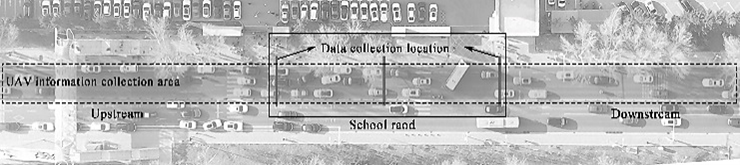
This study aims to identify key factors and sensitive intervals affect the school road traffic characteristics. We collect traffic data from the parking area and the school road (400-700 meters). The simulation is calibrated to ensure the error of outputs are within 1.5%. A sensitivity analysis method is proposed, it makes the multifactor comparable. The sensitivity factors of vehicle delay, queue length, and average speed are 1.44, 2.03, and 0.28 in school road, and the bottleneck road are 3.07, 4.44, and 0.65. The traffic indicators change more concentrated in bottleneck road but greater in school road. 6 scenarios are created to analyze school road traffic characteristics. Traffic flow (TF), number of parking spaces (NPS), and stopping time (ST) are selected as variables. Scenarios 1-3 are univariate, and scenarios 4-6 are bivariate. TF is the key factor with a sensitivity interval of [1300,1700].
El objetivo de este estudio es identificar los factores clave y las zonas sensibles que afectan a las características del tráfico de las carreteras escolares. Recogemos datos de tráfico de la zona de aparcamiento y de la carretera escolar (400-700 metros). La simulación se calibró y el error de salida se situó dentro del 1,5%. Se propone un enfoque de análisis de sensibilidad multifactorial. Los coeficientes de sensibilidad para el retraso de los vehículos, la longitud de las colas y la velocidad media son 1,44, 2,03 y 0,28 para la sección de los colegios y 3,07, 4,44 y 0,65 para la sección de los cuellos de botella. Las variables son el flujo de tráfico (TF), el número de plazas de aparcamiento (NPS) y el tiempo de parada (ST). Los escenarios 1-3 y 4-6 se establecieron como univariantes y bivariantes.TF fue el factor clave con un intervalo de sensibilidad de [1300,1700].
Referencias
Müller, S., Tscharaktschiew, S., and Haase, K., Travel-to-school mode choice modeling and pat-terns of school choice in urban areas, Journal of Transport Geography, 16(5), pp. 342-357, 2008. DOI: https://doi.org/10.1016/j.jtrangeo.2007.12.004.
Chen, J., Pang, M.B., and Yang, M., A cellular automaton model for the road in front of elementary and middle school gates during students going to school, Acta Physica Sinica, 63(9), art. 094502, 2014. DOI: https://doi.org/10.7498/aps.63.094502.
Bina, M., Confalonieri, F., Abati, D., Villa, D., and Biassoni, F., Analysis of traffic upon school departure: environment, behaviour, well-being and risk factors for road crashes, Journal of Transport & Health. 22, art. 101119, 2021. DOI: https://doi.org/10.1016/j.jth.2021.101119.
Daganzo, C.F., and Geroliminis, N., An analytical approximation for the macroscopic fundamental diagram of urban traffic, Transportation Research Part B, 42(9), pp. 771-781, 2008. DOI: https://doi.org/10.1016/j.trb.2008.06.008.
Jin, S., Luo, X., and Ma, D., Determining the breakpoints of fundamental diagrams, IEEE Intelligent Transportation Systems Magazine, 12(1), pp. 74-90, 2020. DOI: https://doi.org/10.1109/MITS.2018.2876576.
Qu, X., Wang, S., and Zhang, J., On the fundamental diagram for freeway traffic: a novel calibration approach for single-regime model, Transportation Research Part B, 73, pp. 91-102, 2015. DOI: https://doi.org/10.1016/j.trb.2015.01.001.
Peng, G., Wang, W., and Tan, H., Chaotic jam and phase transitions in heterogeneous lattice model integrating the delay characteristics difference with passing effect under autonomous and human-driven vehicles environment, Chaos Solitons and Fractals, 177, art. 114252, 2023. DOI: https://doi.org/10.1016/j.chaos.2023.114252.
Zhao, Y., Zheng, J., Wong, W., Wang, X., Meng, Y., and Liu, H., Various methods for queue length and traffic volume estimation using probe vehicle trajectories, Transportation Research part C, 107, pp. 70-91, 2019. DOI: https://doi.org/10.1016/j.trc.2019.07.008.
Bie, Y., Mao, C., and Yang, M., Development of vehicle delay and queue Length Models for adaptive traffic control at signalized roundabout, Procedia Engineering, 137, pp. 141-150, 2016. DOI: https://doi.org/10.1016/j.proeng.2016.01.244.
Chen, J., Jiang, R., Li, X., Hu, M., Jia, B., and Gao, Z., Morning commute problem with queue-length-dependent bottleneck capacity, Transportation Research Part B, 121, pp. 184-215, 2019. DOI: https://doi.org/10.1016/j.trb.2019.01.009.
Jiang, X., and Adeli, H., Freeway work zone traffic delay and cost optimization model, Journal of Transportation Engineering, 129(3), pp. 230-241. 2003. DOI: https://doi.org/10.1061/(ASCE)0733-947X(2003)129:3(230).
Chung, K., Rudjanakanoknad, J., and Cassidy, M.J., Relation between traffic density and capacity drop at three freeway bottlenecks, Transportation Research Part B-Methodological, 41(1), pp. 82-95, 2007. DOI: https://doi.org/10.1016/j.trb.2006.02.011.
Lee, J., and Lee, J., Preventing capacity drop at isolated merging bottleneck through variable speed limit control, Sensors and Materials, 31(10), pp. 3397-3407, 2019. DOI: https://doi.org/10.18494/sam.2019.2567.
Qi, H., Chen, M., and Wang, D., Recurrent and non-recurrent bottleneck analysis based on traffic state rank distribution, Transportmetrica B-Transport Dynamics, 7(1), pp. 275-294, 2019. DOI: https://doi.org/10.1080/21680566.2017.1401496.
Raju, N., Arkatkar, S., and Joshi, G., Examining effect of bottleneck on multi-lane roads at midblock sections using simulation, in: Proceedings of the American-Society-of-Civil-Engineers (ASCE) India Conference on Urbanization Challenges in Emerging Economies, New Delhi, D.C., pp. 697-705, 2018. DOI: https://doi.org/10.1061/9780784482025.071.
Wan, Q., Peng, G., Li, Z., and Inomata, F.H.T., Spatiotemporal trajectory characteristic analysis for traffic state transition prediction near expressway merge bottleneck, Transportation Research Part C, 117, art. 102682, 2020. DOI: https://doi.org/10.1016/j.trc.2020.102682.
Park, B., and Schneeberger, J., Microscopic simulation model calibration and validation: case study of VISSIM simulation model for a coordinated actuated signal system, Transportation Research Record: Journal of the Transportation Research Board, 1856, pp. 185-192, 2003. DOI: https://doi.org/10.3141/1856-20.
Pourmoradnasseri, M., Khoshkhah, K., and Hadachi, A., Real-time calibration of disaggregated traffic demand, arXiv, 2210, art. 17315, 2022. DOI: https://doi.org/10.48550/arXiv.2210.17315.
Pourmoradnasseri, M., Khoshkhah, K., and Hadachi, A., Leveraging IoT data stream for near-real-time calibration of city-scale microscopic traffic simulation, IET Smart Cites, 5(4), pp. 269-290, 2022. DOI: https://doi.org/10.5281/zenodo.8125656.
Hollander, Y., and Liu, R., The principles of calibrating traffic microsimulation models, Transportation, 35(3), pp. 347-362, 2008. DOI: https://doi.org/10.1007/s11116-007-9156-2.
Sacha, B., Kaveh, K., Mozhgan, P., Rumpler, R., and Hadachi, A., Near-real-time dynamic noise mapping and exposure assessment using calibrated microscopic traffic simulations, Transportation Research Part D, 124, art. 103922, 2023. DOI: https://doi.org/10.1016/j.trd.2023.103922.
Cassidy, M.J., Jang, K., and Daganzo, C.F., Macroscopic fundamental diagrams for freeway networks: theory and observation. Transportation Research Record, 2260(1), pp. 8-15, 2011. DOI: https://doi.org/10.3141/2260-02.
Di, S., Gao, J., Yang, D., Zuo, F., and Ozbay, K., Calibrating stochastic traffic simulation models for safety and operational measures based on vehicle conflict distributions obtained from aerial and traffic camera videos, Accident Analysis and Prevention, 179, art. 106878, 2022. DOI: https://doi.org/10.1016/j.aap.2022.106878.
Zang, Z., Xu, X., Qu, K., Chen, R., and Chen, A., Travel time reliability in transportation networks: A review of methodological developments, Transportation Research Part C, 143, art. 103866, 2022. DOI: https://doi.org/10.1016/j.trc.2022.103866.
Dalla, C.G., Krutein, K.F., Ranjbari, A., and Goodchild, A., Providing curb availability information to delivery drivers reduces cruising for parking, Scientific Reports, 12(1), art. 19355, 2022. DOI: https://doi.org/10.1038/s41598-022-23987-z.
Dai, S., Liu G., Zhu J., Gong, J., and Qu, X., On-street parking management strategies and practice, Urban Transport of China, 12, art. 6-11, 2014. DOI: https://doi.org/10.13813/j.cn11-5141/u.2014.01.007.
Cao, Y., Yang, Z.Z., and Zuo, Z.Y., The effect of curb parking on road capacity and traffic safety, European Transport Research Review, 9(1), art. 4, 2017. DOI: https://doi.org/10.1007/s12544-016-0219-3.
Mei, Z., and Chen, J., Modified motor vehicles travel speed models on the basis of curb parking setting under mixed traffic flow, Mathematical Problems in Engineering, 2, pp. 139-139, 2012. DOI: https://doi.org/10.1155/2012/351901.
Cheng, Q., Liu, Z., Lin, Y., and Zhou, X., An s-shaped three-parameter (S3) traffic stream model with consistent car following relationship, Transportation Research Part B: Methodological, 153, pp. 246-271, 2021. DOI: https://doi.org/j.trb.2021.09.004.
Saric, A., and Lovric, I., Improved volume-delay function for two-lane rural highways with impact of road geometry and traffic-flow heterogeneity, Journal of Transportation Engineering, Part A. Systems, 10, art. 147, 2021. DOI: https://doi.org/10.1061/JTEPBS.0000575.
Bally, M.M., Khairy, A.A., and Vien, L.L., Compatibility between delay functions and highway capacity manual on Iraqi highways, Open Engineering, 12(1), pp. 359-372, 2022. DOI: https://doi.org/10.1515/eng-2022-0022.
Ma, D., Wang, D., Bie, Y., Sun, F., and Jin, S., A method for queue length estimation in an urban street network based on roll time occupancy data, Mathematical Problems in Engineering, 9, pp. 285-292, 2012. DOI: https://doi.org/10.1155/2012/892575.
Aksoy, G., and Oeguet, K.S., Direct usage of occupancy data for multiregime speed-flow rate models, Journal of Transportation Engineering, Part A. Systems, 149(1), art. 04022112, 2023. DOI: https://doi.org/10.1061/JTEPBS.0000773.
Olstam, J., and Tapani, A., A review of guidelines for applying traffic simulation to level-of-service analysis. Procedia Social and Behavioral Sciences, 16(1), pp. 771-780, 2011. DOI: https://doi.org/10.1016/j.sbspro.2011.04.496.
Otkovic, I.I., Tollazzi, T., and Sraml, M., Calibration of microsimulation traffic model using neural network approach, Expert Systems with Applications, 40(15), pp. 5965-5974, 2013. DOI: https://doi.org/10.1016/j.eswa.2013.05.003.
Huang, F., Liu, P., Yu, H., and Wang, W., Identifying if VISSIM simulation model and SSAM provide reasonable estimates for field measured traffic conflicts at signalized intersections, Accident Analysis and Prevention, 50, pp. 1014-1024, 2013. DOI: http://dx.doi.org/10.1016/j.aap.2012.08.018.
Song, G., Yu, L., and Zhang, Y., Applicability of traffic microsimulation models in vehicle emissions estimates, Transportation Research Record: Journal of the Transportation Research Board, 2270, pp. 132-141, 2012. DOI: https://doi.org/10.3141/2270-16.
Dimensions
PlumX
Visitas a la página del resumen del artículo
Descargas
Cómo citar
Licencia
Derechos de autor 2024 DYNA

Esta obra está bajo una licencia internacional Creative Commons Atribución-NoComercial-SinDerivadas 4.0.
El autor o autores de un artículo aceptado para publicación en cualquiera de las revistas editadas por la facultad de Minas cederán la totalidad de los derechos patrimoniales a la Universidad Nacional de Colombia de manera gratuita, dentro de los cuáles se incluyen: el derecho a editar, publicar, reproducir y distribuir tanto en medios impresos como digitales, además de incluir en artículo en índices internacionales y/o bases de datos, de igual manera, se faculta a la editorial para utilizar las imágenes, tablas y/o cualquier material gráfico presentado en el artículo para el diseño de carátulas o posters de la misma revista.








