
Publicado
Free shipping in e-commerce: a systematic literature review
Envío gratuito en el comercio electrónico: una revisión sistemática de la literatura
DOI:
https://doi.org/10.15446/dyna.v92n235.116445Palabras clave:
e-commerce, mobile commerce, electronic commerce, e-business, online retailer, shipping fee, free shipping, shipping policy, free shipping effect, free shipping strategies (en)comercio electrónico, comercio móvil, negocio en línea, minorista en línea, tarifa de envío, envío gratuito, política de envío, efecto del envío gratuito, estrategias de envío gratuito (es)
Descargas
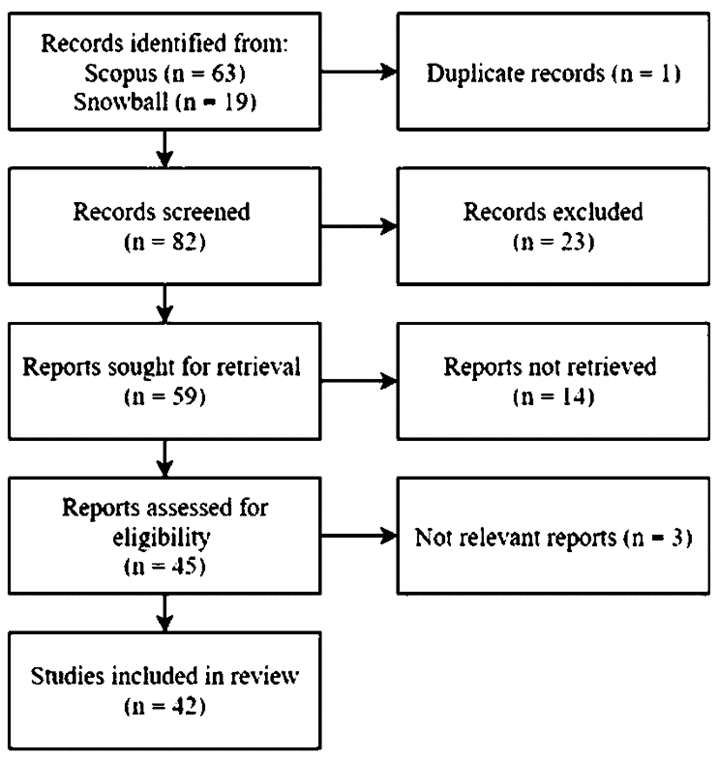
Free shipping in e-commerce has become a crucial strategy to attract and retain customers in a highly competitive markets, becoming a key advantage for companies seeking to meet evolving consumer demands. This study aims to perform a systematic review of the existing scientific literature on free shipping in e-commerce, following PRISMA guidelines and using the Scopus database to ensure an up-to-date perspective. The results show the critical role of free shipping in customer retention and acquisition, and to improve customer satisfaction, influence purchase and repurchase intention, and increase sales and market competitiveness. However, it was also observed that it can lead to an increase in returns.
El envío gratuito en el comercio electrónico se ha convertido en una estrategia crucial para atraer y retener clientes en mercados altamente competitivos, convirtiéndose en una ventaja clave para las empresas que buscan satisfacer las demandas cambiantes de los consumidores. Este estudio tiene como objetivo realizar una revisión sistemática de la literatura científica existente sobre el envío gratuito en el comercio electrónico, siguiendo las directrices PRISMA y utilizando la base de datos Scopus para garantizar una perspectiva actualizada.
Los resultados muestran el papel fundamental del envío gratuito en la retención y adquisición de clientes, así como en la mejora de la satisfacción del cliente, la influencia en la intención de compra y recompra, y el aumento de las ventas y la competitividad en el mercado. Sin embargo, también se observó que puede conducir a un incremento en las devoluciones.
Referencias
[1] Monteith, S., Bauer, M., Alda, M., Geddes, J., Whybrow, P.C., and Glenn, T., Increasing cybercrime since the pandemic: concerns for psychiatry, Psychiatry in the Digital Age, 1920. DOI: https://doi.org/10.1007/s11920-021-01228-w/Published
[2] Verbivska, L., Zhuk, O., Ievsieieva, O., Kuchmiiova, T., and Saienko, V., The role of e-commerce in stimulating innovative business development in the conditions of European integration, Financial and Credit Activity: Problems of Theory and Practice, 3(50), pp. 330–340, 2023. DOI: https://doi.org/10.55643/fcaptp.3.50.2023.3930
[3] Ahmad, S.N., and Callow, M., Free shipping or dollar off? The moderating effects of list price and e-shopping experience on consumer preference for online discount, International Journal of Electronic Commerce Studies, 9(1), pp. 55–70, 2018. DOI: https://doi.org/10.7903/ijecs.1542
[4] Boone, T., and Ganeshan, R., Exploratory analysis of free shipping policies of online retailers, International Journal of Production Economics, Jun., 2013, pp. 627–632. DOI: https://doi.org/10.1016/j.ijpe.2011.08.008
[5] Purwaningrum, E., Rimenda, T., Muchtar, A.M., and Mirati, E., Questioning online store customer loyalty, Journal of Southwest Jiaotong University, 57(5), pp. 308–317, 2022. DOI: https://doi.org/10.35741/issn.0258-2724.57.5.25
[6] Huang, Z.-B., and Han, J., How to flourish less developed areas’ e-businesses: focusing on free shipping effect, International Conference on Management Science and Engineering. In: Annual Conference Proceedings, Lan, H., and Y.H., (Eds.), IEEE Computer Society, 2014, pp. 131–138. DOI: https://doi.org/10.1109/ICMSE.2014.6930220
[7] Tsai, C.-A., and Chang, C.-W., Development of a partial shipping fees pricing model to influence consumers’ purchase intention under the COVID-19 pandemic, Energies (Basel), 15(5), art. 1846, 2022. DOI: https://doi.org/10.3390/en15051846
[8] Shao, X.F., Free or calculated shipping: impact of delivery cost on supply chains moving to online retailing, Int J Prod Econ, 191, pp. 267–277, 2017. DOI: https://doi.org/10.1016/j.ijpe.2017.06.022
[9] Lepthien, A., and Clement, M., Shipping fee schedules and return behavior, Mark Lett, 30(2), pp. 151–165, 2019. DOI: https://doi.org/10.1007/s11002-019-09486-8
[10] Martínez-López, F.J., Feng, C., Li, Y., and Sansó-Mata, M., Restoring the buyer–seller relationship through online return shipping: the role of return shipping method and return shipping fee, Electron Commer Res Appl, 54, art. 1170, 2022. DOI: https://doi.org/10.1016/j.elerap.2022.101170
[11] Kitchenham, B., Pearl-Brereton, O., Budgen, D., Turner, M., Bailey, J., and Linkman, S., Systematic literature reviews in software engineering - A systematic literature review. Information and Software Technology 51(1), pp. 7-15, 2009. DOI: https://doi.org/10.1016/j.infsof.2008.09.009
[12] Page, M.J., et al. The PRISMA 2020 statement: an updated guideline for reporting systematic reviews, Revista Española de Cardiología, 74(9), pp. 790-799, 2021. DOI: https://doi.org/10.1016/j.recesp.2021.06.016
[13] Kim, O., and Cheon, H.J., Product category and shopping options of logistic service quality, Journal of Distribution Science, 18(8), pp. 113–125, 2020. DOI: https://doi.org/10.15722/jds.18.8.202008.113
[14] Lewis, M., Singh, V., and Fay, S., An empirical study of the impact of nonlinear shipping and handling fees on purchase incidence and expenditure decisions, Marketing Science, 25(1), pp. 51–64, 2006. DOI: https://doi.org/10.1287/mksc.1050.0150
[15] Lewis, M., The effect of shipping fees on customer acquisition, customer retention, and purchase quantities, Journal of Retailing, 82(1), pp. 13–23, 2006. DOI: https://doi.org/10.1016/j.jretai.2005.11.005
[16] Sainathan, A., Customer differentiation with shipping as an ancillary service? Free service, prioritization, and strategic delay. Decision Sciences, 49(4), pp. 690–727, 2018. DOI: https://doi.org/10.1111/deci.12285
[17] Bower, A.B., and Maxham, J.G., Return shipping policies of online retailers: normative assumptions and the long-term consequences of fee and free returns, J Mark, 76(5), pp. 110–124, 2012. DOI: https://doi.org/10.1509/jm.10.0419
[18] Tandon, U., Mittal, A., and Manohar, S., Examining the impact of intangible product features and e-commerce institutional mechanics on consumer trust and repurchase intention. Electronic Markets, 31(4), pp. 945–964, 2021. DOI: https://doi.org/10.1007/s12525-020-00436-1
[19] Shehu, E., Papies, D., and Neslin, S.A., Free shipping promotions and product returns. Journal of Marketing Research, 57(4), pp. 640–658, 2020. DOI: https://doi.org/10.1177/0022243720921812
[20] Rofin, T.M., and Mahanty, B., Fulfillment mode selection for Indian online sellers under free and flat rate shipping policies. Electronic Commerce Research, 21(2), pp. 263–296, 2021. DOI: https://doi.org/10.1007/s10660-019-09348-5
[21] Nichifor, E., Lixăndroiu, R.C., Sumedrea, S., Chițu, I.B., and Brătucu, G., How can smes become more sustainable? Modelling the m-commerce consumer behaviour with contingent free shipping and customer journey’s touchpoints optimization. Sustainability (Switzerland), 13(12), art. 126845, 2021. DOI: https://doi.org/10.3390/su13126845
[22] El Kihal, S., and Shehu, E., It’s not only what they buy, it’s also what they keep: linking marketing instruments to product returns. Journal of Retailing, 98(3), pp. 558–571, 2022. DOI: https://doi.org/10.1016/j.jretai.2022.01.002
[23] Yao, Y., and Zhang, J., Pricing for shipping services of online retailers: analytical and empirical approaches. Decis Support Syst, 53(2), pp. 368–380, 2012. DOI: https://doi.org/10.1016/j.dss.2012.01.014
[24] Gümüş, M., Li, S., Oh, W., and Ray, S., Shipping fees or shipping free? A tale of two price partitioning strategies in online retailing. Prod Oper Manag, 22(4), pp. 758–776, 2013. DOI: https://doi.org/10.1111/j.1937-5956.2012.01391.x
[25] Frischmann, T., Hinz, O., and Skiera, B., Retailers’ use of shipping cost strategies: free shipping or partitioned prices? International Journal of Electronic Commerce, 16(3), pp. 65–88, 2012. DOI: https://doi.org/10.2753/JEC1086-4415160303
[26] Kapoor, A.P., and Vij, M., Following you wherever you go: mobile shopping ‘cart-checkout’ abandonment. Journal of Retailing and Consumer Services, 61, art. 102553, 2021. DOI: https://doi.org/10.1016/j.jretconser.2021.102553
[27] Fatta, D.D., and Lu, D.D., Conversion rate determinants in e-commerce websites. What about moderation effects? International Journal of Electronic Marketing and Retailing, 9(4), pp. 366–377, 2018. DOI: https://doi.org/10.1504/IJEMR.2018.094990
[28] Ma, S., Fast or free shipping options in online & Omni-channel retail? The mediating role of uncertainty on satisfaction & purchase intentions. International Journal of Logistics Management, 28(4), pp. 1099–1122, 2017. DOI: https://doi.org/10.1108/IJLM-05-2016-0130
[29] Kwon, K., and Cheong, T., A minimax distribution-free procedure for a newsvendor problem with free shipping, Eur J Oper Res, 232(1), pp. 234–240, 2014. DOI: https://doi.org/10.1016/j.ejor.2013.07.004
[30] Guo, L., and Shang, Y., Decision-Making of Cross-Border E-Commerce platform supply chains considering information sharing and free shipping. Sustainability (Switzerland), 15(4), art. 43350, 2023. DOI: https://doi.org/10.3390/su15043350
[31] Chang, S., Dong, Y., and Wang, X., Optimal shipping policy in retail competition and its effect on customers. Electron Commer Res Appl, 45, art. 101020, 2021. DOI: https://doi.org/10.1016/j.elerap.2020.101020
[32] Xue, M., and He, L., Spatial pricing and product allocation in online retailing, Naval Research Logistics, 67(8), pp. 670–684, 2020. DOI: https://doi.org/10.1002/nav.21945
[33] Wang, Y.-Y., and Li, J., Research on pricing, service and logistic decision-making of E-supply chain with ‘Free Shipping’ strategy. Journal of Control and Decision, 5(4), pp. 319–337, 2018. DOI: https://doi.org/10.1080/23307706.2017.1391138
[34] Song, J., Yin, Y., and Huang, Y., A coordination mechanism for optimizing the contingent-free shipping threshold in online retailing. Electron Commer Res Appl, 26, pp. 73–80, 2017. DOI: https://doi.org/10.1016/j.elerap.2017.10.001
[35] Hua, G., Wang, S., and Cheng, T.C.E., Optimal order lot sizing and pricing with free shipping, Eur J Oper Res, 218(2), pp. 435–441, 2012. DOI: https://doi.org/10.1016/j.ejor.2011.11.024
[36] Niu, B., Xu, H., and Xie, F., Free shipping in cross-border supply chains considering tax disparity and carrier’s pricing decisions, Transp Res E Logist Transp Rev, 152, 2021. DOI: https://doi.org/10.1016/j.tre.2021.102369
[37] Zhou, Y., and Zhang, Y., Optimal strategy for e-tailer issuing diamond card considering shipping policy, Comput Ind Eng, 150, art. 106877, 2020. DOI: https://doi.org/10.1016/j.cie.2020.106877
[38] Kulkarni, A.A., No shipping fees or free shipping? Impact of temporal proximity on the relative effectiveness of promotional framing. Journal of Promotion Management, 26(1), pp. 50–74, 2020. DOI: https://doi.org/10.1080/10496491.2019.1612493
[39] Hua, Z., Hou, H., and Bian, Y., Optimal shipping strategy and return service charge under no-reason return policy in online retailing. IEEE Trans Syst Man Cybern Syst, 47(12), pp. 3189–3206, 2017. DOI: https://doi.org/10.1109/TSMC.2016.2564920
[40] Meng, Q.-C., Zhang, T., Li, M., and Rong, X.-X., Optimal order strategy in uncertain demands with free shipping option. Discrete Dyn Nat Soc, 2014, art. 578280, 2014. DOI: https://doi.org/10.1155/2014/578280
[41] Becerril-Arreola, R., Leng, M., and Parlar, M., Online retailers’ promotional pricing, free-shipping threshold, and inventory decisions: a simulation-based analysis, Eur J Oper Res, 230(2), pp. 272–283, 2013. DOI: https://doi.org/10.1016/j.ejor.2013.04.006
[42] Li, Y., Li, G., Tayi, G.K., and Cheng, T.C.E., Return shipping insurance: free versus for-a-fee?, Int J Prod Econ, 235, art. 108110, 2021. DOI: https://doi.org/10.1016/j.ijpe.2021.108110
[43] Wang, L., and Bae, S., How to avoid the free shipping pitfall? Changing consumer attitudes from the perspective of information interaction, Electron Commer Res Appl, 42, art. 100996, 2020. DOI: https://doi.org/10.1016/j.elerap.2020.100996
[44] Tang, Z., Hua, G., Cheng, T.C.E., Li, X., and Dong, J., Have your cake and eat It? Price discount programs under the membership free shipping policy in online retailing. Journal of Theoretical and Applied Electronic Commerce Research, 19(1), pp. 209–231, 2024. DOI: https://doi.org/10.3390/jtaer19010012
[45] Huang, W.-H., Shen, G.C., and Liang, C.-L., The effect of threshold free shipping policies on online shoppers’ willingness to pay for shipping. Journal of Retailing and Consumer Services, 48, pp. 105–112, 2019. DOI: https://doi.org/10.1016/j.jretconser.2019.01.015
[46] Lu, T., Lu, X., and Dou, Y., The little bid more, the Merrier? Quantifying the effects of filler-item recommendations in contingent free shipping. Electron Commer Res Appl, 61, art. 101299, 2023. DOI: https://doi.org/10.1016/j.elerap.2023.101299
Dimensions
PlumX
Visitas a la página del resumen del artículo
Descargas
Cómo citar
Licencia
Derechos de autor 2025 DYNA

Esta obra está bajo una licencia internacional Creative Commons Atribución-NoComercial-SinDerivadas 4.0.
El autor o autores de un artículo aceptado para publicación en cualquiera de las revistas editadas por la facultad de Minas cederán la totalidad de los derechos patrimoniales a la Universidad Nacional de Colombia de manera gratuita, dentro de los cuáles se incluyen: el derecho a editar, publicar, reproducir y distribuir tanto en medios impresos como digitales, además de incluir en artículo en índices internacionales y/o bases de datos, de igual manera, se faculta a la editorial para utilizar las imágenes, tablas y/o cualquier material gráfico presentado en el artículo para el diseño de carátulas o posters de la misma revista.








