Publicado
Effect of solid fermentation with Rhizopus oryzae on coffee pulp to obtain a food product
Efecto de la fermentación sólida con Rhizopus oryzae en pulpa de café para obtención de un producto alimentario
DOI:
https://doi.org/10.15446/dyna.v92n235.116626Palabras clave:
Aprovechamiento de subproductos, Fermentación en estado sólido, Pulpa de café, Rhizopus oryzae (es)by-product utilization, solid state fermentation, coffee pulp, Rhizopus oryzae (en)
Descargas
La pulpa de café es uno de los subproductos más voluminoso en el tratamiento húmedo del grano. Con el propósito de dar un mejor aprovechamiento de este subproducto, se le realizó un proceso de fermentación en estado sólido (FES) con Rhizopus oryzae (MUCL 28168). En el proceso de FES se evaluó el efecto del pH y la fuente de carbono sobre el contenido de compuestos nutricionales y taninos condensados. Aplicando un diseño factorial, se encontró que la interacción de los factores tuvo un efecto significativo (p < 0,05) sobre el contenido de proteínas, azúcares y taninos condensados, mientras que el contenido de fenoles y la capacidad antioxidante se vio afectada únicamente por el pH. Las condiciones óptimas para el proceso de fermentación fueron pH 6, fuente de carbono del 75%, temperatura de 32 °C y 28 h de proceso. Se logró obtener una infusión de pulpa de café con notas dulces, a miel y madera. El proceso SSF redujo los taninos condensados en la pulpa de café hasta en un 60%, lo que indica su eficacia en la liberación de compuestos funcionales y la reducción de factores antinutricionales.
Coffee pulp is one of the most voluminous by-products in the wet processing of coffee beans. To maximize the use of this by-product, we conducted a solid-state fermentation (SSF) process with Rhizopus oryzae (MUCL 28168). In the SSF process, the effect of pH and carbon source on the content of nutritional compounds and condensed tannins was evaluated. Applying a factorial design revealed a significant (p < 0.05) interaction of factors affecting protein content, sugars, and condensed tannins, while phenol content and antioxidant capacity were only impacted by pH. The optimum conditions for the fermentation process were pH 6, 75% carbon source, temperature of 32 °C, and 28 h of processing. A coffee pulp infusion with sweet, honey, and woody notes was obtained. The SSF process reduced condensed tannins in coffee pulp by up to 60%, indicating its effectiveness in releasing functional compounds and reducing anti-nutritional factors.
Recibido: 17 de septiembre de 2024; Revisión recibida: 11 de diciembre de 2024; Aceptado: 27 de enero de 2025
Abstract
Coffee pulp is one of the most voluminous by-products in the wet processing of coffee beans. To maximize the use of this by-product, we conducted a solid-state fermentation (SSF) process with Rhizopus oryzae (MUCL 28168). In the SSF process, the effect of pH and carbon source on the content of nutritional compounds and condensed tannins was evaluated. Applying a factorial design revealed a significant (p < 0.05) interaction of factors affecting protein content, sugars, and condensed tannins, while phenol content and antioxidant capacity were only impacted by pH. The optimum conditions for the fermentation process were pH 6, 75% carbon source, temperature of 32 °C, and 28 h of processing. A coffee pulp infusion with sweet, honey, and woody notes was obtained. The SSF process reduced condensed tannins in coffee pulp by up to 60%, indicating its effectiveness in releasing functional compounds and reducing anti-nutritional factors.
Keywords:
by-product utilization, solid state fermentation, coffee pulp, Rhizopus oryzae.Resumen
La pulpa de café es uno de los subproductos más voluminoso en el tratamiento húmedo del grano. Con el propósito de dar un mejor aprovechamiento de este subproducto, se le realizó un proceso de fermentación en estado sólido (FES) con Rhizopus oryzae (MUCL 28168). En el proceso de FES se evaluó el efecto del pH y la fuente de carbono sobre el contenido de compuestos nutricionales y taninos condensados. Aplicando un diseño factorial, se encontró que la interacción de los factores tuvo un efecto significativo (p < 0,05) sobre el contenido de proteínas, azúcares y taninos condensados, mientras que el contenido de fenoles y la capacidad antioxidante se vio afectada únicamente por el pH. Las condiciones óptimas para el proceso de fermentación fueron pH 6, fuente de carbono del 75%, temperatura de 32 °C y 28 h de proceso. Se logró obtener una infusión de pulpa de café con notas dulces, a miel y madera. El proceso SSF redujo los taninos condensados en la pulpa de café hasta en un 60%, lo que indica su eficacia en la liberación de compuestos funcionales y la reducción de factores antinutricionales.
Palabras clave:
Aprovechamiento de subproductos, Fermentación en estado sólido, Pulpa de café, Rhizopus oryzae.1. Introducción
Coffee is one of Colombia’s main export products, making it the third largest producer in the world with an annual production of 11.1 million 60 kg bags of green coffee in 2022 [1]. Despite increasing demand, the coffee sector faces significant challenges because only 5% of the harvested coffee cherries are used to produce the beverage [2]. The remaining 95% results in by-products such as pulp, mucilage, cisco, pasilla, borage, and coffee stalks [2].
Coffee pulp, a major by-product of wet coffee processing, accounts for 42% of the fruit's weight on a wet basis, as noted by Acevedo & Penaloza [3]. Traditional disposal methods that involve water lead to severe environmental issues, including contamination of nearby water sources, ecosystem imbalances, and adverse impacts on human health, as well as on local flora and fauna [4,5]. To mitigate these effects, covered pits have been implemented for pulp disposal; however, their effectiveness is limited due to the large volume of pulp produced.
Developing countries often lack the necessary technology and expertise to effectively utilize coffee residues. Consequently, various alternatives have been explored to valorize coffee residues, including their use in composting, animal feed, mushroom substrates, and the production of specialized beverages and infusions. These practices have somewhat increased the market value of coffee residues [6]. However, their application in the food industry is limited by the presence of anti-nutritional compounds such as condensed tannins [7]. Biotechnological processes, such as solid fermentation, are recommended to reduce these compounds to acceptable levels and to release high-value nutritional compounds.
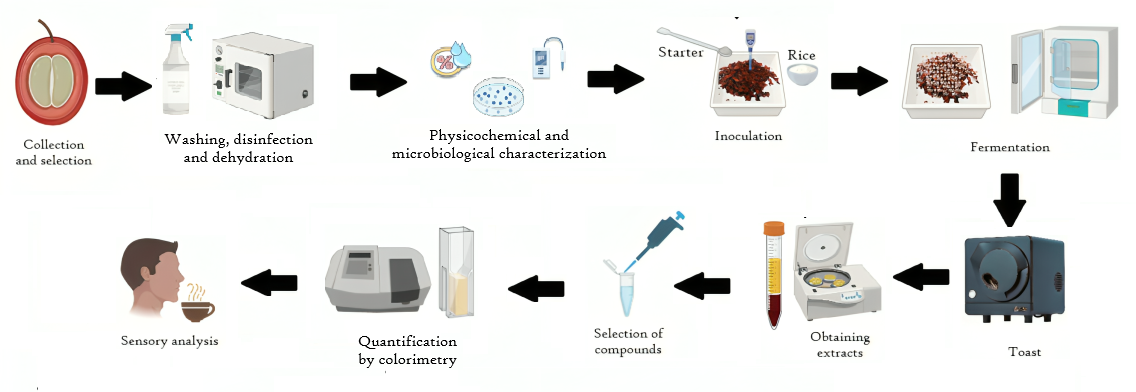
In this context, the fungus Rhizopus oryzae, which is recognized as safe (GRAS), has been chosen for its tannase enzyme that hydrolyzes condensed tannins from coffee pulp, thereby improving the bioavailability of nutritional compounds [8,11]. Therefore, this research aims to develop a food product using fermented coffee residues from Coffea arabica var. Castillo with Rhizopus oryzae (MUCL 28168) (Fig. 1). This approach offers an environmentally sustainable solution and creates new economic opportunities for coffee farmers.
Figure 1: Graphic Summary.
2. Materials and methods
2.1. Raw material
Coffee pulp from Coffea arabica var. Castillo, sourced from the north of Valle del Cauca, was utilized in this research. The samples were collected immediately after the pulping process and transported under controlled conditions to the Microbiology and Applied Biotechnology Laboratory (MIBIA) at Universidad del Valle. At the laboratory, the pulp was cleaned, sorted, and disinfected with 2% chlorinated water for 30 seconds. The samples were then dehydrated at 60°C until a moisture content of 12% was achieved, to minimize physicochemical and microbiological deterioration.
2.2. Physical and chemical characterization of coffee pulp
2.2.1. Determination of the initial moisture content
The initial moisture content of the coffee pulp was determined by applying the NTC 2558:2000 standard [12], which involves measuring the weight difference as described in eq. (1).
2.2.2. Water Activity (Aw) and pH determination
Water activity was measured using an AQUALAB SERIES 4TE device with 1 gram of the dry sample. For pH determination, 1 gram of the product was weighed, suspended in 10 mL of distilled water for 30 minutes, and the pH was then measured using a sensitive pH-meter electrode (Thermo Scientific) until a stable reading was achieved [13].
2.2.3. Determination of Water Absorption Capacity (WAI)
The methodology employed was that developed by Londono [8], where 1.25 g of the sample was suspended in 15 mL of distilled water and agitated continuously for 10 minutes. Afterward, the samples were centrifuged at 3000 rpm for 10 minutes; the supernatant was decanted, and the weight of the resulting gel was recorded. Eq. (2) was used to calculate the water retention capacity:
2.2.4 Microbiological characterization of unfermented coffee pulps
Microbiological analyses were conducted on the coffee pulp following collection, sanitization, and dehydration processes. These analyses adhered to the methodologies outlined in standards NTC 4491-1 [14], 5034 [15], 4516 [16], 5733 [17], and 5698-1 [18], covering material preparation, and counts of lactic acid bacteria, total coliforms, enterobacteria, and yeasts.
2.3. Solid State Fermentation (SSF)
2.3.1. Reactivation and Verification of the Purity of the Filamentous Fungus Rhizopus Oryzae
Dried spores from the MIBIA group's culture collection were used to reactivate Rhizopus oryzae (MUCL 28168). These spores were centrally placed on Petri dishes containing Potato Dextrose Agar (PDA) as the stock culture medium. The dishes were incubated at 28°C until complete sporulation was observed. The purity of the cultures was verified using a stereoscope, and their morphological characteristics were examined under a microscope at 40X magnification.
2.3.2. Preparation of inoculum
The inoculum was prepared using the Tane-Koji method as described by Londoño [19]. This method involved inoculating cooked brown rice with a spore suspension of the fungus Rhizopus oryzae, extracted from test tubes previously seeded with the strain. The rice-filled containers were incubated for 75 hours to allow complete sporulation of the microorganism. Afterward, the rice was dried at 45°C for 24 hours until it reached a moisture content of 12%. The dried product was then ground using a blade mill, stored in sterile containers at 28°C, and spore counts were conducted using a Neubauer chamber.
2.3.3. Experimental design
A 2x3 factorial design was employed to determine the ideal process conditions, assessing the impact of pH and the percentage of carbon source (CS) on various response variables (Table 1). A total of 27 treatments were evaluated. Data analysis was performed using ANOVA and Tukey’s test via Minitab 19.
Source: Author madeTable 1: Experimental design.
Independent Variables
Levels
Response Variable
pH
4
5
6
Content of tannins, total phenols, and caffeine present in coffee pulp
Carbon source (%)
25
50
75
2.3.4. Evaluation of fermentation conditions
Solid-state fermentation was conducted in sterile aluminum boxes at 32°C for 40 hours, maintaining substrate humidity at 65% and an inoculum density of 1 x 10^7 spores per gram. The initial pH of the substrate was adjusted using buffered solutions of NaOH and H2SO4. After fermentation, the samples were dehydrated at 60°C for 24 hours, sieved, and then roasted at 140°C for 1 minute and 20 seconds.
2.4. Quantification of Compounds of interest present in coffee pulp
The quantification of the study compounds was performed using aqueous solutions of coffee pulp samples across three stages: unfermented and unroasted (PST), unfermented with roasting (PCT), and fermented with roasting. Water was used for analyzing nutritional compounds and 80% methanol for condensed tannins. One gram of pulp was placed in centrifuge tubes with 10 mL of the respective solvent and subjected to ultrasonic extraction for 45 minutes at 40°C. The samples were then centrifuged at 3000 rpm for 15 minutes, the extract was filtered and stored at 4°C until analysis.
Soluble proteins were quantified using the modified Lowry method [20]. Total sugars were quantified using the Antrona method [21], and the content of reducing sugars was determined by the DNS method [22]. Total phenols were quantified following the methodology described by Londono [8]. Antioxidant capacity was evaluated using the DPPH (1,1-diphenyl-2-picryl-hydrazyl) technique as described by Medina et al. [23]. The quantification of condensed tannins followed the method established in NTC 602 [24].
2.5. Fermented product selection and design
Product selection and design were conducted using the "Response Optimization" feature in the statistical software Minitab 19. The objective was to minimize the levels of tannins and sugars while increasing the protein content, phenols, and antioxidant capacity. The qualitative sensory profile was evaluated by a panel of experts from Agricola Himalaya S.A., who assessed the aroma, flavor, and appearance in aqueous solutions of both the control sample (PCT) and the selected product.
3. Results and discussion
3.1. Physicochemical characterization of unfermented dry pulp
Following the methodologies outlined earlier in this document, the physicochemical analysis of the unfermented dry pulp was performed, and the results are recorded in Table 2.
Source: Author madeTable 2: Physicochemical characterization of coffee pulp.
Analysis
Methodology
Results
Initial Moisture Content
NTC 2558:2000
88.5±0.9
Final moisture content
NTC 2558:2000
11.5±1.5
WIA
Londoño (2015)
8.3±0.2
pH
Londoño (2015)
4.3±0.2
Aw
-
0.49±0.03
Coffee pulp is a solid by-product with a high moisture content, making it susceptible to microbial growth as well as changes in size, color, and odor [25]. After the drying process, the coffee pulp was found to have an average moisture content of 88.5%. Although several studies indicate that the moisture content of coffee pulp varies between 74% and 88% [25-27], the results obtained in this study are slightly higher. This increase could be attributed to the exudate released during the thawing process, which increased the free water content of the sample, facilitated by the concavity of the pulp.
The water activity of the material after drying was measured at 0.49 ± 0.003, very similar to those found by other researchers [8,28]. This confirms the microbiological and enzymatic stability of the coffee pulp after dehydration, given that the water activity of fresh premium material was reported to be 0.6 [29]. The water absorption capacity of the coffee pulp was recorded at 8.3, significantly exceeding the values reported by Londoño [8]. This indicates a higher hydration capacity of the dry coffee pulp, ensuring effective retention of water added during rehydration and achieving an optimal moisture level (60-70%) for microbial growth. Table 2 shows that the pH of the coffee pulp is 4.3 ± 0.2. Previous studies have shown that the pH of coffee pulp can vary between 3.92 and 5.63 [8,26,30]. This variability is attributed to factors such as geographical location, growing conditions, coffee variety, altitude, degree of fruit ripening, and production methods [8,31].
3.2. Microbiological characterization of the unfermented coffee pulp
Table 3 presents the results of the microbiological analyses performed on both the fresh and dehydrated coffee pulp.
Source: Author madeTable 3: Microbiological characterization of fresh and dehydrated pulp
Parameter
Fresh Pulp
Dry Pulp
Mesophilic Aerobes - PCA (UFC/g)
4.9*106
<3
Fungi and yeasts - PDA (UFC/g)
1.2*107
<3
Enterobacteriaceae count - VRBA (UFC/g)
1.8*106
<36
Lactic Bacteria’s -MRS (UFC/g)
3.7*106
<30
Total Coliforms (NMP/g)
1000
0
As shown in Table 3, the high load of microorganisms in the fresh pulp was attributed to processing, product handling, and machinery. This is evident in the mesophilic microorganism count, as a higher presence of these microorganisms indicates deficiencies in sanitation practices and possible contamination during production [32]. Puerta et al. [32] reported that reducing two stages of the wet coffee processing method-sorting and sieving-resulted in a significant decrease in the count of mesophilic microorganisms, directly associated with product handling.
Fungal and yeast counts also showed elevated amounts, although they were within the range reported by several authors (1.4 × 10^5 to 3.1 × 10^8 CFU/g) [27,32]. At 72 hours, however, yeasts showed an absolute predominance, aligning with the findings of Blandon et al. [27] and Puerta et al. [32], who identified yeasts of the genera Candida spp., Saccharomyces cerevisiae, Rhodotorula spp., and Cryptococcus terreus. In contrast, Martinez et al. [34] observed that fungi of the genera Aspergillus, Penicillium, Fusarium, and Trichoderma are more predominant in coffee fruit. The variability in the count and predominance of fungi and yeasts is influenced by factors such as coffee variety, altitude, and growing conditions.
Regarding lactic acid bacteria, a higher concentration was observed compared to that reported by Puerta et al. [32], who found that 33% of the initial bacterial population belonged to the genus Lactobacillus. However, this finding contrasts with Martinez (2022), who established a relationship between the quantity of lactic acid bacteria and the altitude at which the coffee is grown. Based on the results of this study, it was concluded that altitude did not have a significant effect on the lactic acid bacteria content of the samples analyzed.
Similarly, the fresh pulp showed a high concentration of coliforms, coinciding with the findings of Torres et al. [29]. These authors associated the presence of coliforms of the genera Enterobacter, Klebsiella, Serratia, and Citrobacter with the quality of the water used during the fruit washing process. Deficient water supply, storage, and distribution systems often harbor these bacteria, which negatively affects the microbiological quality of the product.
The high microbial load in the fruit was influenced by the moisture content of the substrate and the soluble carbohydrate content of the pulp. To prevent spoilage caused by microbiological agents, sanitation and drying processes were implemented. These measures significantly reduced the microbial count, as detailed in Table 3, thereby extending the shelf life of the product and eliminating microbial activity that could compete with the fungus during the solid-state fermentation process.
3.3. Solid state fermentation
Physicochemical analysis revealed that coffee pulp is a suitable substrate for the growth of Rhizopus oryzae, enhancing its survival, colonization, and enzyme production [34]. Under the established conditions (temperature of 32°C, substrate humidity of 65%, and relative humidity of 77%), optimal growth of the microorganism on the substrate was observed. At pH 4, maximum growth was achieved in 38-40 hours; at pH 5, it took 32-36 hours; and at pH 6, the time was reduced to 28 hours, indicating that pH significantly influences the mycelial growth rate. Additionally, it was demonstrated that incorporating uncooked white rice as a carbon source (CS) had a positive impact on mycelial growth. Treatments with 75% rice exhibited the highest growth rate (Fig. 2A), followed by those with 50% (Fig. 2B) and, finally, those with only 25% (Fig. 2C).
Figure 2: Comparison of the growth of Rhizopus oryzae at different concentrations of carbon source A) with 75% rice, B) with 50% rice, and C) with 25% rice.
3.4. Quantification of compounds of interest present in coffee
Quantification of the compounds of interest was performed on unfermented and unroasted (PST), unfermented and roasted (PCT) coffee pulp samples, as well as for each of the treatment groups. Table 4 presents the obtained results.
Source: Author madeTable 4: Results of the experimental runs for each of the parameters evaluated after the solid fermentation process.
Proteins are the main structural and functional components of cells [35]. However, plant proteins obtained from the solid-state fermentation process must be free of any contaminants or anti-nutritional factors [35,36].
Table 4 shows that after the roasting process, the control sample exhibited a 6% decrease in protein content. This decrease is attributed to chemical reactions caused by heating, primarily between amino acids and reducing sugars, commonly known as the Maillard reaction. These reactions lead to the creation of molecules with distinct odors and flavors, thus reducing the protein content [37]. Researchers such as Londoño et al. [38], Encalada et al. [39], and Fierro et al. [40] reported soluble protein contents of 14.83%, 12.56%, and 10.63%, respectively, which are slightly lower than those found in the PST sample. These differences are attributed to variations in the growing area, soil composition, and conditions, as well as treatments applied to the crop, factors that can influence the nutritional composition of the fruit [41].
According to the ANOVA and post-ANOVA analyses (P<0.05), it was observed that the treatments at pH 4 and pH 6 with a CF (carbon source) of 75% presented protein amounts of 21.17% and 19.85%, respectively. Ceballos et al. [42] attribute this increase to the fact that during the first 24 hours of fermentation, the microorganism Rhizopus oryzae accelerates its metabolic activity and degrades compounds such as tannins through the action of enzymes like polyphenol oxidase, which breaks down the tannin protein structure. In contrast, at pH 4 and 5 with a CF of 25%, the protein content is low, possibly due to insufficient growth of the microorganism throughout the matrix, as the mycelium did not completely invade the substrate.
According to Navarro & Roa [43], any raw material intended for animal feed is considered to have good capacity if its protein content exceeds 11%. Therefore, the fermented coffee pulp is classified as a premium raw material based on its protein content. However, it should be noted that in this research, the product is intended for human consumption, although its use in animal feed is not ruled out.
3.4.1. Total sugars content of coffee pulp
The sugar content of the substrate significantly influences the growth, invasion, and metabolic activity of the fungus. In the PST sample, a total sugar content of 56% was observed, which is similar to that reported by Londoño et al. [26] for coffee pulp of the same variety. However, this amount decreased considerably to 24.9% after the roasting process due to chemical and biochemical reactions involved [44].
ANOVA analysis showed statistically significant differences in the interaction between the two factors analyzed on the total sugar content, and Tukey's test revealed that the greatest decrease occurred at pH 6 with CS (carbon source) of 75% and 50%. This is because the fungus was in an optimal growth environment, which allowed it to completely invade the substrate and perform transformations on it.
A study by Ibarruri & Hernandez [45] mentions that Rhizopus oryzae grows better on fruit residues than on other by-products, due to the abundant presence of sugars in these substrates. Their research observed a 33% decrease in carbohydrate content after 3 days of fermentation. In contrast, a 71% decrease in carbohydrates (at pH 6 and CS of 75%) was achieved in a maximum time of 40 hours compared to the PCT sample. This was accomplished by optimizing fermentation conditions and adding a CS, which allowed higher growth of the microorganism and, therefore, a higher depletion of carbohydrates.
Thus, there was a higher consumption of carbohydrates from the substrate. It should also be noted that the decrease in this parameter is additionally due to the roasting process.
3.4.2. Reducing sugars content in coffee pulp
In terms of reducing sugars, coffee pulp, unlike coffee beans, is characterized by the presence of these compounds, especially glucose and xylose [45]. The PST samples contained 44% reducing sugars (Table 4), similar to levels reported by Gurram, Al-Shannag & Knapp [46] and Fierro et al. [40] for the same coffee variety. However, the PCT samples showed a reduction to 16.56%, representing a decrease of 62.4% in these compounds. ANOVA analysis revealed that the interaction of the two factors significantly influenced this response variable. Tukey's test indicated that a CS (carbon source) of 75% contributed to the decrease in reducing sugars in the coffee pulp samples, regardless of the pH level. This behavior can be attributed to the fact that, at a CS of 75%, there is a greater availability of reducing sugars, which enhances the growth and metabolic activity of the microorganism. This allows it to degrade compounds such as condensed tannins and increase the presence of proteins and phenolic compounds [36].
3.4.3. Content of total phenolics
Phenols are compounds known for their antioxidant, anti-inflammatory, and antimicrobial capacities [8, 47]. In the PST samples, the content of total phenolics was 80 mg GAE/g. When the pulp underwent the roasting process, a 37.5% increase in phenol content was observed (Table 3). This effect has also been reported by Diaz et al. [66] for roasted coffee, where the phenol content increased with roasting time, concluding that medium-grade roasting is favorable to obtain coffee with a high concentration of total phenols.
ANOVA analysis indicated that the interaction between factors did not significantly affect phenol content. However, post-ANOVA analysis revealed that pH did have an influence, with the highest phenol content observed at pH 6, averaging 318.1 mg GAE/g sample. The fermentation process increased the phenolic content by 189%, 52%, and 19.7% in the PCT sample at pH 6, 5, and 4, respectively. According to Londono [8], this increase is attributed to the crucial role of pH during the growth and metabolism of the microorganism. At pH between 5 and 6, the microorganism can secrete enzymes such as xylanases, α-amylases, and β-glucosidases, which perform the necessary hydrolysis to release phenols bound to other molecules and increase the content of soluble phenols.
According to Londono [8], after solid-state fermentation of coffee pulp with Rhizopus oryzae, approximately 46 phenolic compounds were identified, including ferulic acid, trigonelline, caffeine, and chlorogenic acid, along with 18 compounds found exclusively in coffee pulp. Meanwhile, Palomino et al. [49] reported that after fermentation of coffee pulp with Penicillium purpurogenum, the most abundant phenolic compound was chlorogenic acid, followed by caffeic acid and rutin.
Researchers have found significant variability in the phenolic content of coffee pulp. Authors such as Melendez [50], Cruzalegui et al. [51], and Myo & Khat-udomkiri [52] have determined that the polyphenol content can range from 46.31 to 891 mg GAE/100 grams of coffee pulp. These differences are attributed to several factors, including coffee variety, drying methods, geographical location of the crop, extraction techniques and solvents, as well as the degree of roasting. According to Diaz et al. [48], during roasting, chlorogenic and hydroxycinnamic acids and some other phenolic compounds are degraded, which increases the concentration of quinic acid. Meanwhile, Shanmagam [53] noted that trigonelline does not survive the roasting of coffee beans, being transformed into nicotinic acid, pyridine, and other volatile compounds.
When comparing the results with those of the cited authors, it is evident that fermentation and roasting significantly influenced the phenolic content of the coffee pulp. This led to an increase in its amount, showing figures similar to those recorded in the literature. However, many of these compounds were not extracted due to the methodology employed and/or were degraded during the roasting process.
3.4.4. Antioxidant capacity
The antioxidant capacity provides information on the ability of compounds present in coffee pulp to inhibit or reduce oxidative damage induced by oxidizing agents, in this case, the DPPH radical [54]. Table 4 shows a 19% increase in this capacity in the PCT samples compared to the PST samples. This increase is associated with the synthesis of secondary products such as melanoidins or brown compounds, which have antioxidant activity and are responsible for color, flavor, and reducing properties. These compounds are produced from the Maillard reaction caused by thermal processing [48]. In the ANOVA and post-ANOVA analysis, it was observed that this variable was influenced only by pH. It was found that pH 6 exhibited the highest average antioxidant capacity (64.12 μMol of TE/g), followed by pH 5 (12.42 μMol of TE/g) and then pH 4 (11.5 μMol of TE/g). The amounts obtained in this study are higher than those reported by authors such as Myo & Khat-udomkiri [52] and Thy Minh et al. [55], who found antioxidant capacities of 8.19 mg TE/g and 2.24 mg TE/g, respectively. Therefore, it can be concluded that the application of solid-state fermentation and roasting enhances the antioxidant capacity of the samples.
However, at pH 5 and 6 with a CF (carbon source) of 50%, it was found that there was no direct correlation with the phenolic content. A similar effect was reported by Lopez et al. [56], who, after fermenting coffee pulp with different strains of lactic acid bacteria, observed that an increase in phenolic content did not clearly correlate with an increase in antioxidant capacity, as measured by the DPPH and ABTS methods. They attributed this effect to the presence of reductones, which could react with free radicals to stabilize and terminate the propagation of antioxidant chain reactions.
3.4.5. Condensed tannins content
The presence of condensed tannins impacts the utilization of coffee pulp as a premium material [57]. In the PST (Pre-Solid State Fermentation) and PCT (Post-Solid State Fermentation) samples, the condensed tannin content was recorded at 0.3%, and by solid fermentation, this compound was significantly reduced (see Table 4). Analysis of variance revealed statistically significant differences in the effect of the factors on condensed tannin content. Tukey's post-ANOVA analysis results indicated that the lowest tannin content, at 0.12%, was obtained at pH 6 and a carbon source (CF) concentration of 25%, representing a decrease of 60%. This finding contrasts with that reported by Londono et al. [26], who recorded a 52% reduction in the same compound. This behavior is attributed to the optimization of the substrate, which was enriched with carbon, nitrogen, phosphorus, and sulfur sources, under conditions favorable for the metabolism of the microorganism. This allowed for sufficient production of the enzyme tannase, responsible for degrading these compounds [36].
Authors such as Noriega, Silva, & Garcia [58] and Samayoa et al. [59] report that the tannin content in the Arabica coffee variety varies between 0.14% and 8.56%, which is in agreement with the results obtained for the control samples. However, this variability is attributed to factors such as the region of origin of the samples, genetics, plant species, soil fertility, and climatic conditions, as all these variables influence the quantity and type of tannins that the plant can synthesize [60].
On the other hand, Diaz et al. [48] found that in roasted coffee, tannin content increases with roasting time. Meanwhile, Thy Minh et al. [55] observed that in coffee pulp, drying with hot air at 70°C resulted in the lowest level of condensed tannins (2.34 mg ET/g DW in dry sample) compared to vacuum drying at 90°C and 110°C. This is because condensed tannins are sensitive to light and oxygen; during vacuum drying, reduced exposure to oxygen minimizes the degradation of these compounds. Therefore, both the drying and roasting processes significantly influence the tannin content present in the samples
3.5. Fermented product selection and design
In order to add value to this by-product and considering the characteristics of the premium material, it was decided to produce an infusion-type beverage. This type of beverage has traditionally been popular in countries such as Yemen, Sumatra, Ethiopia, Jamaica, and Sudan, where this by-product has been utilized for many years. In other regions, its popularity has been increasing over time, and companies such as SUTRACAFE, Cafe La Manchuria, Indio Ramirez, and Casa Eguia are already marketing the dried pulp for the preparation of this infusion.
In the Minitab software, the best option was evaluated based on the increase of nutritional compounds and the decrease of condensed tannins. It was found that the fermentation at pH 6 with a carbon source (CS) of 75% (see Table 5) meets these requirements with a composite desirability index of 0.73.
Note: Results expressed in percent are equivalent to the reagent used in the calibration curve/g sample on a dry basis. PST: Pulp without roasting; PCT: Pulp with roasting, BET: Best Experimental treatment. Source: Author madeTable 5: Comparison of the nutritional composition of the infusion samples control and best experimental run
Component
PST
PCT
BET
Protein (%)
17.32±0.36
6.40±0.70
19.85± 1.66
Total sugars (%)
56.95±0.96
56.95±0.96
7.21±0.44
Reducing sugars (%)
44.26±1.51
16.56±0.80
6.83±0.44
Antioxidant capacity (mg/g)
9.84±1.30
11.74±0.51
17.16± 0.06
Phenols (mg/g)
80.00±0.03
110.24±8.50
332.63±11.20
Tannins (%)
0.300±0.006
0.305±0.015
0.165±0.008
To determine the sensory profile and the characteristic sensory notes of the product, panelists from Agricola Himalaya S.A., specializing in the collection of tea and aromatic infusions, were consulted. The results are presented in the Table 6.
Source: Author madeTable 6: Sensory evaluation of the infusion obtained versus the control sample
Organoleptic characteristics
PCT
BET
Aroma
Wood Fresh Vegetal Toasted
Wood Toasted Fermented
Taste
Acids Mild sweetness Wood with predominance over the other notes Slight sensation of astringency
Sweet Woody notes Slight sensation of astringency
Appearance in aqueous solution
Light yellow Translucent
Light yellow Slight turbidity
Note: PCT: Pulp with roasting, BET: Best Experimental treatment
The panelists identified sensory notes in the coffee pulp that align with the findings of other researchers. Amorocho & Cortes [61] noted herbal and sweet notes, as well as fruity aromas, in infusions made from dried and unfermented coffee pulp. Similarly, Prado [62] detected aromatic notes of raisins, while flavors of tamarind, red fruits, and coffee beans were also reported. These variations can be attributed to several factors, including the variety of coffee used. Additionally, Serna et al. [63] determined that the optimal conditions for extracting antioxidant compounds from a coffee pulp infusion were at a temperature of 90°C for 4.5 minutes, using 3.3 grams of dry coffee pulp immersed in 250 mL of drinking water.
4. Conclusions
Physicochemical analysis of coffee pulp has revealed that this by-product possesses significant potential for use in various industries, thanks to its content of bioactive compounds with functional properties. Additionally, it was determined that coffee pulp provides ideal conditions for undergoing solid-state fermentation processes, thereby maximizing its valorization as a premium material.
The optimum conditions for the fermentation process were identified as pH 6, a carbon source concentration of 75%, a temperature of 32°C, and a fermentation time of 28 hours. These conditions favor the metabolic activity of the microorganism, resulting in a significant increase in the content of proteins and total phenols. This is accompanied by a notable reduction in condensed tannins, thus enhancing the nutritional value of the final product.
The solid-state fermentation (SSF) process with Rhizopus oryzae proved effective in transforming coffee pulp, achieving up to a 60% reduction in condensed tannin content. This reduction is attributed to the fungus's ability to alter the chemistry of the substrate, highlighting its potential in the production of functional foods.
The infusion obtained from fermented coffee pulp exhibited attractive sensory profiles, characterized by sweet and woody notes. These attributes, along with its improved nutritional profile, position this product as an innovative alternative in the functional food and beverage market. This underscores the value of coffee pulp as a by-product with high potential to be transformed into a fermentation-enriched functional food, thus contributing to reducing the environmental impact associated with coffee production and generating new economic opportunities for farmers by diversifying their product offerings.
Acknowledgments
We extend our gratitude to the panel of experts from Agricola Himalaya S.A. for their valuable cooperation in the sensory analysis of the coffee pulp samples. We also offer extensive thanks to Finca Las Margaritas for allowing us to visit their facilities, collect raw materials, and share their invaluable experience in coffee cultivation. This work was part of the multidisciplinary project aimed at strengthening the competitiveness of local coffee products on the global market.
References
Referencias
[1] Federación Nacional de Cafeteros. Producción anual de café de Colombia cierra 2022 en 11.1 millones de sacos [Online]. 2022. [date of reference February 15th of 2023]. Available at: https://federaciondecafeteros.org/wp/listado-noticias/produccion-anual-de-cafe-de-colombia-cierra-2022-en-111-millones-de-sacos/#:~:text=a%20prolongadas%20lluvias-,Producci%C3%B3n%20anual%20de%20caf%C3%A9%20de%20Colombia%20cierra%202022%20en%2011,los%20mercados%20internacionales%20en%202021
[2] Rodríguez, N., Balance energético en la producción de etanol a partir de la pulpa y el mucílago de café y poder calorífico de los subproductos del proceso del cultivo de café. Disciplina de Calidad y Manejo Ambiental, Cenicafé; Colombia, 2007.
[3] Acevedo, M., y Peñalosa, I., Evaluación de azúcares presentes en la pulpa de café residual para la obtención de bioproductos, BSc. Thesis, Fundación Universitaria de América, Bogotá, Colombia, 2021.
[4] Magoni, C., Bruni, I., Guzzetti, L., Dell'Agli, M., Sangiovanni, E., Piazza, S, et al., Valorizing coffee pulp by-products as anti-inflammatory ingredient of food supplements acting on IL-8 release. Food Research. International, 112, pp. 129-135, 2018. DOI: https://doi.org/10.1016/j.foodres.2018.06.026
[5] Triviño, J., Contreras, J., Amorocho, C., y Sánchez, J., Obtención de bioproductos a partir de residuos del beneficio húmedo del café (pulpa). Revista Colombiana de Biotecnología, 23(2), pp. 6-14, 2021. DOI: https://doi.org/10.15446/rev.colomb.biote.v23n2.90551
[6] Cubero-Abarca, R., Moya, R., Valaret, J., and Tomazello-Filho, M., Use of coffee (Coffea arabica) pulp for the production of briquettes and pellets for heat generation. Ciência e Agrotecnologia, 38(5), pp. 461-70, 2014. DOI: https://doi.org/10.1590/S1413-70542014000500005
[7] Heeger, A., Kosińska-Cagnazzo, A., Cantergiani, E., and Andlauer, W., Bioactives of coffee cherry pulp and its utilisation for production of Cascara beverage. Food Chemistry, 221, pp. 969-975, 2017. https://doi.org/10.1016/j.foodchem.2016.11.067
[8] Londoño, L., Solid State fermentation as technology for anti-physiological compound reduction in sorghum, and coffee pulp to generate an enriched food, PhD. Dissertation, Universidad Autónoma de Coahuila, Saltillo, Mexico, 2018.
[9] Caridad, M., Ricardo, J., y Ramos, L., Fermentación en estado sólido. Producción de alimento animal. Tecnología Química, [Online]. 27, 2007. [date of reference February 8th of 2023]. Available at: https://www.redalyc.org/pdf/4455/445543754003.pdf
[10] Ramírez, J., Compuestos fenólicos en la pulpa de café: determinación cuantitativa por HPLC. Rev Cienc Aliment Agric 43(2), pp. 135-44, 1988. DOI: https://doi.org/10.1002/jsfa.2740430204
[11] Yoplac, I., Yalta, J., Vásquez, H.V., y Maicelo, J.L., Efecto de la alimentación con pulpa de café (Coffea arabica) en los índices productivos de cuyes (Cavia porcellus L) raza Perú. Revista de Investigaciones Veterinarias del Perú, 28(3), pp. 549-561, 2017. https://doi.org/10.15381/rivep.v28i3.13362
[12] Norma Técnica Colombiana. NTC 2558: Café tostado y molido. Determinación del contenido de humedad. Método por determinación de la pérdida en masa a 103 °C (método de rutina), Bogotá: ICONTEC, 2000.
[13] Asociación Internacional de Químicos Analíticos. AOAC 973.41: Método oficial para la determinación de pH, 1998.
[14] Norma Técnica Colombiana. NTC 4491-1: Microbiología de alimentos y alimentos para animales. Preparación de muestras para ensayo, suspensión inicial y diluciones decimales para análisis microbiológico. Parte 1: Reglas generales para la preparación de la suspensión inicial y de diluciones decimales. Bogotá: ICONTEC, 2005.
[15] Norma Técnica Colombiana. NTC 5034: Microbiología de alimentos y alimentos para animales. Bogotá: ICONTEC, 2002.
[16] Norma Técnica Colombiana. NTC 4516: Microbiología de alimentos y productos de alimentación animal. Método horizontal para la detección y enumeración de coliformes técnicas del número más probable. Bogotá: ICONTEC, 2009.
[17] Norma Técnica Colombiana. NTC 5733: Microbiología de alimentos y productos de alimentación animal. Métodos horizontales para la detección y enumeración de enterobacterias. Parte 2: Método de recuento de colonias. Bogotá: ICONTEC, 2009.
[18] Norma Técnica Colombiana. NTC 5698-1: Microbiología de alimentos y alimentos para animales. Método horizontal para la enumeración de mohos y levaduras. Parte 1: Técnica de recuento de colonias en productos con actividad acuosa (aw) superior a 0,95. Bogotá: ICONTEC, 2009.
[19] Londoño, L., Proceso de fermentación sólida para la disminución de taninos en el sorgo, MSc. Thesis, Universidad Del Valle, Cali, Colombia, 2015.
[20] Hartree, E.F., Determination of protein: a modification of the Lowry method that gives a linear photometric response. Analytical Biochemistry, 48(2), pp. 422-427, 1972. DOI: https://doi.org/10.1016/0003-2697(72)90094-2
[21] Laurentin, A., and Edwards, C.A., A microtiter modification of the anthrone-sulfuric acid colorimetric assay for glucose-based carbohydrates. Biochemistry, 315, pp. 143-145, 2003. DOI: https://doi.org/10.1016/S0003-2697(02)00704-2
[22] Polanía, A.M., Toro, C.R., Londoño, L., Bolívar, G., Ascacio, J.A., and Aguilar, C.N., Bioprocessing of pineapple waste biomass for sustainable production of bioactive compounds with high antioxidant activity. Journal of Food Measurement and Characterization, 17(1), pp. 586-606, 2022. DOI: https://doi.org/10.1007/s11694-022-01627-4
[23] Medina, M., Rojas, R., Rodríguez, R., y Aguilar, C., Manual de métodos de laboratorio del departamento de investigación en alimentos de la Universidad Autónoma de Coahuila, 1. Saltillo: DIA-UAdeC, 2012.
[24] Norma Técnica Colombiana. NTC 602: Norma Técnica Colombiana. Alimentos para animales. Sorgo en grano. Bogotá: ICONTEC, 2020.
[25] Noguera, R., y Posada, S., Efecto del método de secado sobre la digestibilidad in situ de la pulpa de café (Coffea arabica). Livestock Research for Rural Development [Online]. 29(8), 2017. [date of reference January 8th of 2023]. Available at: https://www.lrrd.org/lrrd29/8/nogu29145.html
[26] Londoño, L., Ruiz, H., Ramírez, C., Ascacio, J., Rodríguez, R., and Aguilar, C. Fungal detoxification of coffee pulp by solid-state fermentation. Biocatalysis and Agricultural Biotechnology, 23, 101467, 2020. http://dx.doi.org/10.1016/j.bcab.2019.101467
[27] Blandón, C.G., Dávila, M., y Rodríguez, V., Caracterización microbiológica y físico-química de la pulpa de café sola y con mucílago, en proceso de lombricompostaje. Cenicafé, Colombia, 50, pp. 5-23, 1999.
[28] Kieu, T., Kirkman, T., Nguyen, M., and Van, Q., Effects of drying on physical properties, phenolic compounds and antioxidant capacity of Robusta wet coffee pulp (Coffea canephora). Heliyon, 6(7), art. e04498, 2020. https://doi.org/10.1016/j.heliyon.2020.e04498
[29] Torres, L., Sanin, A., Arango, A., y Serna, J., Caracterización fisicoquímica y microbiológica de aguas mieles del beneficio del café. Revista ION, 32(2), pp. 59-66, 2019. DOI: https://doi.org/10.18273/revion.v32n2-2019006
[30] Buck, N., Wohlt, D., Winter, A., and Ortner, E., Aroma-active compounds in robusta coffee pulp puree-evaluation of physicochemical and sensory properties. Molecules, 26(13), art. 3925, 2022. DOI: https://doi.org/10.3390/molecules26133925
[31] Paredes, M., Evaluación de las propiedades de tres variedades de pulpa de café para la producción de una bebida tipo té, BSc. Thesis, Fundación Universidad de América, Bogotá, Colombia, 2018.
[32] Puerta, G., Marín, J., y Osorio, G., Microbiología de la fermentación del mucílago de café según su madurez y selección. Revista Cenicafé, Colombia, 63(2), pp. 58-78, 2012.
[33] Martinez, S., Pereira, A., Pavesi, J., Satler, V., Ribeiro, D., and Freitas, R., Dominant microbial communities and biochemical profile of pulped natural fermented coffees growing in different altitudes. Food Research International, 159, art. 111668, 2022. DOI: http://doi.org/10.1016/j.foodres.2022.111668
[34] Pastrana, L., Fundamentos de la fermentación en estado sólido y aplicación a la industria alimentaria. CyTA - Journal of Food, 1(3), pp. 4-12, 2009. DOI: https://doi.org/10.1080/11358129609487556
[35] Martínez, A., and Muñoz, V., Proteínas y péptidos en nutrición enteral. Nutrición Hospitalaria [Online]. 21(Supl 2), pp. 1-14, 2006. [date of reference November 11th of 2022]. Available at: https://scielo.isciii.es/scielo.php?script=sci_arttext&pid=S0212-16112006000500002
[36] Roopali, N., Bhoite, P., and Murthy, S., Biodegradation of coffee pulp tannin by Penicillium verrucosum for production of tannase, statistical optimization and its application. Food and Bioproducts Processing, 94, pp. 727-735, 2015. DOI: https://doi.org/10.1016/j.fbp.2014.10.007
[37] Osorio, V., and Pabón, J.m Efecto de las temperaturas y tiempos de tueste en la calidad sensorial del café. Revista Cenicafé, 73(1), art. 73102, 2022. DOI: https://doi.org/10.38141/10778/73102
[38] Londoño, L., Ramírez-Toro, C., Ruiz, H., Ascacio, J., Rodríguez, R., and Aguilar, C., Caracterización del sorgo (Sorghum bicolor (L.) Moench) y pulpa de café (Coffea arabica) como sustrato en fermentación en estado sólido. Agronomía Colombiana, 34(1 Supl.), pp. S1156-S1158, 2016.
[39] Encalada, M., Fernández, P., Jumbo, N., and Quichimbo, A., Ensilaje de pulpa de café con la aplicación de aditivos en el cantón Loja. Bosques Latitud Cero [Online]. 2, pp. 71-82, 2017. [date of reference November 30th of 2022]. Available at: https://revistas.unl.edu.ec/index.php/bosques/article/download/322/293
[40] Fierro, N., Contreras, A., González, O., Rosas, E., and Morales, V., Caracterización química y nutrimental de la pulpa de café (Coffea arabica L.). Agroproductividad, 11(4), pp. 9-13, 2018.
[41] Rosas, J., Escarmilla, E., and Ruiz, O., Relación de los nutrientes del suelo con las características físicas y sensoriales del café orgánico [Online]. Scielo, 2008. [date of reference February 27th of 2023]. Available at: https://www.scielo.org.mx/scielo.php?pid=S0187...script=sci_arttext
[42] Ceballos, C., Montes, O., Londoño, L., Ramírez, C., and Bolívar, G., Effect of solid-state fermentation by Rhizopus oryzae on sorghum grains starch content and other physicochemical parameters. Vitae, 23(Supl. 1), pp. S880-S884, 2016.
[43] Navarro, C., and Roa, M., Comparación de la digestibilidad de tres especies forrajeras estimada mediante diferentes técnicas. Orinoquia, 22(1), pp. 15-33, 2018. DOI: https://doi.org/10.22579/20112629.476
[44] Nakilcioğlu-Taş, E., and Ötleş, S., Physical characterization of Arabica ground coffee with different roasting degrees. Anais da Academia Brasileira de Ciências, 91(2), art. 20180191, 2019. DOI: https://doi.org/10.1590/0001-3765201920180191
[45] Pleissner, D., Katrin, A., Mehlmann, K., and Scheneider, R., Fermentative lactic acid production from coffee pulp hydrolysate using Bacillus coagulans at laboratory and pilot scales [Online]. ResearchGate, 2016. [date of reference January 13th of 2023]. Available at: https://www.researchgate.net/publication/304279577_Fermentative_lactic_acid_production_from_coffee_pulp_hydrolysate_using_Bacillus_coagulans_at_laboratory_and_pilot_scales DOI: https://doi.org/10.1016/j.biortech.2016.06.078
[46] Gurram, R., Al-Shannag, M., and Knapp, S., Technical possibilities of bioethanol production from coffee pulp: a renewable feedstock. Clean Technologies and Environmental Policy, 18, pp. 269-278, 2016. DOI: https://doi.org/10.1007/s10098-015-1015-9
[47] Martínez, S., Hernández, F., Aguilar, C., and Rodríguez, R., Extractos de pulpa de café: una revisión sobre antioxidantes polifenólicos y su actividad antimicrobiana. Investigación y Ciencia, [Online]. 27(77), pp. 73-79, 2019. [date of reference December 12th of 2022]. Available at: https://www.redalyc.org/journal/674/67459697009/html/ DOI: https://doi.org/10.33064/iycuaa2019772124
[48] Díaz, F., Ormaza, A., and Rojano, B., Efecto de la tostión del café (Coffea arabica L. var. Castillo) sobre el perfil de taza, contenido de compuestos antioxidantes y la actividad antioxidante. Información Tecnológica, 29(4), pp. 31-42, 2018. DOI: https://doi.org/10.4067/S0718-07642018000400031
[49] Palomino, L., Rabal, C., Araujo, A., and Del Bianchi, V., Enhanced extraction of phenolic compounds from coffee industry's residues through solid state fermentation by Penicillium purpurogenum. Ciência e Tecnologia de Alimentos, 35(4), pp. 704-711, 2015. DOI: https://doi.org/10.1590/1678-457X.6834
[50] Melendez, R., Extracción asistida por ultrasonido de compuestos fenólicos y capacidad antioxidante de la pulpa de "café" (Coffea arábica L.), BSc. Thesis, Universidad Nacional de Trujillo, Trujillo, Peru, 2019.
[51] Cruzalegui, R., Orlando Güivin, O., Fernández, A., and Cruz, R., Caracterización de compuestos fenólicos y actividad antioxidante de pulpa de café (Coffea arabica L.) deshidratada de tres fincas cafeteras de la región Amazonas (Perú). Información Tecnológica, 32(5), pp. 157-166, 2021. DOI: https://doi.org/10.4067/S0718-07642021000500157
[52] Myo, H., and Khat-udomkiri, N., Optimization of ultrasound-assisted extraction of bioactive compounds from coffee pulp using propylene glycol as a solvent and their antioxidant activities. Ultrasonics Sonochemistry, 89, art. 105479, 2022. DOI: https://doi.org/10.1016/j.ultsonch.2022.105479
[53] Shanmugam, S., Coffee, will it be Healthy Choice. IP Journal of Nutrition, Metabolism and Health Science, 3(2), pp. 45-51, 2020. DOI: https://doi.org/10.18231/j.ijnmhs.2020.010
[54] Fernández, M., Villaño, D., Troncoso, A., and García, M., Revisión de los métodos de evaluación de la actividad antioxidante in vitro del vino y valoración de sus efectos in vivo. Archivos Latinoamericanos de Nutrición, [Online]. 56(2), pp. 110-122, 2006. [date of reference March 3rd of 2023]. Available at: https://ve.scielo.org/scielo.php?script=sci_arttext&pid=S0004-06222006000200002&lng=es&tlng=es
[55] Thy Minh, K., Timothy, K., Minh, N., and Quan, V., Effects of drying on physical properties, phenolic compounds and antioxidant capacity of Robusta wet coffee pulp (Coffea canephora). Heliyon, 6(7), art. 04498, 2020. DOI: https://doi.org/10.1016/j.heliyon.2020.e04498
[56] López, T., Prado, A., Nevárez, G., Contreras, J., Rodríguez, R., and Aguilar, C., Incremento de la capacidad antioxidante de extractos de pulpa de café por fermentación láctica en medio sólido. CyTA - Journal of Food, 11(4), pp. 359-365, 2013. DOI: https://doi.org/10.1080/19476337.2013.773563
[57] Wong, J., Guyot, S., Aguilar, P., Muñiz, D., Contreras, J., and Aguilar, C., Structural characterization of native and oxidized procyanidins (condensed tannins) from coffee pulp (Coffea arabica) using phloroglucinolysis and thioglycolysis-HPLC-ESI-MS. Food Chemistry, 340, art. 127830, 2020. DOI: https://doi.org/10.1016/j.foodchem.2020.127830
[58] Noriega, A., Silva, R., y García, M., Utilización de pulpa de café en alimentación animal. Zootecnia Tropical, [Online]. 26(4), pp. 411-419, 2008. [date of reference March 3rd of 2023]. Available at: https://ve.scielo.org/pdf/zt/v26n4/art01.pdf
[59] Samayoa-Toledo, A., Borrayo-Herrera, B., Pérez-Solares, A., Morataya-Sazo, M., and Montenegro-Álvarez, L., Extracción de mucilago, azúcares y taninos de la pulpa de café y producción de ácido acético comercial a partir de las mieles del café, BSc. Thesis, Universidad de San Carlos de Guatemala, Guatemala, 2014.
[60] Torchio, F., Cagnasso, E., Gerbi, V., and Rolle, L., Mechanical properties, phenolic composition and extractability indices of Barbera grapes of different soluble solids contents from several growing areas. Analytica Chimica Acta, 1-2, pp. 183-189, 2010. DOI: https://doi.org/10.1016/j.aca.2009.10.017
[61] Amorocho, C., and Cortés, Y., Caracterización fisicoquímica, microbiológica y sensorial de bebidas fermentadas de pulpa de café. Ciencia & Café, 16, art. 1889, 2021. DOI: https://doi.org/10.25186/.v16i.1889
[62] Prado, S., Documentación del proceso de producción de aromáticas a base de la pulpa del café para su industrialización, [Online]. 2019 [date of reference January 15th of 2023]. Available at: https://unividafup.edu.co/repositorio/files/original/72a67c57fd65516f00422789b6573fd9.pdf
[63] Serna, A., Torres, L., Martinez, K., and Hernandez, M., Use of coffee pulp as an alternative for the valorization of by-products. Revista Internacional de Contaminación Ambiental. 31(1), pp. 37-45, 2018. DOI: https://doi.org/10.18273/revion.v31n1-2018006
Cómo citar
IEEE
ACM
ACS
APA
ABNT
Chicago
Harvard
MLA
Turabian
Vancouver
Descargar cita
CrossRef Cited-by
1. Sevim Özgül, Ahmet Düzel, Günnur Koçar, Sait Sargın. (2026). Production of Rhizopus oryzae by solid state fermentation and evaluation of its biocomposite characteristics . Preparative Biochemistry & Biotechnology, , p.1. https://doi.org/10.1080/10826068.2026.2635136.
2. Anasya Rahmawati, Muhamad Aldi Nurdiansyah, Intan Taufik, Mia Rosmiati, Rizki Fauziah Ramadhaini, Muhammad Yusuf Abduh. (2025). Effects of coffee pulp fermentation on bioactive compounds and antioxidant activity of coffee pulp extract: a systematic review and meta-analysis. Food Bioscience, 74, p.107964. https://doi.org/10.1016/j.fbio.2025.107964.
Dimensions
PlumX
Visitas a la página del resumen del artículo
Descargas
Licencia
Derechos de autor 2025 DYNA

Esta obra está bajo una licencia internacional Creative Commons Atribución-NoComercial-SinDerivadas 4.0.
El autor o autores de un artículo aceptado para publicación en cualquiera de las revistas editadas por la facultad de Minas cederán la totalidad de los derechos patrimoniales a la Universidad Nacional de Colombia de manera gratuita, dentro de los cuáles se incluyen: el derecho a editar, publicar, reproducir y distribuir tanto en medios impresos como digitales, además de incluir en artículo en índices internacionales y/o bases de datos, de igual manera, se faculta a la editorial para utilizar las imágenes, tablas y/o cualquier material gráfico presentado en el artículo para el diseño de carátulas o posters de la misma revista.









