Publicado
Beta diversity and knowledge gaps of Colombia’s dry forests: implications for their conservation
La diversidad beta y los vacíos de conocimiento de los bosques secos de Colombia: implicaciones para su conservación
DOI:
https://doi.org/10.15446/caldasia.v41n1.76229Palabras clave:
Dry Tropical Forest, forest fragmentation, frugivory, seed dispersal (en)Bosque Seco Tropical, dispersión de semillas, fragmentación de bosques, frugivoría (es)
Descargas
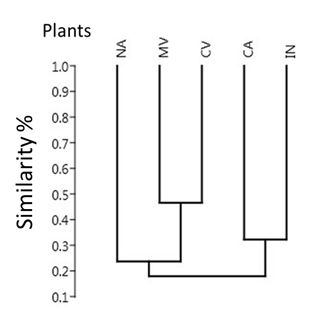
On a continental scale, Neotropical dry forests exhibit high plant beta diversity, forming twelve unique floristic provinces. Conserving this diversity requires plans to protect areas in each province, based on an understanding of their particular ecological conditions. In Colombia dry forest occurs in seven regions. We explored some challenges for conserving beta diversity at the country scale by downscaling the analysis and framing it in the context of the general knowledge status of the country’s dry forests, and particularly of seed dispersal. Our literature review revealed 178 studies, with an increase in publication rate in recent years. The Cauca Valley and the Caribbean region had the most publications. More than half of studies were species inventories of plants, birds, and bats, whereas only ten studies dealt with plant-animal interactions and five with secondary succession. Analyses on plants, birds, and bats revealed high levels of dissimilarity among regions. One-half of plant species in Colombia´s dry forests are dispersed by birds and mammals. Large-sized frugivorous birds and mammals are absent from remaining forest patches, which may negatively affect patterns of seed dispersal and secondary succession. Understanding the ecological and biogeographic factors at several scales, supported by local knowledge of the ecological processes that contribute to forest integrity, is key for the conservation of the unique and distinctive species composition of regional assemblages. A coordinated research effort that integrates knowledge of ecological processes at local to national scales is a priority.
A escala continental los bosques secos presentan alta diversidad beta de plantas y forman doce provincias florísticas. La conservación de esta diversidad requiere planes de protección de áreas en cada provincia, basado en conocimiento de sus condiciones ecológicas particulares. En Colombia los bosques secos se distribuyen en siete regiones. Exploramos algunos retos para conservar la diversidad beta, por medio de un análisis a la escala de Colombia enmarcado en el estado del conocimiento de los bosques secos del país. Encontramos 178 estudios, con un aumento reciente en el número de publicaciones. El valle del Cauca y el Caribe fueron las regiones más estudiadas. Más de la mitad de los estudios fueron inventarios de plantas, aves y murciélagos, mientras que sólo diez estudios trataron sobre interacciones planta-animal y cinco sobre sucesión secundaria. Encontramos altos niveles de diferenciación entre regiones para plantas, aves y murciélagos. La mitad de las especies de plantas del bosque seco son dispersadas por aves y mamíferos. Las aves y mamíferos frugívoros grandes han desaparecido de los remanentes de bosque, lo cual puede afectar negativamente los patrones de dispersión de semillas y sucesión secundaria. Entender los factores ecológicos y biogeográficos a varias escalas, apoyado de un conocimiento local de los procesos ecológicos que contribuyen a la integridad del bosque, es clave para la conservación de la composición única y distintiva de especies entre ensamblajes de bosque seco. Es prioritario desarrollar un programa de investigación que integre el conocimiento de procesos ecológicos de escala local y nacional.
Referencias
Almeida-Neto M, Campassi F, Galetti M, Jordano P, Oliveira-Filho A. 2008. Vertebrate dispersal syndromes along the Atlantic forest: broadscale patterns and macroecological correlates. Global Ecol. Biogeogr. 17(4):503–513. doi: 10.1111/j.1466-8238.2008.00386.x.
Anzures-Dadda A, Andresen E, Martínez ML, Manson RH. 2011. Absence of howlers (Alouatta palliata) influences tree seedling densities in tropical rain forest fragments in southern Mexico. Int. J. Prim. 32:634–651. doi: 10.1007/s10764-011-9492-0.
Barton PS, Cunningham SA, Manning AD, Gibb H, Lindenmayer DB, Didham RK. 2013. The spatial scaling of beta diversity. Global Ecol. Biogeog. 22:639–647. doi: 10.1111/geb.12031.
Calvo-Rodríguez S, Sánchez-Azofeifa G, Durán SM, Espírito-Santo M. 2016. Assessing ecosystem services in Neotropical dry forests: a systematic review. Environ. Conserv. 44(1):34–43. doi: 10.1017/s0376892916000400.
Correa DF, Álvarez E, Stevenson PR. 2015. Plant dispersal systems in Neotropical forests: availability of dispersal agents or availability of resources for constructing zoochorous fruits? Global Ecol. Biogeogr. 24(2):203–214. doi: 10.1111/geb.12248.
Dalling JW. 2002. Ecología de semillas. In: Guariguata MR, Kattan GH, editors. Ecología y conservación de bosques neotropicales. San José, Costa Rica: Libro Universitario Regional. p. 345–375.
Dirzo R, Young HS, Galetti M, Ceballos G, Isaac NJB, Collen B. 2014. Defaunation in the Anthropocene. Science 345(6195):401–406. doi: 10.1126/science.1251817.
Dryflor, Banda K, Delgado SA, Dexter KG, Linares PR, Oliveira FA, Prado D, Pullan M, Quintana C, Riina R, Rodríguez GM, Weintritt J, Acevedo RP, Adarve J, Álvarez J, Aranguren AB, Arteaga JC, Aymard G, Castaño A, Ceballos MN, Cogollo A, Cuadros H, Delgado F, Devia W, Dueñas H, Fajardo L, Fernández A, Ángel M, Franklin J, Freid EH, Galetti LA, Gonto R, González R, Graveson R, Helmer EH, Idárraga A, López R, Marcano VH, Martínez OG, Maturo HM, McDonald M, Mclaren K, Melo M, Mijares F, Mogni V, Molina D, Moreno N, Nassar JM, Neves DM, Oakley LJ, Oatham M, Olvera LA, Pezzini FF, Reyes OO, Ríos ME, Rivera O, Rodríguez N, Rojas A, Särkinen T, Sánchez R, Smith M, Vargas C, Villanueva B, Pennington T. 2016. Plant diversity patterns in Neotropical dry forests and their conservation implications. Science 353(6306):1383–1387. doi: 10.1126/science.aaf5080.
Faaborg J. 1982. Avian population fluctuations during drought conditions in Puerto Rico. Wilson Bull. 94:20–30.
Garcés-Restrepo MF, Saavedra-Rodríguez CA, Cárdenas-Carmona G, Vidal-Astudillo V, Ayerbe-Quiñones F, Ortega LF, López-Solarte JE, Johnston-González R, Ríos-Franco CA. 2012. Expansión de la distribución y datos ecológicos del Carpintero Habado (Melanerpes rubricapillus) en el valle del río Cauca, Colombia. Ornitol. Col. 12:54–60.
García H, Corzo G, Isaacs P, Etter A. 2014. Distribución y estado actual de los remanentes del bioma de bosque seco tropical en Colombia: Insumos para su gestión. In: Pizano C, García H, editors. El bosque seco tropical en Colombia. Bogotá, D. C., Colombia: Instituto de Investigación de Recursos Biológicos Alexander von Humboldt (IAvH). p. 229–251.
Gómez-Posada C, Londoño JM. 2012. Alouatta seniculus: Density, home range and group structure in a bamboo forest fragment in the Colombian Andes. Folia Primatol. 83(1):56–65. doi: 10.1159/000339803.
González-M R, García H, Isaacs P, Cuadros H, López-Camacho R, Rodríguez N, Pérez K, Mijares F, Castãno-Naranjo A, Jurado R, Idárraga-Piedrahíta Á, Rojas A, Vergara H, Pizano C. 2018. Disentangling the environmental heterogeneity, floristic distinctiveness and current threats of tropical dry forests in Colombia. Environ. Res. Lett. 13:045007. doi: 10.1088/1748-9326/aaad74.
Groves C. 2003. Drafting a conservation blueprint: a practitioner’s guide to planning for biodiversity. Washington DC: Island Press.
Guariguata MR, Ostertag R. 2002. Sucesión secundaria. In: Guariguata MR, Kattan GH, editors. Ecología y conservación de bosques neotropicales. San José, Costa Rica: Libro Universitario Regional. p. 591–623.
Hammer Ø, Harper DAT, Ryan PD. 2001. PAST: Paleontological Statistics Software Package for Education and Data Analysis. Palaeontol. Electron. 4(1):1–9.
Hertzog SK, Kessler M. 2002. Biogeography and composition of dry forest bird communities in Bolivia. J. Ornithol. 143(2):171–204. doi: 10.1007/BF02465448.
Jamoneau A, Chabrerie O, Closset-Kopp D, Decocq G. 2012. Fragmentation alters betadiversity patterns of habitat specialists within forest metacommunities. Ecography 35(2):124–133. doi: 10.1111/j.1600-0587.2011.06900.x.
Jara-Guerrero A, Escribano-Avila G, Espinosa CI, De la Cruz M, Méndez M. 2018. White-tailed deer as the last megafauna dispersing seeds in Neotropical dry forests: the role of fruit and seed sets. Biotropica 50(1):169–177. doi: 10.1111/btp.12507.
Kattan GH, Franco P, Rojas V, Morales G. 2004. Biological diversification in a complex region: a spatial analysis of faunistic diversity and biogeography of the Andes of Colombia. J. Biogeogr. 31(11):1829–1839. doi: 10.1111/j.1365-2699.2004.01109.x.
Kattan GH, Franco P, Saavedra-Rodríguez CA, Valderrama C, Rojas V, Osorio D, Martínez J. 2006. Spatial components of bird diversity in the Andes of Colombia: implications for designing a regional reserve system. Conserv. Biol. 20(4):1203–1211. doi: 10.1111/j.1523-1739.2006.00402.x.
MacGregor-Fors I, Schondube JE. 2011. Use of tropical dry forests and agricultural areas by Neotropical bird communities. Biotropica 43(3):365–370. doi: 10.1111/j.1744-7429.2010.00709.x.
Mac Nally R, Fleishman E, Bulluck LP, Betrus CJ. 2004. Comparative influence of spatial scale on beta diversity within regional assemblages of birds and butterflies. J. Biogeogr. 31(6):917–929. doi: 10.1111/j.1365-2699.2004.01089.x.
McKnight MW, White PS, McDonald RI, Lamoreux JF, Sechrest W, Ridgely RS, Stuart SN. 2007. Putting beta-diversity on the map: broad-scale congruence and coincidence in the extremes. PLoS Biol. 5(10):e272. doi: 10.1371/journal.pbio.0050272.
Melo AS, Rangel TF, Diniz-Filho JAF. 2009. Environmental drivers of beta-diversity patterns in New-World birds and mammals. Ecography 32(2):226–236. doi: 10.1111/j.1600-0587.2008.05502.x.
Miles L, Newton AC, DeFries RS, Ravilious C, May I, Blyth S, Kapos V, Gordon JE. 2006. A global overview of the conservation status of tropical dry forests. J. Biogeogr. 33(3):491–505. doi: 10.1111/j.1365-2699.2005.01424.x.
Palacio RD, Valderrama-Ardila C, Kattan GH. 2016. Generalist species have a central role in a highly diverse plant-frugivore network. Biotropica 48(3):349–355. doi: 10.1111/btp.12290.
Peres CA, Emilio T, Schietti J, Desmoulière SJM, Levi T. 2016. Dispersal limitation induces longterm biomass collapse in verhunted Amazonian forests. P. Natl.Acad. Sci.Usa. 113(4):892–897. doi: 10.1073/pnas.1516525113.
Pérez-Méndez N, Jordano P, García C, Valido A. 2016. The signatures of Anthropocene defaunation: cascading effects of the seed dispersal collapse. Sci. Rep. 6:24820. doi: 10.1038/srep24820.
Pizano C, Cabrera M, García H. 2014. Bosque seco tropical en Colombia: Generalidades y contexto. In: Pizano C, García H, editors. El bosque seco tropical en Colombia. Bogotá, D. C., Colombia: Instituto de Investigación de Recursos Biológicos Alexander von Humboldt (IAvH). p. 37–47.
Pizano C, González-M. R, Jurado RD, Cuadros H, Castaño NA, Rojas A, Pérez K, Vergara-Varela H, Idárraga Á, Isaacs P, García H. 2016. El bosque seco tropical en Colombia. Distribución y estado de conservación. Ficha 202. In: Gómez MF, Moreno LA, Andrade GI, Rueda C, editors. Biodiversidad 2015. Estado y tendencias de la biodiversidad continental de Colombia. Bogotá, D.C., Colombia: Instituto Alexander von Humboldt.
Portillo-Quintero C, Sánchez-Azofeifa A. 2010. Extent and conservation of tropical dry forests in the Americas. Biol. Conserv. 143(1):144–155. doi: 10.1016/j.biocon.2009.09.020.
Portillo-Quintero C, Sánchez-Azofeifa A, Calvo-Alvarado J, Quesada M, Espirito Santo MM. 2015. The role of tropical dry forests for biodiversity, carbon and water conservation in the neotropics: lessons learned and opportunities for its sustainable management. Reg. Environ. Change 15(6):1039–1049. doi: 10.1007/s10113-014-0689-6.
Sampaio RAP, Moreira DO, Assis AM, Mendes SL, Gatti A. 2018. Interaction between frugivorous vertebrates and two plant species of the genus Spondias. Anim. Biol. Advance Articles. doi: 10.1163/15707563-18000003.
Sánchez-Azofeifa GA, Quesada M, Rodríguez JP, Nassar JM, Stoner KE, Castillo A, Garvin T, Zent EL, Calvo-Alvarado JC, Kalacska MER, Fajardo L, Gamon JA, Cuevas-Reyes P. 2005. Research priorities for Neotropical dry forest. Biotropica 37(4):477–485. doi: 10.1046/j.0950-091x.2001.00153.x-i1.
Sodhi NS, Liow LH, Bazzaz FA. 2004. Avian extinctions from tropical and subtropical forests. Annu. Rev. Ecol. Evol. S. 35:323–345. doi: 10.1146/annurev.ecolsys.35.112202.130209.
Uriarte M, Anciães M, da Silva MT, Rubim P, Johnson E, Bruna EM. 2011. Disentangling the drivers of reduced long-distance seed dispersal by birds in an experimentally fragmented landscape. Ecology 92(4):924–937. doi: 10.1890/10-0709.1.
Vargas W. 2012. Los bosques secos del Valle del Cauca, Colombia: una aproximación a su flora actual. Biota Colomb. 13(2):102–164. doi: 10.21068/bc.v13i2.265.
Vásquez-Reyes LD, Arizmendi MC, GodínezÁlvarez HO, Navarro-Sigüenza AG. 2017. Directional effects of biotic homogenization of bird communities in Mexican seasonal forests. Condor 119(2):275–288. doi: 10.1650/CONDOR-16-116.1.
Veech JA, Crist TO. 2007. Habitat and climate heterogeneity maintain beta-diversity of birds among landscapes within ecoregions. Global Ecol. Biogeogr. 16(5):650–656. doi: 10.1111/j.1466-8238.2007.00315.x.
Vidal MM, Pires MM, Guimarães PR. 2013. Large vertebrates as the missing components of seed-dispersal networks. Biol. Conserv. 163:42–48. doi: 10.1016/j.biocon.2013.03.025.
Wunderle JM. 1997. The role of animal seed dispersal in accelerating native forest regeneration on degraded tropical lands. Forest Ecol. Manag. 99:223–235.
Dimensions
PlumX
Visitas a la página del resumen del artículo
Descargas
Cómo citar
Licencia
Derechos de autor 2019 Caldasia

Esta obra está bajo una licencia internacional Creative Commons Atribución 4.0.
Aquellos autores/as que tengan publicaciones con esta revista, aceptan los términos siguientes:
- Los autores/as conservarán sus derechos de autor y garantizarán a la revista el derecho de primera publicación de su obra, el cual estará simultáneamente sujeto a la Licencia de reconocimiento de Creative Commons que permite a terceros compartir la obra siempre que se indique su autor y su primera publicación esta revista.
- Los autores/as podrán adoptar otros acuerdos de licencia no exclusiva de distribución de la versión de la obra publicada (p. ej.: depositarla en un archivo telemático institucional o publicarla en un volumen monográfico) siempre que se indique la publicación inicial en esta revista.
- Se permite y recomienda a los autores/as difundir su obra a través de Internet (p. ej.: en archivos telemáticos institucionales o en su página web) antes y durante el proceso de envío, lo cual puede producir intercambios interesantes y aumentar las citas de la obra publicada. (Véase El efecto del acceso abierto).