Publicado
1973-01-01
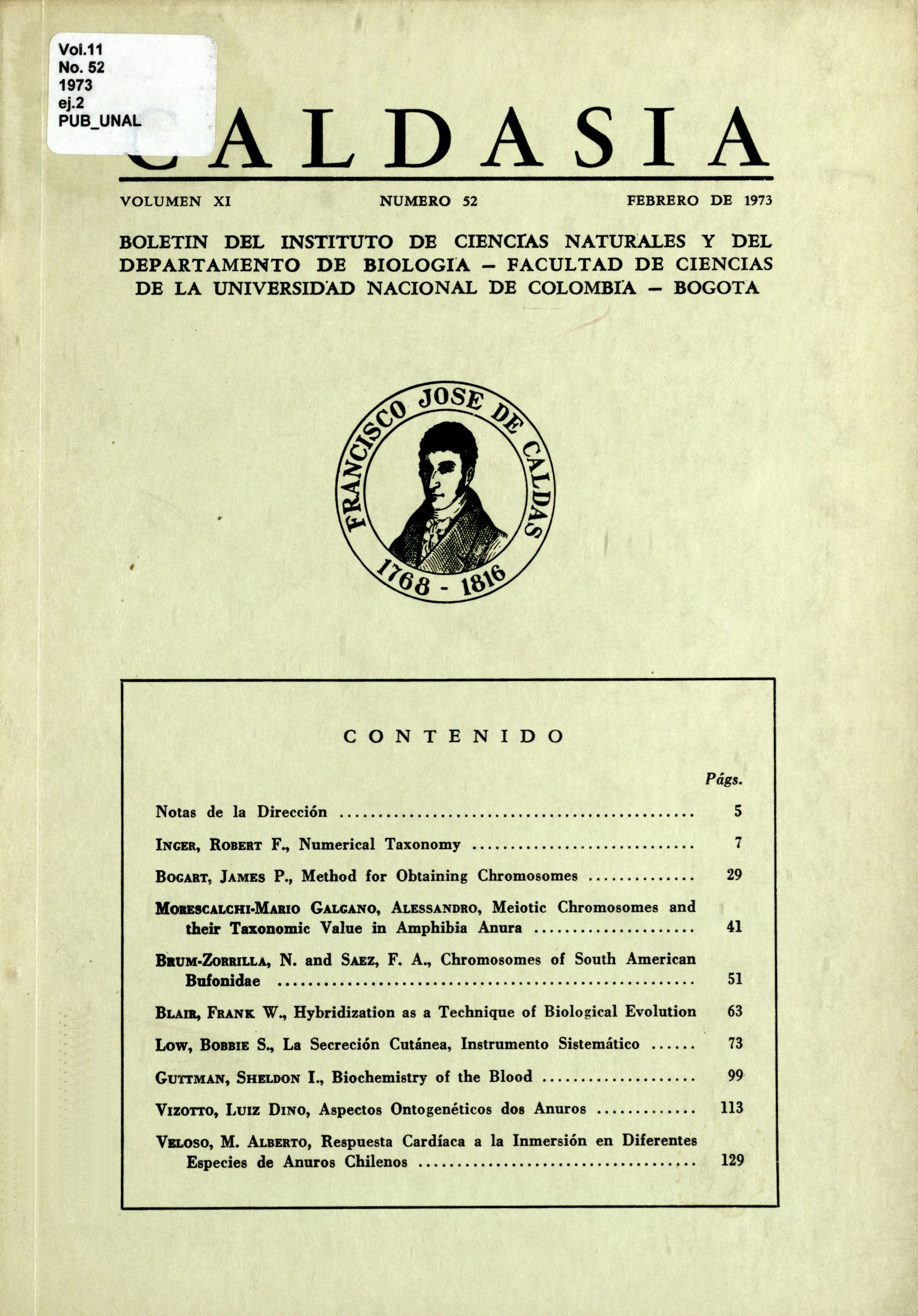
Biochemistry of the Blood
Palabras clave:
Blood, Polypeptide, Electrophoresis (es)Blood, Polypeptide, Electrophoresis (en)
Descargas
Recent findings in molecular biology show that protein structure
results from the indirect translation of the genetic message encoded in part of a DNA strand. The polypeptide chain produced in this manner can be considered the primary phenotype of an individual gene. Various interactions and combinations of these polypeptide chains, at particular time intervals, produce the secondary and tertiary phenotypes of the organism and result in its morphological and physiological attributes. The more sinrilar the genetic constitution of two organisms, the more closely they are related. From this basic observation, it follows that the degree of similarity between the proteins of organisms is directly proportional to their degree of relationship (Sibley, 1964).
results from the indirect translation of the genetic message encoded in part of a DNA strand. The polypeptide chain produced in this manner can be considered the primary phenotype of an individual gene. Various interactions and combinations of these polypeptide chains, at particular time intervals, produce the secondary and tertiary phenotypes of the organism and result in its morphological and physiological attributes. The more sinrilar the genetic constitution of two organisms, the more closely they are related. From this basic observation, it follows that the degree of similarity between the proteins of organisms is directly proportional to their degree of relationship (Sibley, 1964).
Visitas a la página del resumen del artículo
519
Descargas
Los datos de descarga aún no están disponibles.
Cómo citar
Guttman, S. I. (1973). Biochemistry of the Blood. Caldasia, 11(52), 99-112. https://revistas.unal.edu.co/index.php/cal/article/view/34192
Licencia
Derechos de autor 1973 Caldasia

Esta obra está bajo una licencia internacional Creative Commons Atribución 4.0.
Aquellos autores/as que tengan publicaciones con esta revista, aceptan los términos siguientes:
- Los autores/as conservarán sus derechos de autor y garantizarán a la revista el derecho de primera publicación de su obra, el cual estará simultáneamente sujeto a la Licencia de reconocimiento de Creative Commons que permite a terceros compartir la obra siempre que se indique su autor y su primera publicación esta revista.
- Los autores/as podrán adoptar otros acuerdos de licencia no exclusiva de distribución de la versión de la obra publicada (p. ej.: depositarla en un archivo telemático institucional o publicarla en un volumen monográfico) siempre que se indique la publicación inicial en esta revista.
- Se permite y recomienda a los autores/as difundir su obra a través de Internet (p. ej.: en archivos telemáticos institucionales o en su página web) antes y durante el proceso de envío, lo cual puede producir intercambios interesantes y aumentar las citas de la obra publicada. (Véase El efecto del acceso abierto).