Published
Development of a New Method for Synthesizing HITEC Salt-Based Alumina Nanofluids
Desarrollo de un nuevo método de síntesis de nanofluidos de alúmina a base de sal HITEC
DOI:
https://doi.org/10.15446/ing.investig.93876Keywords:
DSC; MDSC; molten salt-based nanofluids; specific heat capacity (en)DSC; MDSC; nanofluidos a base de sales fundidas; capacidad calorífica específica (es)
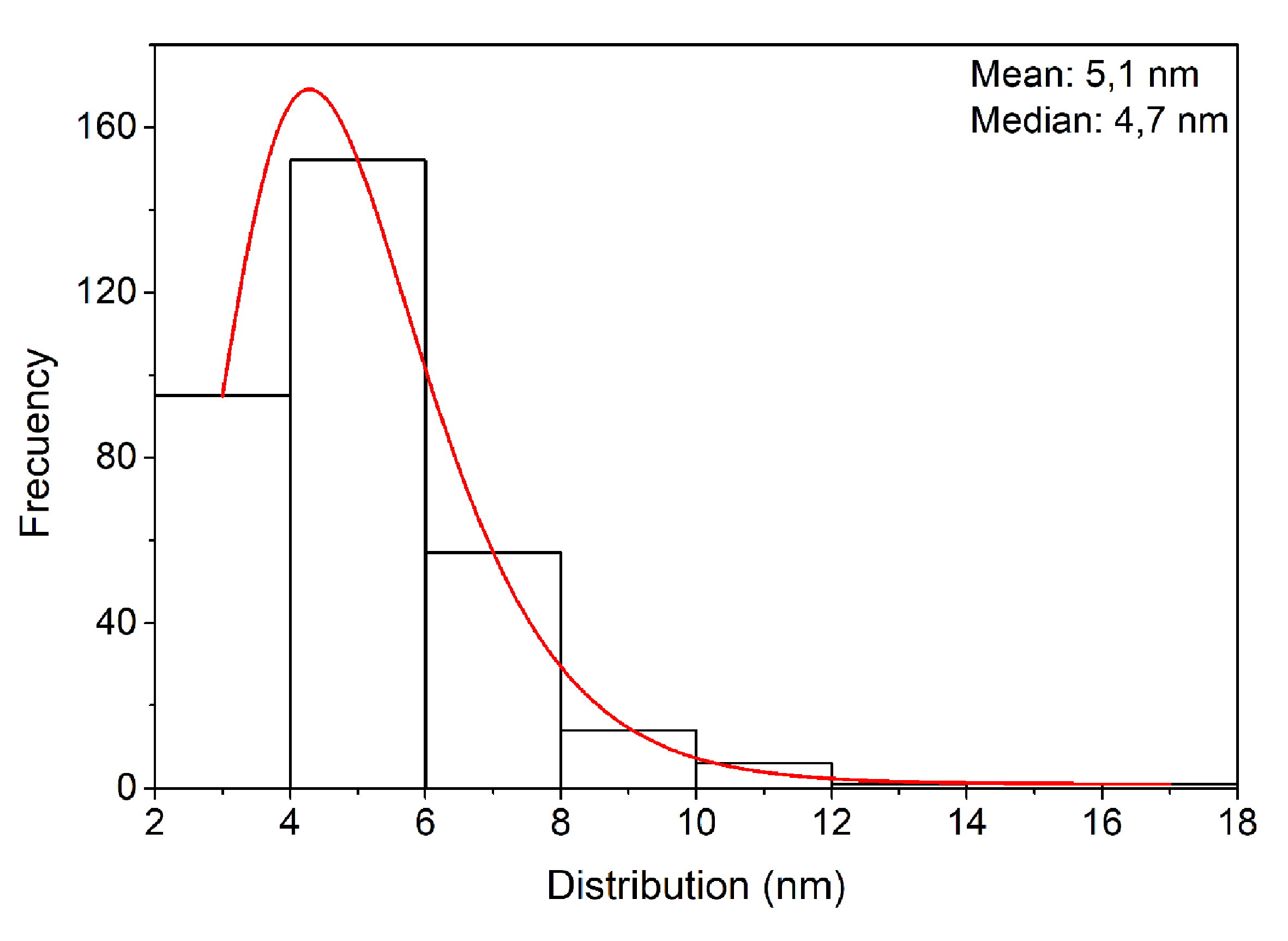
This study presents a new two-step method to synthesize molten salt-based nanofluids by replacing water with butanol and using an Emax high-energy mill to ensure good stability and homogeneity. Commercial HITEC molten salt was selected as the base fluid, and alumina nanoparticles (nominal size of 5,1 nm) were used as an additive in three different proportions: 0,5, 1,0, and 1,5 wt.%. The specific heat capacity was evaluated through two different methods: differential scanning calorimetry (DSC) and modulated differential scanning calorimetry (MDSC). According to the evaluation by MDSC, an increment of up to 4,27% in the specific heat capacity was achieved with 1,0 wt.% of alumina nanoparticles in comparison with the raw salt, without affecting the melting point and thermal stability of the salt. This behavior may be related to the good distribution of the nanoparticles in the salt. However, no significant improvement in the specific heat capacity of the nanofluid was observed when the standard DSC method was applied. This behavior may be due to the different sensitivities of the two methods to small changes in the sample, with MDSC being the more sensitive technique, as it establishes the contribution of the two phases that make up the nanofluid: the molten salt as the base fluid and the solid nanoparticles. Similarly, the heating rate used in each of the techniques can influence the sensitivity with regard to determining changes in nanofluids.
Este estudio presenta un nuevo método de dos pasos para sintetizar nanofluidos a base de sales fundidas reemplazando el agua por butanol y utilizando un molino de alta energía Emax para garantizar una buena estabilidad y homogeneidad. Se seleccionó la sal fundida comercial HITEC como fluido base y se utilizaron nanopartículas de alúmina (tamaño nominal de 5,1 nm) como aditivo en tres proporciones diferentes: 0,5, 1,0 y 1,5 % en peso. La capacidad calorífica específica se evaluó mediante dos métodos diferentes: calorimetría diferencial de barrido (DSC) y calorimetría diferencial de barrido modulada (MDSC). Según la evaluación por MDSC, se logró un incremento de hasta 4,27 % en la capacidad calorífica específica con 1,0 % en peso de nanopartículas de alúmina en comparación con la sal pura, sin afectar el punto de fusión y estabilidad térmica de la sal. Este comportamiento puede estar relacionado con la buena distribución de las nanopartículas en la sal. Sin embargo, no se observó una mejora significativa en la capacidad calorífica específica del nanofluido cuando se aplicó el método estándar de DSC. Este comportamiento puede deberse a las diferentes sensibilidades de los dos métodos a pequeños cambios en la muestra, siendo MDSC la técnica más sensible, ya que establece el aporte de las dos fases que componen el nanofluido: la sal fundida como fluido base y las nanopartículas sólidas. Del mismo modo, la velocidad de calentamiento utilizada en cada una de las técnicas puede influir en la sensibilidad para determinar cambios en los nanofluidos.
References
Andreu-Cabedo, P., Mondragón, R., Hernández, L., Martínez-Cuenca, R., Cabedo, L., and Julia, J. E. (2014). Increment of specific heat capacity of solar salt with SiO2 nanoparticles. Nanoscale Research Letters, 9(1), 582. https://doi.org/10.1186/1556-276X-9-582
ASTM International (2011). E1269: Standard test method for determining specific heat capacity by differential scanning.
ASTM International. https://doi.org/10.1520/E1269-11.2
ASTM International (2015). E2716-09: Standard test method for determining specific heat capacity by sinusoidal modulated temperature differential scanning calorimetry. ASTM International. https://doi.org/10.1520/E2716-09R14.2
Awad, A., Navarro, H., Ding, Y., & Wen, D. (2018). Thermal-physical properties of nanoparticle-seeded nitrate molten salts. Renewable Energy, 120, 275–288. https://doi.org/10.1016/j.renene.2017.12.026
Betts, M. R. (2011). The effects of nanoparticle augmentation of nitrate thermal storage materials for use in concentrating solar power applications [Master's thesis, Texas A&M University]. https://hdl.handle.net/1969.1/ETD-TAMU-2011-05-9118
Bonk, A., Sau, S., Uranga, N., Hernaiz, M., and Bauer, T. (2018). Advanced heat transfer fluids for direct molten salt line-focusing CSP plants. Progress in Energy and Combustion Science, 67, 69-87. https://doi.org/10.1016/j.pecs.2018.02.002
Botero, Y. L., López-Rendón, J. E., Ramírez, D., Zapata, D. M., and Jaramillo, F. (2020). From clay minerals to Al2O3 nanoparticles: Synthesis and colloidal stabilization for optoelectronic applications. Minerals, 10(2), 118. https://doi.org/10.3390/min10020118
Chen, X., Wu, Y. ting, Zhang, L. di, Wang, X., and Ma, C. fang. (2018). Experimental study on the specific heat and stability of molten salt nanofluids prepared by high-temperature melting. Solar Energy Materials and Solar Cells, 176, 42-48. https://doi.org/10.1016/j.solmat.2017.11.021
Chen, X., Wu, Y. ting, Zhang, L. di, Wang, X., and Ma, C. fang. (2019). Experimental study on thermophysical properties of molten salt nanofluids prepared by high-temperature melting. Solar Energy Materials and Solar Cells, 191, 209-217. https://doi.org/10.1016/j.solmat.2018.11.003
Chieruzzi, M., Cerritelli, G. F., Miliozzi, A., and Kenny, J. M. (2013). Effect of nanoparticles on heat capacity of nanofluids based on molten salts as PCM for thermal energy storage. Nanoscale Research Letters, 8(1), 448. https://doi.org/10.1186/1556-276X-8-448
Chieruzzi, M., Cerritelli, G. F., Miliozzi, A., Kenny, J. M., and Torre, L. (2017a). Heat capacity of nanofluids for solar energy storage produced by dispersing oxide nanoparticles in nitrate salt mixture directly at high temperature. Solar Energy Materials and Solar Cells, 167, 60-69. https://doi.org/10.1016/j.solmat.2017.04.011
Chieruzzi, M., Cerritelli, G. F., Miliozzi, A., Kenny, J. M., and Torre, L. (2017b). Heat capacity of nanofluids for solar energy storage produced by dispersing oxide nanoparticles in nitrate salt mixture directly at high temperature. Solar Energy Materials and Solar Cells, 167, 60-69. https://doi.org/10.1016/j.solmat.2017.04.011
Coastal Chemical Co. LLC. (2009). HITEC ® Heat Transfer Salt. http://www.skyscrubber.com/MSR%20-%20HITEC%20Heat%20Transfer%20Salt.pdf
Dudda, B., and Shin, D. (2013). Effect of nanoparticle dispersion on specific heat capacity of a binary nitrate salt eutectic for concentrated solar power applications. International Journal of Thermal Sciences, 69, 37-42. https://doi.org/10.1016/j.ijthermalsci.2013.02.003
Fernández, A. G., Galleguillos, H., Fuentealba, E., and Pérez, F. J. (2015). Thermal characterization of HITEC molten salt for energy storage in solar linear concentrated technology. Journal of Thermal Analysis and Calorimetry, 122(1), 3-9. https://doi.org/10.1007/s10973-015-4715-9
Gimenez, P., and Fereres, S. (2015). Effect of heating rates and composition on the thermal decomposition of nitrate based molten salts. Energy Procedia, 69, 654-662. https://doi.org/10.1016/j.egypro.2015.03.075
Ho, M. X., and Pan, C. (2014). Optimal concentration of alumina nanoparticles in molten hitec salt to maximize its specific heat capacity. International Journal of Heat and Mass Transfer, 70, 174-184. https://doi.org/10.1016/j.ijheatmasstransfer.2013.10.078
Ho, M. X., and Pan, C. (2017). Experimental investigation of heat transfer performance of molten HITEC salt flow with alumina nanoparticles. International Journal of Heat and Mass Transfer, 107, 1094-1103. https://doi.org/10.1016/j.ijheatmasstransfer.2016.11.015
Hu, Y., He, Y., Zhang, Z., and Wen, D. (2017). Effect of Al2O3 nanoparticle dispersion on the specific heat capacity of a eutectic binary nitrate salt for solar power applications. Energy Conversion and Management, 142, 366-373. https://doi.org/10.1016/j.enconman.2017.03.062
Hu, Y., He, Y., Zhang, Z., and Wen, D. (2019). Enhanced heat capacity of binary nitrate eutectic salt-silica nanofluid for solar energy storage. Solar Energy Materials and Solar Cells, 192, 94-102. https://doi.org/10.1016/j.solmat.2018.12.019
Kearney, D., Herrmann, U., Nava, P., Kelly, B., Mahoney, R., Pacheco, J., Cable, R., Potrovitza, N., Blake, D., and Price, H. (2002). Assessment of a molten salt heat transfer fluid in a parabolic trough solar field. Journal of Solar Energy Engineering, 125(2), 170-176. https://doi.org/10.1115/1.1565087
Larche, F. C. (1945). Melting point of alpha-alumina. Journal of the Franklin Institute, 139(5), 406.
Lu, M.-C., and Huang, C.-H. (2013). Specific heat capacity of molten salt-based alumina nanofluid. Nanoscale Research Letters, 8(1), 292. https://doi.org/10.1186/1556-276X-8-292
Mohammad, M. Bin, Brooks, G. A., and Rhamdhani, M. A. (2017). Thermal analysis of molten ternary lithium-sodium-potassium nitrates. Renewable Energy, 104, 76-87. https://doi.org/10.1016/j.renene.2016.12.015
Muñoz-Sánchez, B., Nieto-Maestre, J., Guerreiro, L., Julia, J. E., Collares-Pereira, M., and García-Romero, A. (2017). Molten salt based nanofluids based on solar salt and alumina nanoparticles: An industrial approach. AIP Conference Proceedings, 1850, 080016. https://doi.org/10.1063/1.4984437
Muñoz-Sánchez, B., Nieto-Maestre, J., Imbuluzqueta, G., Marañón, I., Iparraguirre-Torres, I., and García-Romero, A. (2017). A precise method to measure the specific heat of solar salt-based nanofluids. Journal of Thermal Analysis and Calorimetry, 129(2), 905-914. https://doi.org/10.1007/s10973-017-6272-x
Muñoz-Sánchez, B., Nieto-Maestre, J., Veca, E., Liberatore, R., Sau, S., Navarro, H., Ding, Y., Navarrete, N., Juliá, J. E., Fernández, A. G., and García-Romero, A. (2018). Rheology of Solar-Salt based nanofluids for concentrated solar power. Influence of the salt purity, nanoparticle concentration, temperature and rheometer geometry. Solar Energy Materials and Solar Cells, 176, 357-373. https://doi.org/10.1016/j.solmat.2017.10.022
Myers, P. D., Alam, T. E., Kamal, R., Goswami, D. Y., and Stefanakos, E. (2016). Nitrate salts doped with CuO nanoparticles for thermal energy storage with improved heat transfer. Applied Energy, 165, 225-233. https://doi.org/10.1016/j.apenergy.2015.11.045
Navarrete, N., Hernández, L., Vela, A., and Mondragón, R. (2020). Influence of the production method on the thermophysical properties of high temperature molten salt-based nanofluids. Journal of Molecular Liquids, 302, 112570. https://doi.org/10.1016/j.molliq.2020.112570
REN21 (2021). Renewables 2021 Global Status Report. https://abdn.pure.elsevier.com/en/en/researchoutput/ren21(5d1212f6-d863-45f7-8979-5f68a61e380e).html
Schuller, M., Shao, Q., and Lalk, T. (2015). Experimental investigation of the specific heat of a nitrate-alumina nanofluid for solar thermal energy storage systems. International Journal of Thermal Sciences, 91, 142-145. https://doi.org/10.1016/j.ijthermalsci.2015.01.012
Seo, J., and Shin, D. (2016). Size effect of nanoparticle on specific heat in a ternary nitrate (LiNO3-NaNO3-KNO3) salt eutectic for thermal energy storage. Applied Thermal Engineering, 102, 144-148. https://doi.org/10.1016/j.applthermaleng.2016.03.134
Serrano-López, R., Fradera, J., and Cuesta-López, S. (2013). Molten salts database for energy applications. Chemical Engineering and Processing, 73, 87–102. https://doi.org/10.1016/j.cep.2013.07.008
Shin, D., and Banerjee, D. (2014). Specific heat of nanofluids synthesized by dispersing alumina nanoparticles in alkali salt eutectic. International Journal of Heat and Mass Transfer, 74, 210-214. https://doi.org/10.1016/j.ijheatmasstransfer.2014.02.066
Song, W., Lu, Y., Wu, Y., and Ma, C. (2018). Effect of SiO2 nanoparticles on specific heat capacity of low-melting-point eutectic quaternary nitrate salt. Solar Energy Materials and Solar Cells, 179, 66-71. https://doi.org/10.1016/j.solmat.2018.01.014
Tiznobaik, H., and Shin, D. (2013). Enhanced specific heat capacity of high-temperature molten salt-based nanofluids. International Journal of Heat and Mass Transfer, 57(2), 542548. https://doi.org/10.1016/j.ijheatmasstransfer.2012.10.062
Vignarooban, K., Xu, X., Arvay, A., Hsu, K., and Kannan, A. M. (2015). Heat transfer fluids for concentrating solar power systems - A review. Applied Energy, 146, 383-396. https://doi.org/10.1016/j.apenergy.2015.01.125
Villada, C., Bonk, A., Bauer, T., and Bolívar, F. (2018). High-temperature stability of nitrate/nitrite molten salt mixtures under different atmospheres. Applied Energy, 226, 107-115. https://doi.org/10.1016/j.apenergy.2018.05.101
Villada, C., Jaramillo, F., Castaño, J. G., Echeverría, F., and Bolívar, F. (2019). Design and development of nitrate-nitrite based molten salts for concentrating solar power applications. Solar Energy, 188, 291-299. https://doi.org/10.1016/j.solener.2019.06.010
Zhang, S., Wu, W., and Wang, S. (2017). Integration highly concentrated photovoltaic module exhaust heat recovery system with adsorption air-conditioning module via phase change materials. Energy, 118, 1187-1197. https://doi.org/10.1016/j.energy.2016.10.139
Dimensions
PlumX
Article abstract page views
Downloads
How to Cite




License
Copyright (c) 2022 Marllory Isaza Ruiz, Francisco Javier Bolivar Osorio

This work is licensed under a Creative Commons Attribution 4.0 International License.
The authors or holders of the copyright for each article hereby confer exclusive, limited and free authorization on the Universidad Nacional de Colombia's journal Ingeniería e Investigación concerning the aforementioned article which, once it has been evaluated and approved, will be submitted for publication, in line with the following items:
1. The version which has been corrected according to the evaluators' suggestions will be remitted and it will be made clear whether the aforementioned article is an unedited document regarding which the rights to be authorized are held and total responsibility will be assumed by the authors for the content of the work being submitted to Ingeniería e Investigación, the Universidad Nacional de Colombia and third-parties;
2. The authorization conferred on the journal will come into force from the date on which it is included in the respective volume and issue of Ingeniería e Investigación in the Open Journal Systems and on the journal's main page (https://revistas.unal.edu.co/index.php/ingeinv), as well as in different databases and indices in which the publication is indexed;
3. The authors authorize the Universidad Nacional de Colombia's journal Ingeniería e Investigación to publish the document in whatever required format (printed, digital, electronic or whatsoever known or yet to be discovered form) and authorize Ingeniería e Investigación to include the work in any indices and/or search engines deemed necessary for promoting its diffusion;
4. The authors accept that such authorization is given free of charge and they, therefore, waive any right to receive remuneration from the publication, distribution, public communication and any use whatsoever referred to in the terms of this authorization.