Published
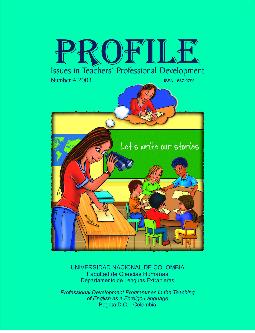
Encouraging the Development of Children’s Oral Communicative Competences through Play
Estimulación del desarrollo de las competencias comunicativas orales de los niños a través del juego
Keywords:
Teaching English to children, primary school, educational games, second language acquisition, learning ability (en)Enseñanza de inglés a niños, escuela primaria, juegos educativos, adquisición de una segunda lengua, habilidad de aprendizaje (es)
Downloads
When children start to learn a foreign language they already have some communicative competence in their mother tongue. Thus a classroom research project was carried out in order to study the development of children's competence in communicating in other languages. The main theme explored was if it was possible to help kids acquire and develop their competence in the new code through the use of play activities. The concepts related to competences, play and some children's characteristics when learning a second language will be presented in this article. Also, the results of the implementation of play activities in the classroom as well as some pedagogical implications will be analyzed as a means to promote improvement in the foreign language teaching-learning process.
Cuando los niños empiezan el aprendizaje de una lengua extranjera ya poseen alguna competencia comunicativa en su lengua materna. Este proyecto de investigación en el aula busca promover esta competencia para comunicarse en otras lenguas. El propósito fundamental de esta investigación fue explorar si era posible ayudar a los estudiantes a adquirir y desarrollar su competencia en este nuevo código, mediante la implementación de actividades lúdicas. En este artículo se presentarán los conceptos de competencias, lúdica y algunas de las características de los niños en el aprendizaje de una segunda lengua. También se presentarán los resultados que surgieron a partir de la implementación de las actividades lúdicas y se mencionarán algunas implicaciones pedagógicas que promueven el mejoramiento del proceso de enseñanza-aprendizaje de una lengua extranjera.
References
Arhar, J.M., Holly, M. and Kasten, W.C. (2001). Action Research for Teachers. Traveling the Yellow Brick Road. New Jersey: Merrill Prentice Hall.
Bachman, L.F. (1990). Fundamental Considerations in Language Testing. Reading M.A. Addison Wesley Publishing Company.
Bogoya, D., et al. (1999). Competencias y proyectos pedagógicos. Bogotá: Unibiblos.
Bruner, J. (1990). La elaboración del sentido. La construcción del mundo por el niño. Buenos Aires: Paidós.
Buendía L. (1998). Métodos de investigación en psicopedagogía. Bogotá: Editorial McGraw-Hill.
González de Zárate, M. (2000). Lúdica y Lenguas Extranjeras. Bogotá: Cooperativa Editorial Magisterio.
Hymes, D. (1972). On Communicative Competence. En J. B. Pride and J. Homes (Eds.). Sociolinguistics: Selected Readings. Harmondsworth: Penguin Books.
Jiménez, Carlos A. (1996). Pedagogía de la creatividad y de la lúdica. Bogotá: Cooperativa Editorial Magisterio.
Piaget, J. (1981). La Representación del Mundo en el Niño. Madrid: Morata.
Shorrocks, D. (1991). The Development of Children’s Thinking and Understanding. In C. Brumfit. Teaching English to Children. London: Collins.
Vygotsky, L. S. (1978). Mind in Society. The Development of Higher Psychological Processes. Cambridge, MA: Harvard University Press.
Article abstract page views
Downloads
How to Cite
License
Copyright (c) 2003 Olga Lucía Castrillón

This work is licensed under a Creative Commons Attribution-NonCommercial-NoDerivatives 4.0 International License.
You are authorized to copy and redistribute the material in any medium or format as long as you give appropriate credit to the authors of the articles and to Profile: Issues in Teachers' Professional Development as original source of publication. The use of the material for commercial purposes is not allowed. If you remix, transform, or build upon the material, you may not distribute the modified material.
Authors retain the intellectual property of their manuscripts with the following restriction: first publication is granted to Profile: Issues in Teachers' Professional Development.