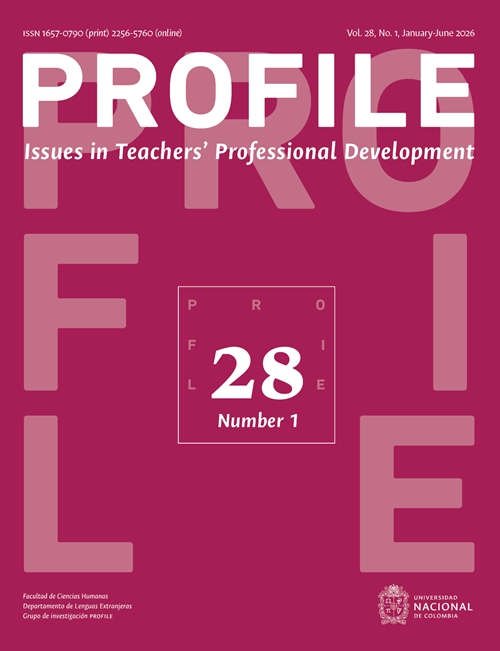
Published
Editorial: On the Use of Generative AI Tools in Academic Writing
DOI:
https://doi.org/10.15446/profile.v28n1.124327Keywords:
Generative artificial intelligence, Large language models, Publication ethics (en)Inteligencia artifical generativa, Grandes modelos de lenguaje, Ética de la publicación (es)
Generative artificial intelligence (GenAI) tools, and particularly large language models (LLMs), have become an inescapable reality of modern life, with their potential to permeate the distinct dimensions of human activity, including fundamental ones, such as the communication of knowledge and information, which are at the core of scientific publishing. Thus, it behooves those of us involved in academic and editorial arenas to exert careful control over the management of those tools. This is much needed to avoid falling into ethically questionable practices (e.g., reproducing biases, spreading misinformation, plagiarism, and lack of transparency, among many others), for which only we can be held liable.
References
COPE Council. (2024). COPE position: Authorship and AI [English version]. https://doi.org/10.24318/cCVRZBms
Hosseini, M., Resnik, D. B., & Holmes, K. (2023). The ethics of disclosing the use of artificial intelligence tools in writing scholarly manuscripts. Research Ethics, 19(4), 449–465. https://doi.org/10.1177/17470161231180449
Kaebnick, G. E., Magnus, D. C., Kao, A., Hosseini, M., Resnik, D., Dubljević, V., Rentmeester, C., Gordijn, B., & Cherry, M. J. (2023). Editors’ statement on the responsible use of generative AI technologies in scholarly journal publishing. Hastings Center Report, 53(5), 3–6. https://doi.org/10.1002/hast.1507
Kosmyna, N., Hauptmann, E., Yuan, Y. T., Situ, J., Liao, X.-H., Beresnitzky, A. V., Braunstein, I., & Maes, P. (2025). Your brain on ChatGPT: Accumulation of cognitive debt when using an AI assistant for essay writing task. arXiv. https://doi.org/10.48550/arXiv.2506.08872
Penabad-Camacho, L., Morera-Castro, M., & Penabad-Camacho, M. A. (2024b). Guía para uso y reporte de inteligencia artificial en revistas científico-académicas. Revista Electrónica Educare, 28, 1–41. https://doi.org/10.15359/ree.28-S.19830
Penabad-Camacho, L., Penabad-Camacho, M. A., Mora-Campos, A., Cerdas-Vega, G., Morales-López, Y., Ulate-Segura, M., Méndez-Solano, A., Nova-Bustos, N., Vega-Solano, M. F., & Castro-Solano, M. M. (2024a). Declaración de Heredia: principios sobre el uso de inteligencia artificial en la edición científica. Revista Electrónica Educare, 28, 1–10. https://doi.org/10.15359/ree.28-S.19967
Dimensions
PlumX
Article abstract page views
Downloads
How to Cite
License
Copyright (c) 2026 Melba Libia Cárdenas

This work is licensed under a Creative Commons Attribution-NonCommercial-NoDerivatives 4.0 International License.
You are authorized to copy and redistribute the material in any medium or format as long as you give appropriate credit to the authors of the articles and to Profile: Issues in Teachers' Professional Development as original source of publication. The use of the material for commercial purposes is not allowed. If you remix, transform, or build upon the material, you may not distribute the modified material.
Authors retain the intellectual property of their manuscripts with the following restriction: first publication is granted to Profile: Issues in Teachers' Professional Development.