Published
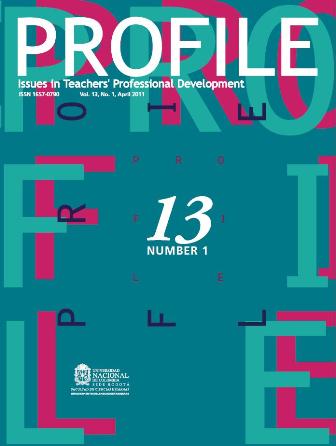
Teachers’ Knowledge of Second Language and Curriculum: A Narrative Experience
Conocimiento de los profesores acerca de la segunda lengua y el currículo: una experiencia narrativa
Keywords:
Narrative inquiry, narratives, second language curriculum, second language teaching and learning, teachers' beliefs (en)Currículo de una segunda lengua, creencias de los docentes, enseñanza y aprendizaje de una segunda lengua, estudio de la narrativa, narrativas (es)
This study was carried out with a group of three teachers who work for the foreign languages department of a private university in Colombia. It was aimed at unveiling and characterizing the narrative knowledge these teachers hold about language teaching and learning processes as well as the role this knowledge plays in the constant construction and evaluation of curriculum. Data were collected through concept maps, biodata surveys, narrative interviews, and participant observation within a narrative inquiry approach to research. Findings show the crucial need to value and explore teachers' knowledge from a narrative perspective in order to better understand the complexity of the teaching context in which they work.
Este proyecto de investigación se realizó con un grupo de tres profesores que laboran en el Departamento de Lenguas de una universidad privada de Colombia. El objetivo fue develar y caracterizar el conocimiento narrativo de los participantes en relación con la enseñanza y aprendizaje de la lengua extranjera y el papel de dicho conocimiento en la construcción y evaluación del currículo. Se recolectaron datos mediante mapas conceptuales, encuestas, entrevistas narrativas y observación de clases, en el marco de una metodología de la investigación de tipo narrativo. Los resultados muestran la necesidad de valorar y explorar el conocimiento de los docentes, desde una perspectiva narrativa, y con el fin de comprender mejor la complejidad del contexto en donde laboran.
References
Beattie, M., Dobson, D., Thornton, G., & Hegge, L. (2007). Interacting narratives: Creating and re-creating the self. International Journal of Lifelong Education. 26(2), 119-141.
Ben-Peretz, M. (1980). Teachers' role in curriculum development: An alternative approach. Canadian Journal of Education, 5(2), 52-62.
Clavijo, A. (2004) Teacher acting critically upon the curriculum: Innovations that transform teaching. Ikala, 15, 11-44.
Clandinin, M. (1985). Personal practical knowledge: A study of teachers' classroom images. Curriculum Inquiry, 15(4), 361-385.
Connelly, F. M., & Clandinin, D. J. (1995). Teachers' professional knowledge landscapes: Teacher stories. Stories of teachers. School stories. Stories of school. Educational Researcher, 25(3), 24-30.
Connelly, M., & Clandinin, D. (2006). Narrative inquiry. In Camilli, G., & Elmore, P. (Eds.), Handbook of complimentary methods in education research (pp. 477-487). Washington: American Educational Research Association.
Cortazzi, M., (1993). Narrative and the study of teaching: Narrative analysis. London: Routledge.
Coulter, C., Charles, M., & Poynor, L. (2007). Storytelling as pedagogy: An unexpected outcome of Narrative Inquiry. Curriculum Inquiry, 37(2), 103-122.
Craig, S. (2006). Why is dissemination so difficult: The nature of teacher knowledge and the spread of curricular reform. American Education Research Journal. 43(2), 257-293.
Drake, C., & Gamoran, M. (2006). Practicing change: Adaptation and teacher narrative in the context of mathematics education reform. Curriculum Inquiry, 36(2), 153-185.
Elbaz, F. (1983). Teacher thinking: A study of practical knowledge. New York: Nichols Publishing Company.
Farrell, T. (2001). Concept maps to trace conceptual change in pre-service English teachers. RECL Journal, 32(2), 27-44.
Jackson, P. (1992). Helping teachers develop. In Hargreaves, A., & Fullan, M. (Eds.), Understanding Teacher Development. New York: Teachers College Press.
Olson, M. (2000). Curriculum as a multistoried process. Canadian Journal of Education, 25(2), 169.
Ollerenshaw, J., & Creswell, J. (2002). Narrative Research: A Comparison of two restorying data analysis approaches. Qualitative Inquiry, 8(3), 329-350.
Polkinghorne, D. E. (1995). Narrative configuration in qualitative analysis. In J. A. H. A. R. Wisniewski (Ed.), Life history and narrative (pp. 5-24). London: Falmer Press.
Schwab, Joseph J. (1969). College Curriculum and Student Protest. Chicago: University of Chicago Press.
Sikes, P., & Gale, K. (2006). Narrative approaches to educational research: Research in education. Retrieved from http://www.edu.plymouth.ac.uk/resined/
Strauss,A., & Corbin, J. (1990). Basics of qualitative research: Grounded theory, procedures and techniques. London: Sage.
Thorne, S., Kirkham, S.R., & MacDonald-Emes, J. (1997). Interpretive description: A noncategorical qualitative alternative for developing nursing knowledge. Research in Nursing & Health, 20, 169-177.
Woods, D. (1996). Teacher cognition in language teaching: Beliefs, decision-making and classroom practice. Cambridge: Cambridge University Press.
Article abstract page views
Downloads
How to Cite
License
Copyright (c) 2011 Jenny Alexandra Mendieta Aguilar

This work is licensed under a Creative Commons Attribution-NonCommercial-NoDerivatives 4.0 International License.
You are authorized to copy and redistribute the material in any medium or format as long as you give appropriate credit to the authors of the articles and to Profile: Issues in Teachers' Professional Development as original source of publication. The use of the material for commercial purposes is not allowed. If you remix, transform, or build upon the material, you may not distribute the modified material.
Authors retain the intellectual property of their manuscripts with the following restriction: first publication is granted to Profile: Issues in Teachers' Professional Development.