Published
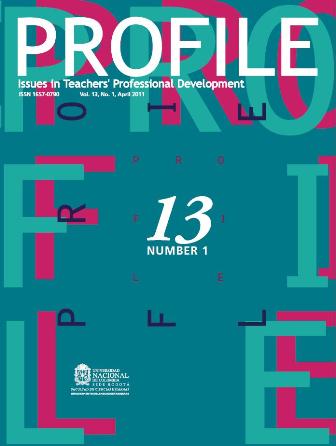
The Role of Discussion Boards in a University Blended Learning Program
El papel de los foros de discusión en un programa universitario de aprendizaje mixto
Keywords:
ALEX Virtual English program, blended learning, discussion forums (en)Aprendizaje mixto, foros de discusión, programa virtual de inglés (es)
Discussion boards as tools in blended English language learning programs have unique characteristics when compared to other synchronous and asynchronous communication tools that are different. Therefore, it is important to investigate the way they operate, their role within a given program and the students', teachers' and tutors' attitudes towards them. This paper contains the report of a study that took place in an English virtual program of a public university in Colombia. Students' surveys and reflections, the tutor's and teachers' interviews and reflections were used to collect data. The results showed the main advantages and disadvantages of the use of the tool as well as ideas for new proposals to improve their use and, therefore, increase the students' performance in the program.
Los foros de discusión tienen características únicas en comparación con otras herramientas sincrónicas y asincrónicas de comunicación. Es importante indagar sobre su funcionamiento, su papel dentro del programa y las percepciones que estudiantes, tutores y profesores tienen de ellos. Se reporta aquí el estudio que se realizó en un programa virtual de inglés de una universidad pública colombiana. Se recolectó información mediante encuestas y reflexiones de los estudiantes y entrevistas y reflexiones de los profesores. Los resultados muestran las ventajas y desventajas en el uso de esta herramienta e ideas para generar nuevas propuestas que mejoren su uso, para así incrementar el desempeño de los estudiantes en el programa.
References
Arango, M. L. (2003). Foros virtuales como estrategia de aprendizaje. Universidad de Los Andes. LIDIE-Laboratorio de Investigación y Desarrollo sobre Informática en Educación. Argentina. Retrieved on April 2009 from Web site: http://www.rlcu.org.ar/revista/numeros/02-02-Abril-2004/documentos/Arango.pdf
Barrios, O. (2008). Aprendizaje colaborativo y entornos virtuales: en la búsqueda de una comunidad de aprendizaje de lengua extranjera para los estudiantes de segundo nivel del programa ALEX Virtual. Monografía para optar por el Título de Licenciado en Filología e Idiomas-Inglés. Universidad Nacional de Colombia Facultad de Ciencias Humanas, Bogotá.
Benson, P. (2001). Teaching and Researching Autonomy in Language Learning. Edinburgh: Longman Pearson Education Limited.
Cantor, D. I. (2009). Discussion Boards as Tools in Blended EFL Learning Programs. PROFILE Issues in Teachers Professional Development, 11, p. 113-121.
Carlile, O., Jordan, A., & Stack, A. (2004). Learning by Design: Learning Theory for the Designer of Multimedia Educational Materials. Waterford: WIT/BBC Online.
Carnell, E. (2000). Dialogue, discussion and feedback: views of secondary school students on how others help their learning. In Askew, S. (Ed), Feedback for learning, (pp. 46-61). London: Routledge.
Cohen, L., Manion, L., & Morrison, K., (2000). (5th Edition), Research Methods in Education, London: Rout-ledge Falmer.
Coordinación ALEX Virtual. (2010). Guía del estudiante: Programa ALEX Virtual. Retrieved from: http://guiadelestudiantealexvirtual.net16.net/
Departamento de Lenguas Extranjeras. (2007). Folleto divulgativo lanzamiento, ALEX Virtual. Bogotá: Universidad Nacional de Colombia.
Ellis, A. (2001). Student-centred collaborative learning via face-to-face and asynchronous online communication: What's the difference? Proceedings 18th ASCILITE Conference Melbourne, 9-12 December. Retrieved on April 2010 from Web site: http://www.ascilite.org.au/conferences/melbourne01/pdf/papers/ellisa.pdf
Hiltz, S. T., Turoff, M., & Harasim, L. (2007). Development and philosophy of the field of asynchronous learning networks. In Andrews, R. & Haythornthwaite, C. (Eds.), Handbook of E-Learning Research (pp. 56-72). London: Sage.
Horton, W., & Horton, K. (2003). E-Learning tools and technologies. Indianapolis: Wiley Publishing.
Krashen, D. (1988). Second Language Acquisition and Second Language Learning. Prentice-Hall International.
MacDonald, J. (2008). Blended learning and online tutoring: Planning Learner Support and Activity Design. Hampshire, UK: Gower Publishing.
Malamah-Thomas,A.(1987).Classroom Interaction. Oxford: Oxford University Press.
Medina, R. (2009). Interaction in the online tutoring sessions in a group of ALEX Virtual level IV at the National University of Colombia-Bogotá. Monografía para optar por el Título de Licenciada en Filología e Idiomas Inglés. Universidad Nacional de Colombia Facultad de Ciencias Humanas, Bogotá.
Pérez, S. L. (2008). El foro virtual como espacio educativo: propuestas didácticas para su uso. Retrieved on April 2010 from Web site: http://www.quadernsdigitals.net/ datos_web/hemeroteca/r_1/nr_662/a_8878/8878.html
Pinzón, D. (2008). Percepciones de los estudiantes, profesores y tutores de los cursos de inglés I y II del programa ALEX Virtual de la Universidad Nacional de Colombia, respecto a la respuesta a las tutorías presenciales y en línea durante el primer semestre de 2008. Monografía para optar por el Título de Licenciada en Filología e Idiomas Inglés. Universidad Nacional de Colombia Facultad de Ciencias Humanas, Bogotá.
Strauss, A.L. & Corbin, J. (1990). Basics of qualitative research: Grounded theory procedures and techniques. Newbury Park: Sage.
Sutherland-Smith, W. (2008). Plagiarism, the Internet and Student Learning: Improving Academic Integrity. New York and London: Routledge.
Universidad Nacional de Colombia [ALEX]. (2008). objetivos del programa. Programa para el desarrollo del aprendizaje autónomo de lenguas extranjeras. Bogotá, D.C.
Yin, R. (2003). Case Study Research. Thousand Oaks California: Sage Publications.
Article abstract page views
Downloads
How to Cite
License
Copyright (c) 2011 Rosa Isabel González Moreno

This work is licensed under a Creative Commons Attribution-NonCommercial-NoDerivatives 4.0 International License.
You are authorized to copy and redistribute the material in any medium or format as long as you give appropriate credit to the authors of the articles and to Profile: Issues in Teachers' Professional Development as original source of publication. The use of the material for commercial purposes is not allowed. If you remix, transform, or build upon the material, you may not distribute the modified material.
Authors retain the intellectual property of their manuscripts with the following restriction: first publication is granted to Profile: Issues in Teachers' Professional Development.