
Publicado
The importance of antimicrobial compounds produced by beneficial bacteria on the biocontrol of phytopathogens
Importancia de compuestos antimicrobianos producidos por bacterias benéficas en el biocontrol de fitopatógenos
DOI:
https://doi.org/10.15446/abc.v25n1.76867Palabras clave:
Antagonism, antibiotic, competition, inhibition, PGPR (en)Antagonismo, antibiótico, competencia, inhibición, PGPR (es)
Descargas
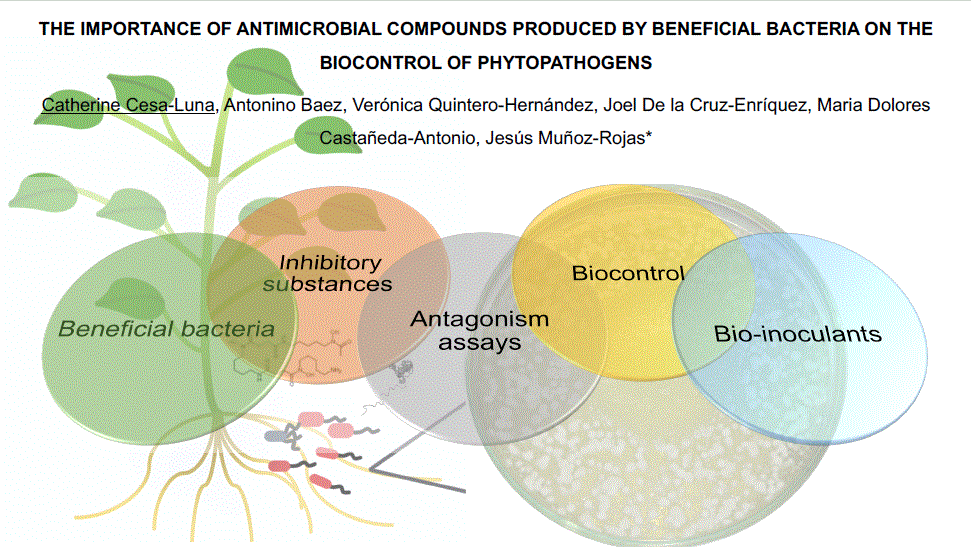
Bacteria produce antimicrobial compounds to compete for nutrients and space in a particular habitat. Antagonistic interactions can be evaluated by several methodologies including the double-layer agar and simultaneous inhibition assays. Among the well-known inhibitory substances produced by bacteria are the broad-spectrum antibiotics, organic acids, siderophores, antifungal, and bacteriocins. The most studied bacterial genera able to produce these inhibitory substances are Enterococcus, Lactococcus, Streptomyces, Bacillus, Pseudomonas, Klebsiella, Escherichia, and Burkholderia. Some beneficial bacteria can promote plant growth and degrade toxic compounds in the environment representing an attractive solution to diverse issues in agriculture and soil pollution, particularly in fields with damaged soils where pesticides and fertilizers have been indiscriminately used. Beneficial bacteria may increase plant health by inhibiting pathogenic microorganisms; some examples include Gluconacetobacter diazotrophicus, Azospirullum brasilense, Pseudomonas fluorescens, Pseudomonas protegens, and Burkholderia tropica. However, most studies showing the antagonistic potential of these bacteria have been performed in vitro, and just a few of them have been evaluated in association with plants. Several inhibitory substances involved in pathogen antagonism have not been elucidated yet; in fact, we know only 1 % of the bacterial diversity in a natural environment leading us to assume that many other inhibitory substances remain unexplored. In this review, we will describe the characteristics of some antimicrobial compounds produced by beneficial bacteria, the principal methodologies performed to evaluate their production, modes of action, and their importance for biotechnological purposes.
Las bacterias producen compuestos antimicrobianos para competir por nutrientes y espacio en un hábitat particular. Las interacciones antagónicas pueden evaluarse mediante varias metodologías, incluido el agar de doble capa y los ensayos de inhibición simultánea. Las sustancias inhibidoras mejor conocidas producidas por bacterias incluyen antibióticos, ácidos orgánicos, sideróforos, antifúngicos y bacteriocinas. Entre los géneros bacterianos más estudiados que producen sustancias inhibidoras se incluyen Enterococcus, Lactococcus, Streptomyces, Bacillus, Pseudomonas, Klebsiella, Escherichia y Burkholderia. Algunas bacterias beneficiosas tienen la capacidad de promover el crecimiento de las plantas y degradar compuestos tóxicos en el ambiente, por lo que podrían incrementar el rendimiento de los cultivos y disminuir problemas de contaminación del suelo, especialmente donde los pesticidas y fertilizantes han sido utilizados
indiscriminadamente. Algunas bacterias beneficiosas pueden aumentar la salud de las plantas al inhibir microorganismos patógenos, por ejemplo, Gluconacetobacter diazotrophicus, Azospirullum brasilense, Pseudomonas fluorescens, Pseudomonas protegens y Burkholderia tropica. Sin embargo, la mayoría de los estudios que muestran el potencial antagónico de estas bacterias se han realizado in vitro, y pocos de ellos se han evaluado en asociación con plantas. Varias sustancias inhibitorias implicadas en el antagonismo de los patógenos aún son desconocidas; de hecho, sabemos que solo se ha aislado el 1 % de la diversidad bacteriana en un ambiente natural, lo que sugiere que hay muchas otras sustancias inhibitorias que no han sido exploradas. En esta revisión describimos las características de algunos compuestos antimicrobianos producidos por bacterias beneficiosas, las principales metodologías usadas para evaluar su producción, modos de acción y su importancia para fines biotecnológicos.
Referencias
Abriouel H, Franz CMAP, Omar N Ben, Galvez A. Diversity and applications of Bacillus bacteriocins. FEMS Microbiol Rev. 2011;35(1):201–32. Doi: https://doi.org/10.1111/j.1574-6976.2010.00244.x
Aguado-Santacruz G, Moreno-Gómez B, Jiménez-Francisco B, García-Moya E, Preciado-Ortiz R. Impact of the microbial siderophores and phytosiderophores on the iron assimilation by plants: a synthesis. Rev Fitotec Mex . 2012;35(1):9–21.
Ahmed E, Holmström S. Siderophores in environmental research: Roles and applications. Microb Biotechnol. 2014;7(3):196–208. Doi: https://doi.org/10.1111/1751-7915.12117
Anacarso I, Bondi M, Mura C, Niederhäusern S De, Iseppi R, Messi P, et al. Plant Pathology & Microbiology Culture Compounds which are Able to Increase the Growth and the Production of Bacteriocins by Two Different LABS. Plant Pathol Microb. 2014;5(3):1–8. Doi: https://doi.org/10.4172/2157-7471.1000234
Atieno M, Herrmann L, Okalebo R, Lesueur D. Efficiency of different formulations of Bradyrhizobium japonicum and effect of co-inoculation of Bacillus subtilis with two different strains of Bradyrhizobium japonicum. World J Microbiol Biotechnol. 2012;28(7):2541–2550. Doi: https://doi.org/10.1007/s11274-012-1062-x
Baars O, Zhang X, Morel FMM, Seyedsayamdost MR. The Siderophore Metabolome of Azotobacter vinelandii. Appl Environ Microbiol. 2015;82:27–39. Doi: https://doi.org/10.1128/AEM.03160-15
Baez-Rogelio A, Morales-García YE, Quintero-Hernández V, Muñoz-Rojas J. Next generation of microbial inoculants for agriculture and bioremediation. Microb Biotechnol. 2017;10(1):19–21. Doi: https://doi.org/10.1111/1751-7915.12448
Beneduzi A, Ambrosini A, Passaglia LM. Plant growth-promoting rhizobacteria (PGPR): Their potential as antagonists and biocontrol agents. Genet Mol Biol. 2012;35:1044–1051. Doi: https://doi.org/10.1590/S1415-47572012000600020
Berg G, Grube M, Schloter M, Smalla K. The plant microbiome and its importance for plant and human health. Front Microbiol. 2014;5:1-4.
Berg G, Köberl M, Rybakova D, Müller H, Grosch R, Smalla K. Plant microbial diversity is suggested as the key to future biocontrol and health trends. FEMS Microbiol Ecol. 2017;93(5):1-9. Doi: https://doi.org/10.1093/femsec/fix050.
Bolívar-Anillo HJ, Contreras-Zentella ML, Teherán-Sierra LG. Burkholderia tropica una bacteria con gran potencial para su uso en la agricultura. TIP Rev Espec en Ciencias Químico-Biológicas. 2016;19(2):102–8. Doi: https://doi.org/10.1016/j.recqb.2016.06.003
Busby PE, Soman C, Wagner MR, Friesen ML, Kremer J, Bennett A, et al. Research priorities for harnessing plant microbiomes in sustainable agricultura. PLoS Biol. 2017;15(3):1-14. Doi: https://doi.org/10.1371/journal.pbio.2001793.
Chacón JM, Möbius W, Harcombe WR. The spatial and metabolic basis of colony size variation. ISME J. 2018;12:669-680. Doi: https://doi.org/10.1038/s41396-017-0038-0
Chaurasia B, Pandey A, Palni LMS, Trivedi P, Kumar B, Colvin N. Diffusible and volatile compounds produced by an antagonistic Bacillus subtilis strain cause structural deformations in pathogenic fungi in vitro. Microbiol Res. 2005;160(1):75–81. Doi: https://doi.org/10.1016/j.micres.2004.09.013
Chen Y, Yang W, Chao Y, Wang S, Tang YT, Qiu RL. Metal-tolerant Enterobacter sp. strain EG16 enhanced phytoremediation using Hibiscus cannabinus via siderophore-mediated plant growth promotion under metal contamination. Plant Soil. 2017; 413(1-2):203-216. Doi: https://doi.org/10.1007/s11104-016-3091-y
Crovo V, Clemente G. Eficacia de fungicidas de Síntesis y biológico en base a Trichoderma Harzianum para controlar patógenos de Semillas de soja. Rev FAVE Ciencias Agrar. 2015;14(2):1–13.
Cursino L, Šmarda J, Chartone-Souza E, Nascimento AMA. Recent updated aspects of colicins of Enterobacteriaceae. Brazilian J Microbiol. 2002;33:185–95. Doi: https://doi.org/10.1590/S1517-83822002000300001
De la Fuente-Salcido NM, Castañeda-Ramírez JC, García-Almendárez BE, Bideshi DK, Salcedo-Hernández R, Barboza-Corona JE. Isolation and characterization of bacteriocinogenic lactic bacteria from M-Tuba and Tepache, two traditional fermented beverages in México. Food Sci Nutr. 2015;3(5):434–42. Doi: https://doi.org/10.1002/fsn3.236
Dimkpa C. Microbial siderophores: Production, detection and application in agriculture and environment. Endocytobiosis Cell Res. 2016;27(2):7–16.
Dobbelaere S, Croonenborghs A, Thys A, Ptacek D, Vanderleyden J, Dutto P, et al. Responses of agronomically important crops to inoculation with Azospirillum. Funct Plant Biol. 2002a;28(9):871-879 Doi: https://doi.org/10.1071/pp01074
Dobbelaere S, Croonenborghs A, Thys A, Ptacek D, Okon Y, Vanderleyden J. Effect of inoculation with wild type Azospirillum brasilense and A. irakense strains on development and nitrogen uptake of spring wheat and grain maize. Biol Fertil Soils. 2002b;36(4):284–297. Doi: https://doi.org/10.1007/s00374-002-0534-9
Dvořák P, Nikel PI, Damborský J, de Lorenzo V. Bioremediation 3.0: Engineering pollutant-removing bacteria in the times of systemic biology. Biotechnol Adv. 2017;35(7):845–866. Doi: https://doi.org/10.1016/j.biotechadv.2017.08.001
Elkoca E, Turan M, Donmez MF. Effects of single, dual and triple inoculations with bacillus subtilis, bacillus megaterium and rhizobium leguminosarum bv. phaseoli on nodulation, nutrient uptake, yield and yield parameters of common bean (phaseolus vulgaris l. cv. ’Elkoca-05’). J Plant Nutr. 2010;33(14):2104–2119. Doi: https://doi.org/10.1080/01904167.2010.519084
Fuentes-Ramírez LE, Caballero-Mellado J. Bacterial biofertilizers. PGPR: Biocontrol and Biofertilization. 2006, p. 143-172 . Doi: https://doi.org/10.1007/1-4020-4152-7_5
Fukami J, Nogueira MA, Araujo RS, Hungria M. Accessing inoculation methods of maize and wheat with Azospirillum brasilense. AMB Express. 2016;6(1):1–13. Doi: https://doi.org/10.1186/s13568-015-0171-y
Gálvez A, Abriouel H, López RL, Omar N Ben. Bacteriocin-based strategies for food biopreservation. Int J Food Microbiol. 2007;120(1–2):51–70. Doi: https://doi.org/10.1016/j.ijfoodmicro.2007.06.001
Garza-Ramos U, Silva-Sánchez J, Martínez-Romero E, Tinoco P, Pina-Gonzales M, Barrios H, et al. Development of a Multiplex-PCR probe system for the proper identification of Klebsiella variicola. BMC Microbiol. 2015:1–14. Doi: https://doi.org/10.1186/s12866-015-0396-6
Ghequire MGK, De Mot R. The Tailocin Tale: Peeling off Phage Tails. Trends Microbiol. 2015;23(10):587–590. Doi: https://doi.org/10.1016/j.tim.2015.07.011
Ghrairi T, Braiek O Ben, Hani K. Detection and characterization of a bacteriocin, putadicin T01, produced by Pseudomonas putida isolated from hot spring water. APMIS. 2014:260–268. Doi: https://doi.org/10.1111/apm.12343
Gillor O, Giladi I, Riley MA. Persistence of colicinogenic Escherichia coli in the mouse gastrointestinal tract. BMC Microbiol. 2009;7:1–7. Doi: https://doi.org/10.1186/1471-2180-9-165
Gomes ES, Schuch V, Lemos EG de M. Biotechnology of polyketides: New breath of life for the novel antibiotic genetic pathways discovery through metagenomics. Brazilian J Microbiol. 2013;44(4):1007–1034. Doi: https://doi.org/10.1590/S1517-83822013000400002
Hammami I, Rhouma A, Jaouadi B, Rebai A, Nesme X. Optimization and biochemical characterization of a bacteriocin from a newly isolated Bacillus subtilis strain 14B for biocontrol of Agrobacterium spp. strains. Lett Appl Microbiol. 2009;48(2):253–60. Doi: https://doi.org/10.1111/j.1472-765X.2008.02524.x
He L, Chen W, Liu Y. Production and partial characterization of bacteriocin-like pepitdes by Bacillus licheniformis. Microb Res. 2006;161:321–326. Doi: https://doi.org/10.1016/j.micres.2005.12.002
Hibbing ME, Fuqua C, Parsek MR, Peterson SB. Bacterial competition: surviving and thriving in the microbial jungle. Nat Rev Microbiol. 2010;8(1):15–25. Doi: https://doi.org/10.1038/nrmicro2259.Bacterial
Huo Y, Kang JP, Kim YJ, Yang DC. Paraburkholderia panacihumi sp. nov., an isolate from ginseng-cultivated soil, is antagonistic against root rot fungal pathogen. Arch Microbiol. Springer Berlin Heidelberg; 2018;200(8):1–8. Doi: https://doi.org/10.1007/s00203-018-1530-2
Johnstone TC, Nolan EM. Beyond iron: Non-classical biological functions of bacterial siderophores. Dalt. Trans. 2015;14:6320-6339. Doi: https://doi.org/10.1039/c4dt03559c
Jousset A, Schuldes J, Keel C, Maurhofer M, Daniel R, Scheu S, et al. Full-Genome Sequence of the Plant Growth-Promoting Bacterium Pseudomonas protegens CHA0. Genome Announc. 2014;2(2):1. Doi: https://doi.org/10.1128/genomeA.00322-14
Kai M, Effmert U, Piechulla B. Bacterial-plant-interactions: Approaches to unravel the biological function of bacterial volatiles in the rhizosphere. Front Microbiol. 2016;7(FEB). Doi: https://doi.org/10.3389/fmicb.2016.00108
Kaur S, Kaur S. Bacteriocins as potential anticancer agents. Front Pharmacol. 2015;6:1–11. Doi: https://doi.org/10.3389/fphar.2015.00272
Kelsic ED, Zhao J, Vetsigian K, Kishony R. Counteraction of antibiotic production and degradation stabilizes microbial communities. Nature. 2015;521(7553):516–519. Doi: https://doi.org/10.1038/nature14485
Kemperman R, Kuipers A, Karsens H, Nauta A, Kuipers O, Kok J. Identification and characterization of two novel clostridial bacteriocins, circularin A and closticin 574. Appl Environ Microbiol. 2003;69(3):1589–1597. Doi: https://doi.org/10.1128/AEM.69.3.1589-1597.2003
Khabbaz SE, Zhang L, Cáceres LA, Sumarah M, Wang A, Abbasi PA. Characterisation of antagonistic Bacillus and Pseudomonas strains for biocontrol potential and suppression of damping-off and root rot diseases. Ann Appl Biol. 2015;166(3):456–471. Doi: https://doi.org/10.1111/aab.12196
Khare A, Tavazoie S. Multifactorial Competition and Resistance in a Two-Species Bacterial System. PLoS Genet. 2015;11(12): e1005715 Doi: https://doi.org/10.1371/journal.pgen.1005715
Klaenhammer TR. Bacteriocins of lactic acid bacteria. 1988;70(11171):337–349.
Kreth J, Zhang Y, Herzberg MC. Streptococcal antagonism in oral biofilms: Streptococcus sanguinis and Streptococcus gordonii interference with Streptococcus mutans. J Bacteriol. 2008;190(13):4632–4640. Doi: https://doi.org/10.1128/JB.00276-08
Krewulak KD, Vogel HJ. Structural biology of bacterial iron uptake. Biochim Biophys Acta - Biomembr. 2008;1778(9):1781–1804. Doi: https://doi.org/10.1016/j.bbamem.2007.07.026
Laue BE, Jiang Y, Chhabra SR, Jacob S, Stewart GSAB, Hardman A, et al. The biocontrol strain Pseudomonas fluorescens F113 produces the Rhizobium small bacteriocin, N-(3-hydroxy-7-cis-tetradecenoyl) homoserine lactone, via HdtS, a putative novel N-acylhomoserine lactone synthase. Microbiology. 2000;146(10):2469–80. Doi: https://doi.org/10.1099/00221287-146-10-2469
Lavermicocca P. Bacteriocin production by Pseudomonas syringae pv. ciccaronei NCPPB2355. Isolation and partial characterization of the antimicrobial compound. J Appl Microbiol. 1999;86(2):257–65. Doi: https://doi.org/10.1046/j.1365-2672.1999.00656.x
Li W, Rokni-zadeh H, Vleeschouwer M De, Ghequire MGK, Sinnaeve D. The Antimicrobial Compound Xantholysin Defines a New Group of Pseudomonas Cyclic Lipopeptides. PLoS One. 2013;8(5):1–16. Doi: https://doi.org/10.1371/journal.pone.0062946
Logeshwaran P, Thangaraju M, Rajasundari K. In Vitro Suppression of Soil Borne Pathogenic Fungi and Pyoluteorin Production by Gluconacetobacter Diazotrophicus. J Basic Appl Sci Res. 2011;1(3):150–156.
Lucy M, Reed E, Glick BR. Applications of free living plant growth-promoting rhizobacteria. Antonie Van Leeuwenhoek. 2004;86(1):1–25. Doi: https://doi.org/10.1023/B:ANTO.0000024903.10757.6e
Lugtenberg B, Kamilova F. Plant growth promoting Rhizobacteria. Annu Rev Microbiol. 2009;63:541–556. Doi: https://doi.org/10.1146/annurev.micro.62.081307.162918
Marín-Cevada V, Muñóz-Rojas J, Caballero-Mellado J, Mascarúa-Esparza MA, Castañeda-Lucio M, Carreño-López R, et al. Antagonistic interactions among bacteria inhabiting pineapple. Appl Soil Ecol. 2012:230–235. Doi: https://doi.org/10.1016/j.apsoil.2011.11.014
Matilla MA, Nogellova V, Morel B, Krell T, Salmond GPC. Biosynthesis of the acetyl-coA carboxylase-inhibiting antibiotic, andrimid in Serratia is regulated by hfq and the LysR-type transcriptional regulator, admX. Environ Microbiol. 2016;18(11):3635–3650. Doi: https://doi.org/10.1111/1462-2920.13241
Matilla MA, Krell T. Bacterias rizosféricas como fuente de antibióticos. Alianzas y Tendencias. 2017;2(1):14–21.
Matilla MA, Krell T. Plant Growth Promotion and Biocontrol Mediated by Plant-Associated Bacteria. In: Egamberdieva D., Ahmad P. (eds) Plant Microbiome Stress Response Microorganisms for Sustainability, vol 5. Singapore: Springer. 2018. p. 45-80.
McArthur M, Bibb MJ. Manipulating and understanding antibiotic production in Streptomyces coelicolor A3(2) with decoy oligonucleotides. Proc Natl Acad Sci. 2008;105(3):1020–1025. Doi: https://doi.org/10.1073/pnas.0710724105
McCaughey LC, Grinter R, Josts I, Roszak AW, Waløen KI, Cogdell RJ, et al. Lectin-Like Bacteriocins from Pseudomonas spp. Utilise D-Rhamnose Containing Lipopolysaccharide as a Cellular Receptor. PLoS Pathog. 2014;10(2):1–15. Doi: https://doi.org/10.1371/journal.ppat.1003898
Meena KR, Kanwar SS. Lipopeptides as the antifungal and antibacterial agents: Applications in food safety and therapeutics. Biomed Res Int. 2015;2015. Doi: https://doi.org/10.1155/2015/473050
Méndez M, Mercado EC, Pineda EG. Azospirillum una rizobacteria con uso potencial en la agricultura. Biológicas . 2014;16(1):11–18.
Michel-Briand Y, Baysse C. The pyocins of Pseudomonas aeruginosa. Biochimie. 2002;84(5–6):499–510. Doi: https://doi.org/10.1016/S0300-9084(02)01422-0
Molina-Romero D, Bustillos-Cristales M del R, Rodríguez-Andrade O, Morales-García YE, Santiago-Saenz Y, Castañeda-Lucio M, et al. Mecanismos de fitoestimulación por rizobacterias , aislamientos en América y potencial biotecnológico. Biológicas. 2015;17(2):24–34.
Molina-Romero D, Baez A, Quintero-Hernández V, Castañeda-Lucio M, Fuentes-Ramírez LE, Bustillos-Cristales M del R, et al. Compatible bacterial mixture, tolerant to desiccation, improves maize plant growth. PLoS One. 2017a;12(11):1–21. Doi: https://doi.org/10.1371/journal.pone.0187913
Molina-Romero D, Baez A, Quintero-Hernández V, Castañeda-Lucio M, Fuentes-Ramírez LE, Bustillos-Cristales M del R, et al. Antagonism assays to identify bacterial strains producing antimicrobial compounds. Protoc PLoS ONE. 2017b;12(11):1–2. Doi: https://doi.org/10.17504/protocols.io.j4mcqu6
Mukherjee A, Ghosh K. Antagonism against fish pathogens by cellular components and verification of probiotic properties in autochthonous bacteria isolated from the gut of an Indian major carp, Catla catla (Hamilton). Aquac Res. 2014;47(7):1–13. Doi: https://doi.org/10.1111/are.12676
Muñoz-Rojas J, Fuentes-Ramírez L, Caballero-Mellado J. Antagonism among Gluconacetobacter diazotrophicus strains in culture media and in endophytic association. FEMS Microbiol Ecol. 2005;54:57–66. Doi: https://doi.org/10.1016/j.femsec.2005.02.011
Muñoz-Rojas J, Morales-García YE, Juárez-Hernández D, Fuentes-Ramirez LE, Munive J-A. Formulación de un inoculante multiespecies para potenciar el crecimiento de plantas. 2013:1–36.
Naz SA, Jabeen N, Sohail M, Rasool SA. Biophysicochemical characterization of pyocin SA189 produced by pseudomonas aeruginosa SA189. Brazilian J Microbiol. 2015;46(4):1147–1154. Doi: https://doi.org/10.1590/S1517-838246420140737
Oliveira ALM, Stoffels M, Schmid M, Reis VM, Baldani JI, Hartmann A. Colonization of sugarcane plantlets by mixed inoculations with diazotrophic bacteria. Eur J Soil Biol. 2009;45(1):106–113. Doi: https://doi.org/10.1016/j.ejsobi.2008.09.004
Oliveira MM, Ramos ETA, Drechsel MM, Vidal MS, Schwab S, Baldani JI. Gluconacin from Gluconacetobacter diazotrophicus PAL5 is an active bacteriocin against phytopathogenic and beneficial sugarcane bacteria. J Appl Microbiol. 2018:1812–1826. Doi: https://doi.org/10.1111/jam.14074
Pahari A, Pradhan A, Nayak S, Mishra B. Bacterial Siderophore as a Plant Growth Promoter. In: Patra JK, Vishnuprasad CN, Das G, editors. Microb Biotechnol Vol 1 Appl Agric Environ. Singapore: Springer Singapore; 2017 p. 163–180.
Parret AHA, De Mot R. Bacteria killing their own kind: Novel bacteriocins of Pseudomonas and other γ-proteobacteria. Trends Microbiol. 2002;10(3):107–112. Doi: https://doi.org/10.1016/S0966-842X(02)02307-7
Parret AHA, Wyns L, De Mot R, Loris R. Overexpression, purification and crystallization of bacteriocin LlpA from Pseudomonas sp. BW11M1. Acta Crystallogr Sect D Biol Crystallogr. 2004;60(10):1922–4. Doi: https://doi.org/10.1107/S0907444904020153
Parret AHA, Temmerman K, De Mot R. Novel lectin-like bacteriocins of biocontrol strain Pseudomonas fluorescens Pf-5. Appl Environ Microbiol. 2005;71(9):5197–5207. Doi: https://doi.org/10.1128/AEM.71.9.5197-5207.2005
Pazos-Rojas LA, Rodríguez-Andrade O, Muñoz-Arenas LC, Morales-García YE, Corral-Lugo A, Quintero-Hernández V, et al. Desiccation-Tolerant Rhizobacteria Maintain their Plant Growth- Promoting Capability after Experiencing Extreme Water Stress. SciFed Journal of Applied Microbiology. 2018;1(1):1-13.
Pérez-Santos JLM, Alatorre-Cruz JM, Bustillos-Cristales MDR, Morales-García YE, Hernández-Tenorio AL, Baez-Rogelio A, et al. Multi-species formulation to improve the growth of plants from semi-desertic zones. 2017a.
Pérez-Santos JLM, Santiago-Saenz YO, Hérnandez-Tenorio AL, Morales-García YE, Quintero-Hernández V, Baez-Rogelio A, et al. Method for obtaining potato plants from the extraction of induced sprouts in controlled conditions. 2017b.
Ramamoorthy V. Induction of systemic resistance by plant growth promoting rhizobacteria in crop plants against pests and diseases. Crop Prot. 2001;20(1):1–11. Doi: https://doi.org/10.1016/S0261-2194(00)00056-9
Ramette A, Frapolli M, Saux MF Le, Gruffaz C, Meyer JM, Défago G, et al. Pseudomonas protegens sp. nov., widespread plant-protecting bacteria producing the biocontrol compounds 2,4-diacetylphloroglucinol and pyoluteorin. Syst Appl Microbiol. Elsevier GmbH.; 2011;34(3):180–188. Doi: https://doi.org/10.1016/j.syapm.2010.10.005
Rebuffat S. Microcins and Other Bacteriocins: Bridging the Gaps Between Killing Stategies, Ecology and Applications. In: Dorit RL, Roy SM, Riley MA, editors. Bacteriocins Curr Knowl Futur Prospect. U.K.: Caister Academic Press; 2016 p. 11–34.
Riley MA, Wertz JE. Bacteriocins: Evolution, Ecology, and Application. 2002; 56:117–37. Doi: https://doi.org/10.1146/annurev.micro.56.012302.161024
Riley MA. Bacteriocins, Biology, Ecology, and Evolution. Encycl Microbiol. 2009:32–44
Rojas-Solís D, Contreras-Pérez M, Santoyo G. Mecanismos de estimulación del crecimiento vegetal en bacterias del género Bacillus. Biológicas. 2013;15(2):36–41.
Russel J, Røder HL, Madsen JS, Burmølle M, Sørensen SJ. Antagonism correlates with metabolic similarity in diverse bacteria. Proc Natl Acad Sci. 2017;114(40):10684-10688. Doi: https://doi.org/10.1073/pnas.1706016114
Saha M, Sarkar S, Sarkar B, Sharma BK, Bhattacharjee S, Tribedi P. Microbial siderophores and their potential applications: a review. Environ Sci Pollut Res. 2016;23(5):3984–3999. Doi: https://doi.org/10.1007/s11356-015-4294-0
Sah S, Sahgal M, Singh R. Concomitant Ability of Siderophore Against Iron Paucity and Fusarium wilt in Lycopersicon esculentum. Biosci Biotechnol Res Asia. 2017;14(1):319-328
Salazar-Marroquín EL, Galán-Wong LJ, Moreno-Medina R, Reyes-López MÁ, Pereyra-Alférez B. Bacteriocins synthesized by Bacillus thuringiensis: generalities and potential applications. Rev Med Microbiol. 2016;27:95–101. Doi: https://doi.org/10.1097/MRM.0000000000000076
Sanders ER. Aseptic Laboratory Techniques: Plating Methods. J Vis Exp. 2012(63):1–18. Doi: https://doi.org/10.3791/3064
Santoro MV, Cappellari LR, Giordano W, Banchio E. Plant growth-promoting effects of native Pseudomonas strains on Mentha piperita (peppermint): An in vitro study. Plant Biol. 2015;17(6):1218–1226. Doi: https://doi.org/10.1111/plb.12351
Sayyed RZ, Patel PR. Biocontrol Potential of Siderophore Producing Heavy Metal Resistant Alcaligenes sp. and Pseudomonas aeruginosa RZS3 vis-à-vis Organophosphorus Fungicide. Indian J Microbiol. 2011;51(3):266–272. Doi: https://doi.org/10.1007/s12088-011-0170-x
Sekhar AC, Thomas P. Isolation and Identification of Shoot-Tip Associated Endophytic Bacteria from Banana cv. Grand Naine and Testing for Antagonistic Activity against Fusarium oxysporum f. sp. cubense. Am J Plant Sci. 2015;06(07):943–954. Doi: https://doi.org/10.4236/ajps.2015.67101
Sharma D, Mandal SM, Manhas RK. Purification and characterization of a novel lipopeptide from Streptomyces amritsarensis sp. nov. active against methicillin-resistant Staphylococcus aureus. AMB Express. 2014;4(1):50. Doi: https://doi.org/10.1186/s13568-014-0050-y
Siddiqui ZA. PGPR: Biocontrol and biofertilization. Netherlands: Springer. 2006:1–318. Doi: https://doi.org/10.1007/1-4020-4152-7
Silva CCG, Silva SPM, Ribeiro SC. Application of bacteriocins and protective cultures in dairy food preservation. Front Microbiol. 2018;9:594. Doi: https://doi.org/10.3389/fmicb.2018.00594
Sindhu SS, Sehrawat A, Sharma R, Dahiya A. Biopesticides: Use of Rhizosphere Bacteria for Biological Control of Plant Pathogens. Def Life Sci J. 2016;01(2):135–148.
Singh A, Jain A, Sarma BK, Upadhyay RS, Singh HB. Rhizosphere competent microbial consortium mediates rapid changes in phenolic profiles in chickpea during Sclerotium rolfsii infection. Microbiol Res. 2014;169:(5-6). Doi: https://doi.org/10.1016/j.micres.2013.09.014
Stubbendieck RM, Vargas-Bautista C, Straight PD. Bacterial communities: Interactions to scale. Front Microbiol. 2016;7:1234. Doi: https://doi.org/10.3389/fmicb.2016.01234
Su L, Shen Z, Ruan Y, Tao C, Chao Y, Li R, et al. Isolation of antagonistic endophytes from banana roots against meloidogyne javanica and their effects on soil nematode community. Front Microbiol. 2017a;8:1-11. Doi: https://doi.org/10.3389/fmicb.2017.02070
Su P, Tan X, Li C, Zhang D, Cheng J, Zhang S, et al. Photosynthetic bacterium Rhodopseudomonas palustris GJ-22 induces systemic resistance against viruses. Microb Biotechnol. 2017b;10(3):612-624. Doi: https://doi.org/10.1111/1751-7915.12704
Subramanian S, Smith DL. Bacteriocins from the rhizosphere microbiome - from an agriculture perspective. Front Plant Sci. 2015;6:909. Doi: https://doi.org/10.3389/fpls.2015.00909
Sundaramoorthy S, Raguchander T, Ragupathi N, Samiyappan R. Combinatorial effect of endophytic and plant growth promoting rhizobacteria against wilt disease of Capsicum annum L. caused by Fusarium solani. Biol Control. 2012;60(1):59-67. Doi: https://doi.org/10.1016/j.biocontrol.2011.10.002
Sylvia D, Fuhrmann J, Hartel P, Zuberer D. Principles and Applications of Soil Microbiology. 2nd ed. U.K: Pearson Prentice Hall; 2005.
Tenorio-Salgado S, Tinoco R, Vazquez-Duhalt R, Caballero-Mellado J, Perez-Rueda E. the bacterium Burkholderia tropica that inhibit the growth of fungal pathogens Identification of volatile compounds produced by the bacterium Burkholderia tropica that inhibit the growth of fungal pathogens. Bioengineered. 2013;4(4):236–243. Doi: https://doi.org/10.4161/bioe.23808
Tontou R, Gaggia F, Baffoni L, Devescovi G, Venturi V, Giovanardi D, et al. Molecular characterisation of an endophyte showing a strong antagonistic activity against Pseudomonas syringae pv. actinidiae. Plant Soil. Plant and Soil; 2016;405(1–2):97–106. Doi: https://doi.org/10.1007/s11104-015-2624-0
Tortora ML, Díaz-Ricci JC, Pedraza RO. Azospirillum brasilense siderophores with antifungal activity against Colletotrichum acutatum. Arch Microbiol. 2011;193(4):275–286. Doi: https://doi.org/10.1007/s00203-010-0672-7
Trapet P, Avoscan L, Klinguer A, Pateyron S, Citerne S, Chervin C, et al. The Pseudomonas fluorescens Siderophore Pyoverdine Weakens Arabidopsis thaliana Defense in Favor of Growth in Iron-Deficient Conditions. Plant Physiol. 2016; 171(1):675-693. Doi: https://doi.org/10.1104/pp.15.01537
Tyc O, Song C, Dickschat JS, Vos M, Garbeva P. The Ecological Role of Volatile and Soluble Secondary Metabolites Produced by Soil Bacteria. Trends Microbiol. 2017;25(4):280–292. Doi: https://doi.org/10.1016/j.tim.2016.12.002
Ugras S, Sezen K, Kati H, Demirbag Z. Purification and characterization of the Bacteriocin thuricin Bn1 produced by bacillus thuringiensis subsp. kurstaki Bn1 isolated from a hazelnut pest. J Microbiol Biotechnol. 2013;23(2):167–176. Doi: https://doi.org/10.4014/jmb.1209.09056
Vejan P, Abdullah R, Khadiran T, Ismail S, Nasrulhaq Boyce A. Role of plant growth promoting rhizobacteria in agricultural sustainability-A review. Molecules. 2016;21(5). Doi: https://doi.org/10.3390/molecules21050573
Velkov T, Thompson PE, Nation RL, Li J. Structure-activity relationships of polymyxin antibiotics. J Med Chem. 2010;53(5):1898–1916. Doi: https://doi.org/10.1021/jm900999h
Vivanco-Calixto R, Molina-Romero D, Morales-García YE, Quintero-Hernández V, Munive-Hernández A, Baez-Rogelio A, et al. Reto agrobiotecnológico: inoculantes bacterianos de segunda generación. Alianzas y Tendencias. 2016;1:9–19.
Vivas A, Marulanda A, Ruiz-Lozano JM, Barea JM, Azcón R. Influence of a Bacillus sp. on physiological activities of two arbuscular mycorrhizal fungi and on plant responses to PEG-induced drought stress. Mycorrhiza. 2003;13(5):249–256. Doi: https://doi.org/10.1007/s00572-003-0223-z
Weller DM, Landa BB, Mavrodi O V., Schroeder KL, De La Fuente L, Blouin Bankhead S, et al. Role of 2,4-diacetylphloroglucinol-producing fluorescent Pseudomonas spp. in the defense of plant roots. Plant Biol. 2007;9(1):4–20. Doi: https://doi.org/10.1055/s-2006-924473
Wong MJQ, Liang X, Smart M, Tang L, Moore R, Ingalls B, et al. Microbial Herd Protection Mediated by Antagonistic Interaction in Polymicrobial Communities. Appl Environ Microbiol. 2016;82(23):6881-6888. Doi: https://doi.org/10.1128/aem.02210-16.
Yang SC, Lin CH, Sung CT, Fang JY. Antibacterial activities of bacteriocins: Application in foods and pharmaceuticals. Front Microbiol. 2014;5:1–10. Doi: https://doi.org/10.3389/fmicb.2014.00241
Yao GW, Duarte I, Le TT, Carmody L, LiPuma JJ, Young R, et al. A Broad-Host-Range Tailocin from Burkholderia cenocepacia. Appl Environ Microbiol. 2017;83(10). Doi: https://doi.org/10.1128/AEM.03414-16
Zoppellari F, Malusa E, Chitarra W, Lovisolo C, Spanna F, Bardi L. Improvement of drought tolerance in maize (Zea mays L.) by selected rhizospheric microorganisms. Ital J Agrometeorol Ital Di Agrometeorol. 2014;19(1):5–18.
Dimensions
PlumX
Visitas a la página del resumen del artículo
Descargas
Cómo citar
Licencia
Derechos de autor 2020 Acta Biológica Colombiana

Esta obra está bajo una licencia internacional Creative Commons Atribución-NoComercial-CompartirIgual 4.0.
1. La aceptación de manuscritos por parte de la revista implicará, además de su edición electrónica de acceso abierto bajo licencia Attribution-NonCommercial-ShareAlike 4.0 (CC BY NC SA), la inclusión y difusión del texto completo a través del repositorio institucional de la Universidad Nacional de Colombia y en todas aquellas bases de datos especializadas que el editor considere adecuadas para su indización con miras a incrementar la visibilidad de la revista.
2. Acta Biológica Colombiana permite a los autores archivar, descargar y compartir, la versión final publicada, así como las versiones pre-print y post-print incluyendo un encabezado con la referencia bibliográfica del articulo publicado.
3. Los autores/as podrán adoptar otros acuerdos de licencia no exclusiva de distribución de la versión de la obra publicada (p. ej.: depositarla en un archivo telemático institucional o publicarla en un volumen monográfico) siempre que se indique la publicación inicial en esta revista.
4. Se permite y recomienda a los autores/as difundir su obra a través de Internet (p. ej.: en archivos institucionales, en su página web o en redes sociales cientificas como Academia, Researchgate; Mendelay) lo cual puede producir intercambios interesantes y aumentar las citas de la obra publicada. (Véase El efecto del acceso abierto).




