Correo Electrónico
 DNINFOA - SIA
 Bibliotecas
 Convocatorias
 Identidad U.N.


Publicado
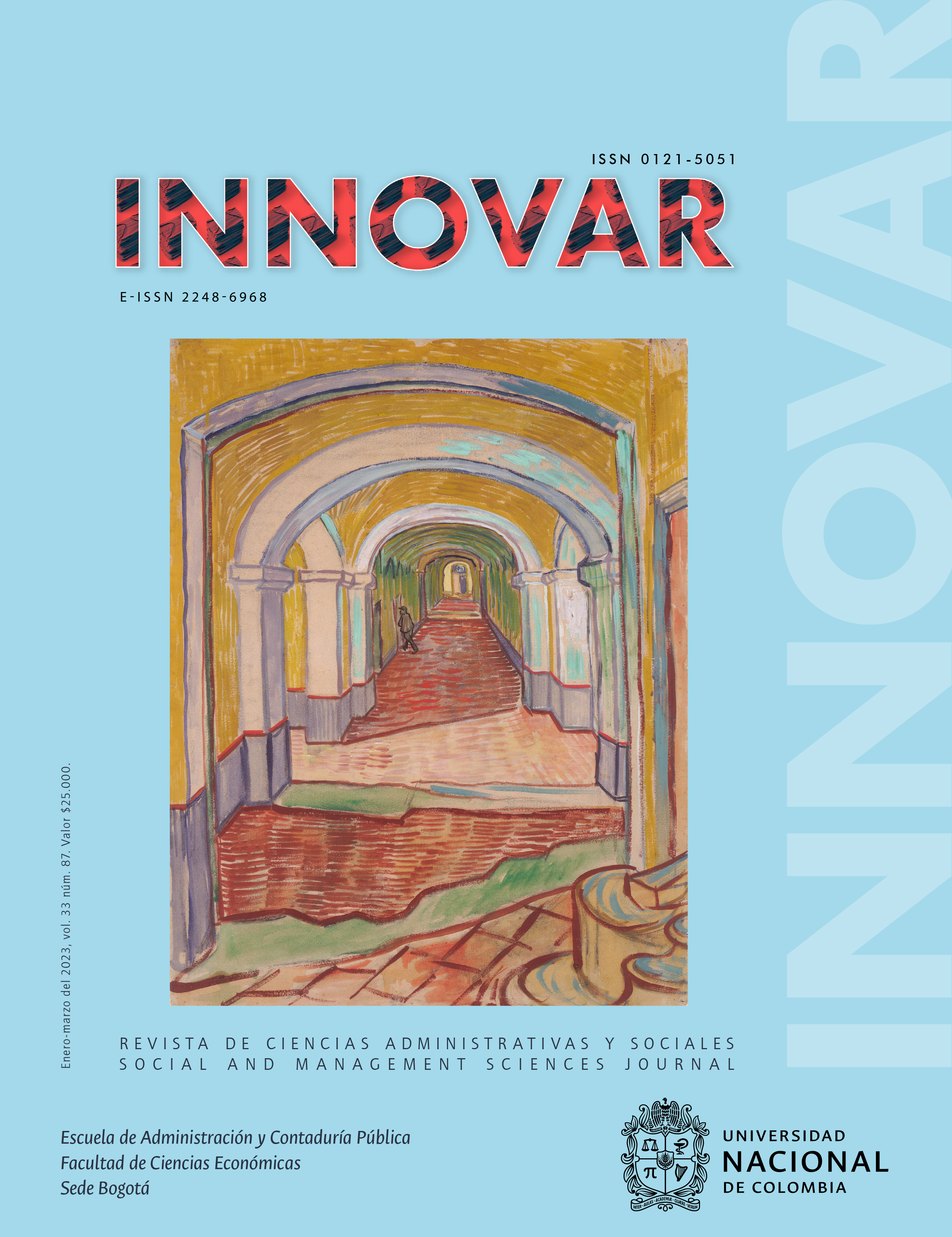
Main Factors that Explain Organic Food Purchase Intention: A Systematic Review
Principales factores que explican la intención de compra de alimentos orgánicos: una revisión sistemática
Principais fatores que explicam a intenção de compra de alimentos orgânicos: uma revisão sistemática
DOI:
https://doi.org/10.15446/innovar.v33n87.105509Palabras clave:
Attitude, confidence, consumer values, COVID-19, theory of planned behavior (en)actitud, confianza, valores del consumidor, COVID-19, teoría del comportamiento planificado (es)
atitude, confiança, valores do consumidor, covid-19, teoria do comportamento planejado (pt)
Descargas
This study sought to understand the factors behind the intention towards buying organic products mentioned in the existing literature and provide conceptual and theoretical guidelines for future research on the subject. A systematic revision of original research papers included in Scopus and Web of Science databases during the period 2011-2021 was conducted, resulting in a sample of 162 articles. The results show that the attitude, values, and confidence of the consumer were the main factors in the intention to buy organic foods. Moreover, it was found that the theory of planned behavior was the most used theoretical framework in the analysis of organic foods purchasing. The changes brought by the covid-19 pandemic are manifested in consumers’ values and their implications to the sale of this type of foods. We propose to consider consumers’ values as variables that intertwine the rational and motivational approaches to consumption analysis. It is also proposed to understand the purchase intention underlying the stimulation of attitudes and the confidence of consumers due to their values. Finally, it is suggested to consider the analysis of the mediating effect of attitudes and trust in the relationship between values and purchase intention.
Esta investigación tuvo como objetivo comprender los factores tras la intención de compra de productos orgánicos mencionados en la literatura y proporcionar pautas conceptuales y teóricas para futuras investigaciones sobre el tema. Para ello, se realizó una revisión sistemática de artículos de investigación originales incluidos en las bases de datos Scopus y Web of Science durante el período 2011-2021, que arrojó una muestra de 162 artículos. Los resultados muestran que la actitud, los valores y la confianza del consumidor son los principales factores asociados a la intención de compra de alimentos orgánicos. Además, se identificó que la teoría del comportamiento planificado es el marco teórico más empleado para el análisis de la intención de compra de este tipo de alimentos. Los cambios generados por la pandemia de covid-19 se manifiestan en los valores de los consumidores y sus implicaciones para la venta de alimentos orgánicos. En consecuencia, se sugiere considerar los valores de los consumidores como variables que entrelazan los enfoques racional y motivacional en el análisis de los patrones de consumo. Además, se recomienda estudiar la intención de compra que subyace a la estimulación de las actitudes y la confianza de los consumidores con base en sus valores. Finalmente, se propone incorporar el análisis del efecto mediador de las actitudes y la confianza en la relación entre los valores y la intención de compra.
Este estudo buscou compreender os fatores por trás da intenção de compra de produtos orgânicos mencionados na literatura existente e fornece diretrizes conceituais e teóricas para futuras pesquisas sobre o tema. Foi realizada uma revisão sistemática dos trabalhos de pesquisa originais incluídos nas bases de dados da Scopus e Web of Science no período de 2011 a 2021, resultando em uma amostra de 162 artigos. Os resultados mostram que a atitude, os valores e a confiança do consumidor foram os principais fatores na intenção de comprar alimentos orgânicos. Além disso, verificou-se que a teoria do comportamento planejado foi o enquadramento teórico mais utilizado na análise da compra de alimentos orgânicos. As mudanças trazidas pela pandemia da covid-19 se manifestam nos valores dos consumidores e suas implicações na venda desse tipo de alimentos. Propomos considerar os valores dos consumidores como variáveis que entrelaçam as abordagens racional e motivacional à análise do consumo. Propõe-se também compreender a intenção de compra subjacente ao estímulo às atitudes e à confiança dos consumidores devido aos seus valores. Por fim, sugere-se considerar a análise do efeito mediador das atitudes e da confiança na relação entre valores e intenção de compra.
Referencias
Acar Bolat, B., Kaygisiz, F., & Bulut, D. (2020). How consumers’ consciousness and perception levels affect purchase intention of organic chicken meat in Turkey. Turkish Journal of Veterinary and Animal Sciences, 44(6), 1306-1315. https://doi.org/10.3906/vet-2005-53
Ahmed, N., Li, C., Khan, A., Qalati, S. A., Naz, S., & Rana, F. (2021). Purchase intention toward organic food among young consumers using theory of planned behavior: Role of environmental concerns and environmental awareness. Journal of Environmental Planning and Management, 64(5), 796-822. https://doi.org/10.1080/09640568.2020.1785404
Aitken, R., Watkins, L., Williams, J., & Kean, A. (2020). The positive role of labelling on consumers’ perceived behavioural control and intention to purchase organic food. Journal of Cleaner Production, 255, 120334. https://doi.org/10.1016/j.jclepro.2020.120334
Ajzen, I. (1991). The theory of planned behavior. Organizational Behavior and Human Decision Processes, 50(2), 179-211. https://doi.org/https://doi.org/10.1016/0749-5978(91)90020-T
Akbar, A., Ali, S., Ahmad, M. A., Akbar, M., & Danish, M. (2019). Understanding the antecedents of organic food consumption in Pakistan: Moderating role of food neophobia. International Journal of Environmental Research and Public Health, 16(20), 4043. https://doi.org/10.3390/ijerph16204043
Al-Swidi, A., Huque, S. M. R., Hafeez, M. H., & Shariff, M. N. M. (2014). The role of subjective norms in theory of planned behavior in the context of organic food consumption. British Food Journal, 116(10), 1561-1580. https://doi.org/10.1108/BFJ-05-2013-0105
Ali, A., Xiaoling, G., Sherwani, M., & Ali, A. (2017). Factors affecting Halal meat purchase intention: Evidence from international Muslim students in China. British Food Journal, 119(3), 527-541. https://doi.org/10.1108/BFJ-10-2016-0455
Amin, S., & Tarun, M. T. (2020). Effect of consumption values on customers’ green purchase intention: A mediating role of green trust. Social Responsibility Journal, 17(8), 1320-1336. https://doi.org/10.1108/SRJ-05-2020-0191
Araya-Pizarro, S. C., & Araya Pizarro, C. R. (2020). Importancia de la certificación de calidad en la decisión de compra de productos agroalimentarios artesanales. Innovar, 30(77), 53-62. https://doi.org/https://doi.org/10.15446/innovar.v30n77.87430
Ashraf, M. A. (2017). The theory of bounded rational behavior-A new theory. Lambert Academic Publishing.
Ashraf, M. A. (2020). What drives and mediates organic food purchase intention: An analysis using bounded rationality theory. Journal of International Food and Agribusiness Marketing, 33(2). 185-216. https://doi.org/10.1080/08974438.2020.1770660
Asif, M., Xuhui, W., Nasiri, A., & Ayyub, S. (2018). Determinant factors influencing organic food purchase intention and the moderating role of awareness: A comparative analysis. Food Quality and Preference, 63, 144-150. https://doi.org/10.1016/j.foodqual.2017.08.006
Awan, H. M., Siddiquei, A. N., & Haider, Z. (2015). Factors affecting Halal purchase intention – evidence from Pakistan’s Halal food sector. Management Research Review, 38(6), 640-660. https://doi.org/10.1108/mrr-01-2014-0022
Bai, L., Wang, M., & Gong, S. (2019). Understanding the antecedents of organic food purchases: The important roles of beliefs, subjective norms, and identity expressiveness. Sustainability, 11(11), 3045. https://doi.org/10.3390/su11113045
Benitez, J., Henseler, J., Castillo, A., & Schuberth, F. (2020). How to perform and report an impactful analysis using partial least squares: Guidelines for confirmatory and explanatory IS research. Information and Management, 57(2), 103168. https://doi.org/10.1016/j.im.2019.05.003
Boobalan, K., & Nachimuthu, G. S. (2020). Organic consumerism: A comparison between India and the USA. Journal of Retailing and Consumer Services, 53, 101988. https://doi.org/10.1016/j.jretconser.2019.101988
Boobalan, K., Nachimuthu, G. S., & Sivakumaran, B. (2021). Understanding the psychological benefits in organic consumerism: An empirical exploration. Food Quality and Preference, 87, 104070. https://doi.org/10.1016/j.foodqual.2020.104070
Brugarolas, M., Martínez-Carrasco, L., Rabadán, A., & Bernabéu, R. (2020). Innovation strategies of the Spanish agri-food sector in response to the Black Swan COVID-19 pandemic. Foods, 9(12), 1-20. https://doi.org/10.3390/foods9121821
Çabuk, S., Tanrikulu, C., & Gelibolu, L. (2014). Understanding organic food consumption: Attitude as a mediator. International Journal of Consumer Studies, 38(4), 337-345. https://doi.org/10.1111/ijcs.12094
Cachero-Martínez, S. (2020). Consumer behaviour towards organic products: The moderating role of environmental concern. Journal of Risk and Financial Management, 13(12), 330. https://doi.org/10.3390/jrfm13120330
Caliskan, A., Celebi, D., & Pirnar, I. (2020). Determinants of organic wine consumption behavior from the perspective of the theory of planned behavior. International Journal of Wine Business Research, 33(3), 360-376. https://doi.org/10.1108/IJWBR-05-2020-0017
Canova, L., Bobbio, A., & Manganelli, A. M. (2020). Buying organic food products: The role of trust in the theory of planned behavior. Frontiers in Psychology, 11, 575820. https://doi.org/10.3389/fpsyg.2020.575820
Carfora, V., Cavallo, C., Caso, D., Del Giudice, T., De Devitiis, B., Viscecchia, R., Nardone, G., & Cicia, G. (2019). Explaining consumer purchase behavior for organic milk: Including trust and green self-identity within the theory of planned behavior. Food Quality and Preference, 76, 1-9. https://doi.org/10.1016/j.foodqual.2019.03.006
Chu, K. M. (2018). Mediating influences of attitude on internal and external factors influencing consumers’ intention to purchase organic foods in China. Sustainability, 10(12), 4690. https://doi.org/10.3390/su10124690
Dangi, N., Narula, S. A., & Gupta, S. K. (2020). Influences on purchase intentions of organic food consumers in an emerging economy. Journal of Asia Business Studies, 14(5), 599-620. https://doi.org/10.1108/JABS-12-2019-0364
David, A., Ahmed, R. R., Ganeshkumar, C., & Sankar, J. G. (2020). Consumer purchasing process of organic food product: An empirical analysis. Quality - Access to Success, 21(177), 128-132. https://ssrn.com/abstract=3705817
De Toni, D., Eberle, L., Larentis, F., & Milan, G. S. (2018). Antecedents of perceived value and repurchase intention of organic food. Journal of Food Products Marketing, 24(4), 456-475. https://doi.org/10.1080/10454446.2017.1314231
Demirtas, B. (2019). Assessment of the impacts of the consumers’ awareness of organic food on consumption behavior. Food Science and Technology, 39(4), 881-888. https://doi.org/10.1590/fst.10518
Dorce, L. C., da Silva, M. C., Mauad, J. R. C., de Faria Domingues, C. H., & Borges, J. A. R. (2021). Extending the theory of planned behavior to understand consumer purchase behavior for organic vegetables in Brazil: The role of perceived health benefits, perceived sustainability benefits and perceived price. Food Quality and Preference, 91, 104191. https://doi.org/10.1016/j.foodqual.2021.104191
Effendi, I. (2020). The role of ethics on the green behaviour of organic food in Indonesia: A case of North Sumatera. International Journal of Management, 11(1), 73-81. https://doi.org/10.34218/IJM.11.1.2020.008
Erdoğan Yazar, E., & Burucuoğlu, M. (2019). Consumer attitude towards organic foods: A multigroup analysis across genders. Istanbul Business Research, 48(2), 176-196. https://doi.org/10.26650/ibr.2019.48.0001
Espejel-Blanco, J. E., Camarena-Gómez, D. M. J., & Sandoval-Godoy, S. A. (2014). Alimentos tradicionales en Sonora, México: factores que influyen en su consumo. Innovar, 24(53), 127-139. https://doi.org/10.15446/innovar.v24n53.43920
Farias, F. De, Eberle, L., Milan, G. S., De Toni, D., & Eckert, A. (2019). Determinants of organic food repurchase intention from the perspective of Brazilian consumers. Journal of Food Products Marketing, 25(9), 921-943. https://doi.org/10.1080/10454446.2019.1698484
Fleseriu, C., Cosma, S. A., & Bocănet, V. (2020). Values and planned behaviour of the Romanian organic food consumer. Sustainability, 12(5), 1-21. https://doi.org/10.3390/su12051722
Ham, M., Pap, A., & Stanic, M. (2018). What drives organic food purchasing? – Evidence from Croatia. British Food Journal, 120(4), 734-748. https://doi.org/10.1108/BFJ-02-2017-0090
Hauser, M., Nussbeck, F. W., & Jonas, K. (2010). The impact of food‐related values on food purchase behavior and the mediating role of attitudes: A swiss study. Psychology & Marketing, 30(9), 765-778. https://doi.org/https://doi.org/10.1002/mar.20644
Hoang, H. C., Chovancova, M., & Hoang, T. Q. H. (2020). The interactive effect of level of education and environmental concern toward organic food in Vietnam. Journal of Distribution Science, 18(9), 19-30. https://doi.org/10.15722/jds.18.9.202009.19
Homer, P. M., & Kahle, L. R. (1988). A structural equation test of the value-attitude-behavior hierarchy. Journal of Personality and Social Psychology, 54(4), 638-646. https://doi.org/https://doi.org/10.1037/0022-3514.54.4.638
Hsu, S. Y., Chang, C. C., & Lin, T. T. (2016). An analysis of purchase intentions toward organic food on health consciousness and food safety with/under structural equation modeling. British Food Journal, 118(1), 200-216. https://doi.org/10.1108/BFJ-11-2014-0376
Hsu, S. Y., Chang, C. C., & Lin, T. T. (2019). Triple bottom line model and food safety in organic food and conventional food in affecting perceived value and purchase intentions. British Food Journal, 121(2), 333-346. https://doi.org/10.1108/BFJ-07-2017-0403
Hwang, J. (2016). Organic food as self-presentation: The role of psychological motivation in older consumers’ purchase intention of organic food. Journal of Retailing and Consumer Services, 28, 281-287. https://doi.org/10.1016/j.jretconser.2015.01.007
Iweala, S., Spiller, A., & Meyerding, S. (2019). Buy good, feel good? The influence of the warm glow of giving on the evaluation of food items with ethical claims in the U.K. and Germany. Journal of Cleaner Production, 215, 315-328. https://doi.org/10.1016/j.jclepro.2018.12.266
Kareklas, I., Carlson, J. R., & Muehling, D. D. (2014). “I eat organic for my benefit and yours”: Egoistic and altruistic considerations for purchasing organic food and their implications for advertising strategists. Journal of Advertising, 43(1), 18-32. https://doi.org/10.1080/00913367.2013.799450
Kashif, U., Hong, C., Naseem, S., Khan, W. A., & Akram, M. W. (2020). Consumer preferences toward organic food and the moderating role of knowledge: A case of Pakistan and Malaysia. Ciencia Rural, 50(5), e20190842. https://doi.org/10.1590/0103-8478cr20190842
Kashif, U., Hong, C., Naseem, S., Khan, W. A., Akram, M. W., Rehman, K. U., & Andleeb, S. (2021). Assessment of millennial organic food consumption and moderating role of food neophobia in Pakistan. Current Psychology. https://doi.org/10.1007/s12144-021-01520-1
Katt, F., & Meixner, O. (2020). Is it all about the price? An analysis of the purchase intention for organic food in a discount setting by means of structural equation modeling. Foods, 9(4), 458. https://doi.org/10.3390/foods9040458
Khare, A., & Pandey, S. (2017). Role of green self-identity and peer influence in fostering trust towards organic food retailers. International Journal of Retail and Distribution Management, 45(9), 969-990. https://doi.org/10.1108/IJRDM-07-2016-0109
Koklic, M. K., Golob, U., Podnar, K., & Zabkar, V. (2019). The interplay of past consumption, attitudes and personal norms in organic food buying. Appetite, 137, 27-34. https://doi.org/10.1016/j.appet.2019.02.010
Konuk, F. A. (2018a). Antecedents of pregnant women’s purchase intentions and willingness to pay a premium for organic food. British Food Journal, 120(7), 1561-1573. https://doi.org/10.1108/BFJ-11-2017-0631
Konuk, F. A. (2018b). Price fairness, satisfaction, and trust as antecedents of purchase intentions towards organic food. Journal of Consumer Behaviour, 17(2), 141-148. https://doi.org/10.1002/cb.1697
Konuk, F. A. (2018c). The role of store image, perceived quality, trust and perceived value in predicting consumers’ purchase intentions towards organic private label food. Journal of Retailing and Consumer Services, 43, 304–310. https://doi.org/10.1016/j.jretconser.2018.04.011
Kushwah, S., Dhir, A., & Sagar, M. (2019a). Understanding consumer resistance to the consumption of organic food. A study of ethical consumption, purchasing, and choice behaviour. Food Quality and Preference, 77, 1-14. https://doi.org/10.1016/j.foodqual.2019.04.003
Kushwah, S., Dhir, A., & Sagar, M. (2019b). Ethical consumption intentions and choice behavior towards organic food. Moderation role of buying and environmental concerns. Journal of Cleaner Production, 236, 117519. https://doi.org/10.1016/j.jclepro.2019.06.350
Lacoeuilhe, J., Louis, D., Lombart, C., & Labbé-Pinlon, B. (2021). The impacts of comparative ads used by retailers to compare their store brands with national brands. International Journal of Retail and Distribution Management, 49(1), 1-22. https://doi.org/10.1108/IJRDM-11-2019-0364
Ladwein, R., & Sánchez Romero, A. M. (2021). The role of trust in the relationship between consumers, producers and retailers of organic food: A sector-based approach. Journal of Retailing and Consumer Services, 60, 102508. https://doi.org/10.1016/j.jretconser.2021.102508
Latip, M. S. A., Newaz, F. T., Ramasamy, R., Tumin, S. A., & Noh, I. (2020). How do food safety knowledge and trust affect individual’s green considerations during the COVID-19 pandemic in Malaysia? Malaysian Journal of Consumer and Family Economics, 24, 261-285. https://www.majcafe.com/wp-content/uploads/2020/10/Vol-24-2020-Paper-11.pdf
Le-Anh, T., & Nguyen-To, T. (2020). Consumer purchasing behaviour of organic food in an emerging market. International Journal of Consumer Studies, 44(6), 563-573. https://doi.org/10.1111/ijcs.12588
Lee, H. J. (2016). Individual and situational determinants of U.S. consumers’ buying behavior of organic foods. Journal of International Food and Agribusiness Marketing, 28(2), 117-131. https://doi.org/10.1080/08974438.2015.1035471
Lee, H. J., & Goudeau, C. (2014). Consumers’ beliefs, attitudes, and loyalty in purchasing organic foods: The standard learning hierarchy approach. British Food Journal, 116(6), 918-930. https://doi.org/10.1108/BFJ-02-2013-0030
Lee, H. J., & Yun, Z. S. (2015). Consumers’ perceptions of organic food attributes and cognitive and affective attitudes as determinants of their purchase intentions toward organic food. Food Quality and Preference, 39, 259-267. https://doi.org/10.1016/j.foodqual.2014.06.002
Lee, K. H., Bonn, M. A., & Cho, M. (2015). Consumer motives for purchasing organic coffee: The moderating effects of ethical concern and price sensitivity. International Journal of Contemporary Hospitality Management, 27(6), 1157-1180. https://doi.org/10.1108/IJCHM-02-2014-0060
Lee, T. H., Fu, C. J., & Chen, Y. Y. (2020). Trust factors for organic foods: Consumer buying behavior. British Food Journal, 122(2), 414-431. https://doi.org/10.1108/BFJ-03-2019-0195
Leyva-Hernández, S. N., Toledo-López, A., & Hernández-Lara, A. B. (2021). Purchase intention for organic food products in Mexico: The mediation of consumer desire. Foods, 10(2), 245. https://doi.org/10.3390/foods10020245
Li, S., & Jaharuddin, N. S. (2020). Identifying the key purchase factors for organic food among Chinese consumers. Frontiers of Business Research in China, 14(1), 25. https://doi.org/10.1186/s11782-020-00093-3
Li, S., & Jaharuddin, N. S. (2021). Influences of background factors on consumers’ purchase intention in China’s organic food market: Assessing moderating role of word-of-mouth (WOM). Cogent Business and Management, 8(1), 1876296. https://doi.org/10.1080/23311975.2021.1876296
Liang, A. R. D. (2016). Predicting intentions to purchase organic food: the moderating effects of organic food prices. British Food Journal, 118(1), 183-199. https://doi.org/10.1108/BFJ-06-2015-0215
Liang, A. R. D., & Lim, W. M. (2020). Why do consumers buy organic food? Results from an S–O–R model. Asia Pacific Journal of Marketing and Logistics, 33(2), 394-415. https://doi.org/10.1108/APJML-03-2019-0171
Lin, J., Guo, J., Turel, O., & Liu, S. (2020). Purchasing organic food with social commerce: An integrated food-technology consumption values perspective. International Journal of Information Management, 51, 102033. https://doi.org/10.1016/j.ijinfomgt.2019.11.001
Lu, L., Chi, C. G. Q., & Zou, R. (2019). Determinants of Chinese consumers’ organic wine purchase. International Journal of Contemporary Hospitality Management, 31(9), 3761-3778. https://doi.org/10.1108/IJCHM-02-2019-0118
Mahrinasari, M. S. (2019). Impact of safety concerns on a lifestyle. Journal of Security and Sustainability Issues, 9(1), 269-280. https://doi.org/10.9770/jssi.2019.9.1(20)
Mainardes, E. W., de Araujo, D. V. B., Lasso, S., & Andrade, D. M. (2017). Influences on the intention to buy organic food in an emerging market. Marketing Intelligence and Planning, 35(7), 858-876. https://doi.org/10.1108/MIP-04-2017-0067
Massey, M., O’Cass, A., & Otahal, P. (2018). A meta-analytic study of the factors driving the purchase of organic food. Appetite, 125, 418-427. https://doi.org/10.1016/j.appet.2018.02.029
Mehrabian, A., & Russell, J. A. (1974). An approach to environmental psychology. The MIT Press.
Mohammed, A. A. (2020). What motivates consumers to purchase organic food in an emerging market? An empirical study from Saudi Arabia. British Food Journal, 123(5), 1758-1775. https://doi.org/10.1108/BFJ-07-2020-0599
Mohanty, S. (2020). An assessment of theory of reasoned action towards organic food in india. International Journal of Scientific and Technology Research, 9(3), 7233-7235. http://www.ijstr.org/final-print/mar2020/An-Assessment-Of-Theory-Of-Reasoned-Action-Towards-Organic-Food-In-India.pdf
Molinillo, S., Vidal-Branco, M., & Japutra, A. (2020). Understanding the drivers of organic foods purchasing of millennials: Evidence from Brazil and Spain. Journal of Retailing and Consumer Services, 52, 101926. https://doi.org/10.1016/j.jretconser.2019.101926
Müller, C. E., & Gaus, H. (2015). Consumer response to negative media information about certified organic food products. Journal of Consumer Policy, 38(4), 387-409. https://doi.org/10.1007/s10603-015-9299-z
Nagaraj, S. (2021). Role of consumer health consciousness, food safety & attitude on organic food purchase in emerging market: A serial mediation model. Journal of Retailing and Consumer Services, 59, 102423. https://doi.org/10.1016/j.jretconser.2020.102423
Nathan, R. J., Soekmawati, Victor, V., Popp, J., Fekete-Farkas, M., & Oláh, J. (2021). Food innovation adoption and organic food consumerism-a cross national study between Malaysia and Hungary. Foods, 10(2), 1-21. https://doi.org/10.3390/foods10020363
Nguyen, D. T., & Truong, D. C. (2021). The impact of psychological and environmental factors on consumers’ purchase intention toward organic food: Evidence from Vietnam. Journal of Asian Finance, Economics and Business, 8(1), 915-925. https://doi.org/10.13106/jafeb.2021.vol8.no1.915
Nguyen, H. V., Nguyen, N., Nguyen, B. K., & Greenland, S. (2021). Sustainable food consumption: Investigating organic meat purchase intention by vietnamese consumers. Sustainability, 13(2), 1-15. https://doi.org/10.3390/su13020953
Nguyen, H. V., Nguyen, N., Nguyen, B. K., Lobo, A., & Vu, P. A. (2019). Organic food purchases in an emerging market: The influence of consumers’ personal factors and green marketing practices of food stores. International Journal of Environmental Research and Public Health, 16(6), 1037. https://doi.org/10.3390/ijerph16061037
Nguyen, T. T. M., Phan, T. H., Nguyen, H. L., Dang, T. K. T., & Nguyen, N. D. (2019). Antecedents of purchase intention toward organic food in an Asian emerging market: A study of urban Vietnamese consumers. Sustainability, 11(17), 4773. https://doi.org/10.3390/su11174773
Nie, Y. Y., Liang, A. R. D., & Chen, D. J. (2017). Assessing the effect of organic-food short storytelling on consumer response. Service Industries Journal, 37(15-16), 968-985. https://doi.org/10.1080/02642069.2017.1371143
Nosi, C., Zollo, L., Rialti, R., & Ciappei, C. (2020). Sustainable consumption in organic food buying behavior: the case of quinoa. British Food Journal, 122(3), 976-994. https://doi.org/10.1108/BFJ-09-2019-0745
Ogorevc, M., Primc, K., Slabe-Erker, R., Kalar, B., Dominko, M., Murovec, N., & Bartolj, T. (2020). Social feedback loop in the organic food purchase decision-making process. Sustainability, 12(10), 4174. https://doi.org/10.3390/su12104174
Olson, J. M., & Zanna, M. P. (1993). Attitudes and attitude change. Annual Review of Psychology, 44, 117-154. https://doi.org/10.1146/annurev.ps.44.020193.001001
Pacho, F. (2020). What influences consumers to purchase organic food in developing countries? British Food Journal, 122(12), 3695-3709. https://doi.org/10.1108/BFJ-01-2020-0075
Palmero, K. L., & Montemayor, C. T. (2020). An analysis on the factors influencing green purchase intention among young consumers in the Philippine BPO industry. Polish Journal of Management Studies, 22(1), 371-384. https://doi.org/10.17512/pjms.2020.22.1.24
Pandey, D., Kakkar, A., Farhan, M., & Khan, T. A. (2019). Factors influencing organic foods purchase intention of Indian customers. Organic Agriculture, 9(4), 357-364. https://doi.org/10.1007/s13165-018-0240-z
Pandey, S. K., & Khare, A. (2015). Mediating role of opinion seeking in explaining the relationship between antecedents and organic food purchase intention. Journal of Indian Business Research, 7(4), 321-337. https://doi.org/10.1108/JIBR-06-2014-0042
Pandey, S. K., Gupta, A. K., & Sharma, D. P. (2020). Perceived risk reduction strategies for organic food customers. Journal of Food Products Marketing, 26(5), 344-357. https://doi.org/10.1080/10454446.2020.1774953
Pérez-Villarreal, H. H., Martínez-Ruiz, M. P., & Izquierdo-Yusta, A. (2019). Testing model of purchase intention for fast food in Mexico: How do consumers react to food values, positive anticipated emotions, attitude toward the brand, and attitude toward eating hamburgers? Foods, 8(9), 369. https://doi.org/10.3390/foods8090369
Perugini, M., & Bagozzi, R. P. (2001). The role of desires and anticipated emotions in goal-directed behaviours: Broadening and deepening the theory of planned behaviour. Social Psychology, 40(1), 79-98. https://doi.org/10.1348/014466601164704
Pham, T. H., Nguyen, T. N., Phan, T. T. H., & Nguyen, N. T. (2019). Evaluating the purchase behaviour of organic food by young consumers in an emerging market economy. Journal of Strategic Marketing, 27(6), 540-556. https://doi.org/10.1080/0965254X.2018.1447984
Pino, G., Peluso, A. M., & Guido, G. (2012). Determinants of regular and occasional consumers’ intentions to buy organic food. Journal of Consumer Affairs, 46(1), 157-169. https://doi.org/10.1111/j.1745-6606.2012.01223.x
Prakash, G., Singh, P. K., & Yadav, R. (2018). Application of consumer style inventory (CSI) to predict young Indian consumer’s intention to purchase organic food products. Food Quality and Preference, 68, 90-97. https://doi.org/10.1016/j.foodqual.2018.01.015
Prentice, C., Chen, J., & Wang, X. (2019). The influence of product and personal attributes on organic food marketing. Journal of Retailing and Consumer Services, 46, 70-78. https://doi.org/10.1016/j.jretconser.2017.10.020
Prince, S. A., & Wahid, I. S. (2020). The purchase of organic fish in Bangladesh: Safeguarding against COVID-19. Cogent Business and Management, 7(1), 1841524. https://doi.org/10.1080/23311975.2020.1841524
Puelles-Gallo, M., Llorens-Marín, M., & Talledo-Flores, H. (2014). El factor de la percepción de control como determinante en la intención de compra de productos ecológicos. Innovar, 24(54), 139-152. https://doi.org/10.15446/innovar.v24n54.46655
Qasim, H., Yan, L., Guo, R., Saeed, A., & Ashraf, B. N. (2019). The defining role of environmental self-identity among consumption values and behavioral intention to consume organic food. International Journal of Environmental Research and Public Health, 16(7), 1106. https://doi.org/10.3390/ijerph16071106
Rahman, K. M., & Noor, N. A. M. (2016). In search of a model explaining organic food purchase behavior: The overlooked story of Montano and Kasprzyk’s integrated behavior model. British Food Journal, 118(12), 2911-2930. https://doi.org/10.1108/BFJ-02-2016-0060
Rahnama, H. (2017). Effect of consumption values on women’s choice behavior toward organic foods: The case of organic yogurt in Iran. Journal of Food Products Marketing, 23(2), 144-166. https://doi.org/10.1080/10454446.2017.1244790
Rana, J., & Paul, J. (2017). Consumer behavior and purchase intention for organic food: A review and research agenda. Journal of Retailing and Consumer Services, 38, 157-165. https://doi.org/10.1016/j.jretconser.2017.06.004
Ruiz-de-Maya, S., López-López, I., & Munuera, J. L. (2011). Organic food consumption in Europe: International segmentation based on value system differences. Ecological Economics, 70(10), 1767-1775. https://doi.org/10.1016/j.ecolecon.2011.04.019
Ryan, J., & Casidy, R. (2018). The role of brand reputation in organic food consumption: A behavioral reasoning perspective. Journal of Retailing and Consumer Services, 41, 239-247. https://doi.org/10.1016/j.jretconser.2018.01.002
Sadiq, M. A., Rajeswari, B., Ansari, L., & Danish Kirmani, M. (2021). The role of food eating values and exploratory behaviour traits in predicting intention to consume organic foods: An extended planned behaviour approach. Journal of Retailing and Consumer Services, 59, 102352. https://doi.org/10.1016/j.jretconser.2020.102352
Saleki, R., Quoquab, F., & Mohammad, J. (2019). What drives Malaysian consumers’ organic food purchase intention? The role of moral norm, self-identity, environmental concern and price consciousness. Journal of Agribusiness in Developing and Emerging Economies, 9(5), 584-603. https://doi.org/10.1108/JADEE-02-2019-0018
Sarabia-Andreu, F., Sarabia-Sánchez, F. J., & Moreno-Albaladejo, P. (2019). A new attitudinal integral-model to explain green purchase intention. Sustainability, 11(22), 1-17. https://doi.org/10.3390/su11226290
Schwartz, S. H. (1992). Universals in the content and structure of values: Theoretical advances and empirical tests in 20 countries. Advances in Experimental Social Psychology, 25(C), 1-65. https://doi.org/10.1016/S0065-2601(08)60281-6
Schwartz, S. H. (2012). An overview of the Schwartz theory of basic values. Readings in Psychology and Culture, 2(1). https://doi.org/10.9707/2307-0919.1116
Schwartz, S. H., & Bilsky, W. (1987). Toward A universal psychological structure of human values. Journal of Personality and Social Psychology, 53(3), 550-562. https://doi.org/10.1037/0022-3514.53.3.550
Shahriari, E., Torres, I. M., Zúñiga, M. A., & Yarlou, P. M. (2019). Values driving organic food purchase intention: A comparative analysis between a developing eastern country (Iran) and a developed western country (US). Journal of International Consumer Marketing, 31(4), 317-329. https://doi.org/10.1080/08961530.2018.1561345
Sheth, J. (2020). Impact of Covid-19 on consumer behavior: Will the old habits return or die ? Journal of Business Research, 117, 280-283. https://doi.org/10.1016/j.jbusres.2020.05.059
Sheth, J. N., Newman, B. I., & Gross, B. L. (1991). Why we buy what we buy: A theory of consumption values. Journal of Business Research, 22(2), 159-170. https://doi.org/10.1016/0148-2963(91)90050-8
Shin, Y. H., Moon, H., Jung, S. E., & Severt, K. (2017). The effect of environmental values and attitudes on consumer willingness to pay more for organic menus: A value-attitude-behavior approach. Journal of Hospitality and Tourism Management, 33, 113-121. https://doi.org/10.1016/j.jhtm.2017.10.010
Sultan, P., Tarafder, T., Pearson, D., & Henryks, J. (2020). Intention-behaviour gap and perceived behavioural control-behaviour gap in theory of planned behaviour: Moderating roles of communication, satisfaction and trust in organic food consumption. Food Quality and Preference, 81, 103838. https://doi.org/10.1016/j.foodqual.2019.103838
Sweeney, J. C., & Soutar, G. N. (2001). Consumer perceived value: The development of a multiple item scale. Journal of Retailing, 77(2), 203-220. https://doi.org/10.1016/S0022-4359(01)00041-0
Talwar, S., Jabeen, F., Tandon, A., Sakashita, M., & Dhir, A. (2021). What drives willingness to purchase and stated buying behavior toward organic food? A Stimulus–Organism–Behavior–Consequence (SOBC) perspective. Journal of Cleaner Production, 293, 125882. https://doi.org/10.1016/j.jclepro.2021.125882
Tandon, A., Dhir, A., Kaur, P., Kushwah, S., & Salo, J. (2020). Behavioral reasoning perspectives on organic food purchase. Appetite, 154, 104786. https://doi.org/10.1016/j.appet.2020.104786
Tandon, A., Jabeen, F., Talwar, S., Sakashita, M., & Dhir, A. (2021). Facilitators and inhibitors of organic food buying behavior. Food Quality and Preference, 88, 104077. https://doi.org/10.1016/j.foodqual.2020.104077
Teng, C. C., & Wang, Y. M. (2015). Decisional factors driving organic food consumption: Generation of consumer purchase intentions. British Food Journal, 117(3), 1066-1081. https://doi.org/10.1108/BFJ-12-2013-0361
Tranfield, D., Denyer, D., & Smart, P. (2003). Towards a methodology for developing evidence‐informed management knowledge by means of systematic review. British Journal of Management, 14(3), 207-222. https://doi.org/https://doi.org/10.1111/1467-8551.00375
Tuan, T. N., & Vinh, T. T. (2016). An exploration in the theory of planned behavior: A case of organic food in Vietnam. International Journal of Applied Business and Economic Research, 14(6), 4951-4972. https://serialsjournals.com/abstract/20233_18.pdf
Ünal, S., Deveci, F. G., & Yıldız, T. (2019). Do we know organic food consumers? The personal and social determinants of organic food consumption. Istanbul Business Research, 48(1), 1-35. https://doi.org/10.26650/ibr.2019.48.0019
Urban, J. A. N., Zvěřinová, I. V. A., & Ščasný, M. (2012). What motivates Czech consumers to buy organic food? Sociologicky Casopis, 48(3), 509-536. https://doi.org/10.13060/00380288.2012.48.3.06
Vassallo, M., Scalvedi, M. L., & Saba, A. (2016). Investigating psychosocial determinants in influencing sustainable food consumption in Italy. International Journal of Consumer Studies, 40(4), 422-434. https://doi.org/10.1111/ijcs.12268
Vinson, D. E., Scott, J. E., & Lamont, L. M. (1977). The role of personal values in marketing and consumer behavior. American Marketing Association, 41(2), 44-50. https://doi.org/10.2307/1250633
Wang, E. S. T., & Tsai, B. K. (2014). Consumer response to retail performance of organic food retailers. British Food Journal, 116(2), 212-227. https://doi.org/10.1108/BFJ-05-2012-0123
Wang, J., Tao, J., & Chu, M. (2020). Behind the label: Chinese consumers’ trust in food certification and the effect of perceived quality on purchase intention. Food Control, 108, 106825. https://doi.org/10.1016/j.foodcont.2019.106825
Wang, X., Pacho, F., Liu, J., & Kajungiro, R. (2019). Factors influencing organic food purchase intention in Tanzania and Kenya and the moderating role of knowledge. Sustainability, 11(1), 209. https://doi.org/10.3390/su11010209
Westaby, J. D. (2005). Behavioral reasoning theory: Identifying new linkages underlying intentions and behavior. Organizational Behavior and Human Decision Processes, 98(2), 97-120. https://doi.org/10.1016/j.obhdp.2005.07.003
Wheeler, S. A., Gregg, D., & Singh, M. (2019). Understanding the role of social desirability bias and environmental attitudes and behaviour on South Australians’ stated purchase of organic foods. Food Quality and Preference, 74, 125-134. https://doi.org/10.1016/j.foodqual.2019.01.007
Wijesinghe, A. G. K., & Aththanayaka, W. V. H. L. (2021). Assessing urban consumer intention on purchasing of organic food in Sri Lanka. Journal of Agricultural Sciences - Sri Lanka, 16(1), 80-92. https://doi.org/10.4038/jas.v16i1.9185
Woo, E., & Kim, Y. G. (2019). Consumer attitudes and buying behavior for green food products: From the aspect of green perceived value (GPV). British Food Journal, 121(2), 320-332. https://doi.org/10.1108/BFJ-01-2018-0027
Yadav, R. (2016). Altruistic or egoistic: Which value promotes organic food consumption among young consumers? A study in the context of a developing nation. Journal of Retailing and Consumer Services, 33, 92-97. https://doi.org/10.1016/j.jretconser.2016.08.008
Yadav, R., & Pathak, G. S. (2016). Intention to purchase organic food among young consumers: Evidences from a developing nation. Appetite, 96, 122-128. https://doi.org/10.1016/j.appet.2015.09.017
Yangui, A., Costa-Font, M., & Gil, J. M. (2016). The effect of personality traits on consumers’ preferences for extra virgin olive oil. Food Quality and Preference, 51, 27-38. https://doi.org/10.1016/j.foodqual.2016.02.012
Yangzom, C., & Singh, J. S. K. (2019). Ecologically conscious buying behaviour of organic products: A quantitative study in Thimpu, Bhutan. Malaysian Journal of Consumer and Family Economics, 22(Special Ed), 92-113 https://www.majcafe.com/wp-content/uploads/2019/10/2019-Vol-22-S1-Article-6.pdf.
Yazdanpanah, M., & Forouzani, M. (2015). Application of the theory of planned behaviour to predict Iranian students’ intention to purchase organic food. Journal of Cleaner Production, 107, 342-352. https://doi.org/10.1016/j.jclepro.2015.02.071
Yu, W., Han, X., Ding, L., & He, M. (2021). Organic food corporate image and customer co-developing behavior: The mediating role of consumer trust and purchase intention. Journal of Retailing and Consumer Services, 59, 102377. https://doi.org/10.1016/j.jretconser.2020.102377
Zagata, L. (2012). Consumers’ beliefs and behavioural intentions towards organic food. Evidence from the Czech Republic. Appetite, 59(1), 81-89. https://doi.org/10.1016/j.appet.2012.03.023
Zaidi, S. M. M. R., Yifei, L., Bhutto, M. Y., Ali, R., & Alam, F. (2019). The influence of consumption values on green purchase intention: A moderated mediation of greenwash perceptions and green trust. Pakistan Journal of Commerce and Social Science, 13(4), 826-848. https://ssrn.com/abstract=3522451
Zhuang, W., Luo, X., & Riaz, M. U. (2021). On the Factors Influencing Green Purchase Intention: A Meta-Analysis Approach. Frontiers in Psychology, 12, 1-15. https://doi.org/10.3389/fpsyg.2021.644020
Cómo citar
APA
ACM
ACS
ABNT
Chicago
Harvard
IEEE
MLA
Turabian
Vancouver
Descargar cita
CrossRef Cited-by
1. Youness Riouali, Ayoub Rabhi, Dimitrios A. Karras. (2026). A Blockchain‐Driven Approach to Enhancing Transparency and Traceability in Organic Food Supply Chain Management. Applied Computational Intelligence and Soft Computing, 2026(1) https://doi.org/10.1155/acis/3114851.
2. Rahman Md. Mostafizur, Khatun Mst. Asma, Moinul Islam, Koji Kotani. (2025). Drivers for sustainable food purchase intentions: Prosocial attitudes for future generations and environmental concerns. Future Foods, 11, p.100609. https://doi.org/10.1016/j.fufo.2025.100609.
3. Liyu Huang, Songyu Jiang. (2026). Unveiling digital knowledge pathways for pregnancy-related green food purchase orientations: a comparative fsQCA study of social media discourse in China and Thailand. Frontiers in Sustainable Food Systems, 10 https://doi.org/10.3389/fsufs.2026.1779236.
4. Sandra Rojas-Berrio, Javier A. Sánchez-Torres, Francisco-Javier Arroyo-Cañada, Flor Madrigal-Moreno. (2022). Retos del marketing desde la pandemia por COVID-19. Innovar, 33(87), p.3. https://doi.org/10.15446/innovar.v33n87.106350.
5. Christopher DEMETRAKOS, Itsuki NAKATO, Shannen ROMERO-PEREZ, Yasushi KYUTOKU, Ippeita DAN. (2025). Psychological Factors that Influence Behavioral Intentions towards Bottled Green Tea in the Japanese Market. International Journal of Affective Engineering, 24(1), p.103. https://doi.org/10.5057/ijae.IJAE-D-24-00013.
Dimensions
PlumX
Visitas a la página del resumen del artículo
Descargas
Licencia
Derechos de autor 2022 Innovar

Esta obra está bajo una licencia internacional Creative Commons Atribución-NoComercial-CompartirIgual 4.0.
Todos los artículos publicados por Innovar se encuentran disponibles globalmente con acceso abierto y licenciados bajo los términos de Creative Commons Atribución-No_Comercial-Sin_Derivadas 4.0 Internacional (CC BY-NC-ND 4.0).
Una vez seleccionados los artículos para un número, y antes de iniciar la etapa de cuidado y producción editorial, los autores deben firmar una cesión de derechos patrimoniales de su obra. Innovar se ciñe a las normas colombianas en materia de derechos de autor.
El material de esta revista puede ser reproducido o citado con carácter académico, citando la fuente.
Esta obra está bajo una Licencia Creative Commons: